







Tokyo's Changes
[CONTRIBUTED ARTICLE] Michael Pronko, professor of American literature, culture and film at Meiji Gakuin University, columnist for Newsweek Japan and The Japan Times, and a Tokyo resident of more than 30 years, writes novels and non-fiction about life in Tokyo.


This audio is generated by AI, so pronunciation and expressions may not be fully accurate. The narration is only in English.
Some days, living in Tokyo, I'm unsure which century I'm in. I take the escalator down to a newly built subway line, and I feel as if I've been hurled into a future of diffused lighting, sliding walkways, high-tech transportation, and slick ads for products I can't always identify.
But then on other days, I step down a back lane, enter an unkempt garden with a rickety tea house, and wonder if I'm back in the Edo Period. Bamboo trees shoot up in tangles along a stone walkway, and a round window lets me peer inside at the dusty tatami of a small, single tearoom.
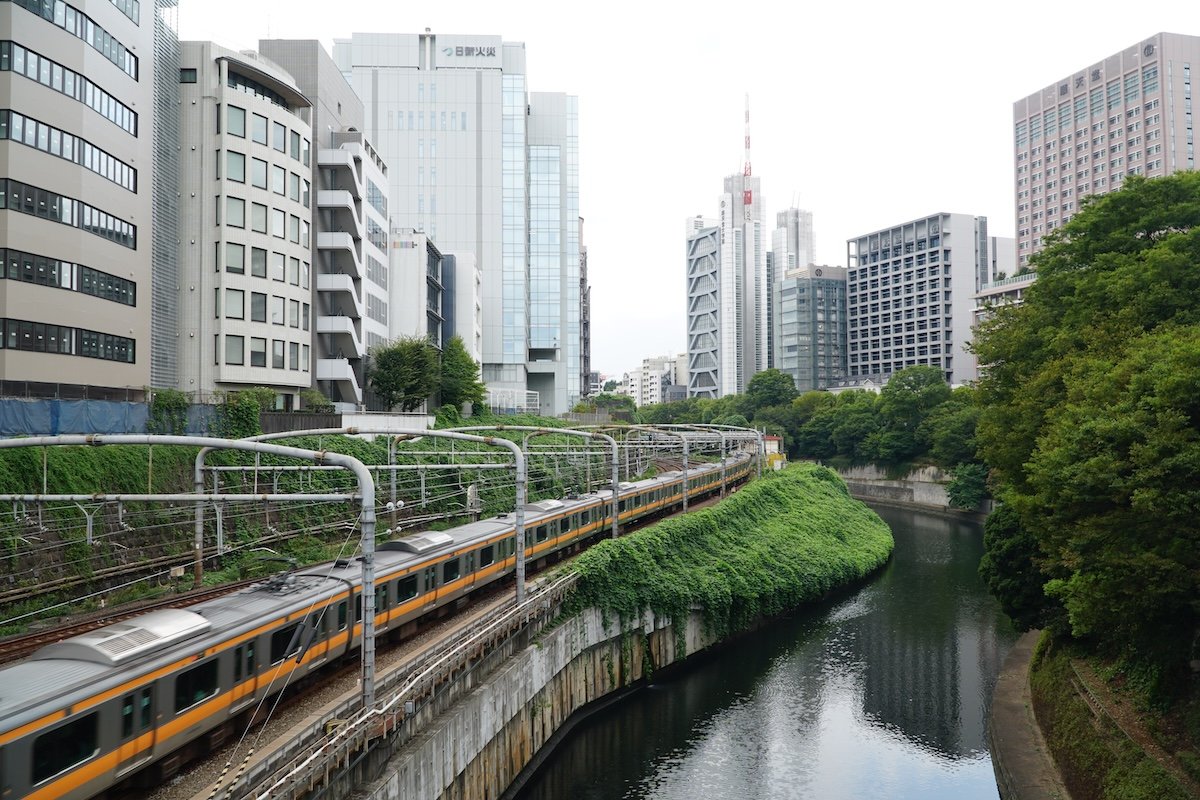
After living in Japan for almost thirty years, I take pleasure in watching the city's process of change. Tokyo has never been mired in the past, nor has it entirely embraced the future. Its dual nature is always looking to upgrade to newer versions without losing its past. It's a delicate balancing act.
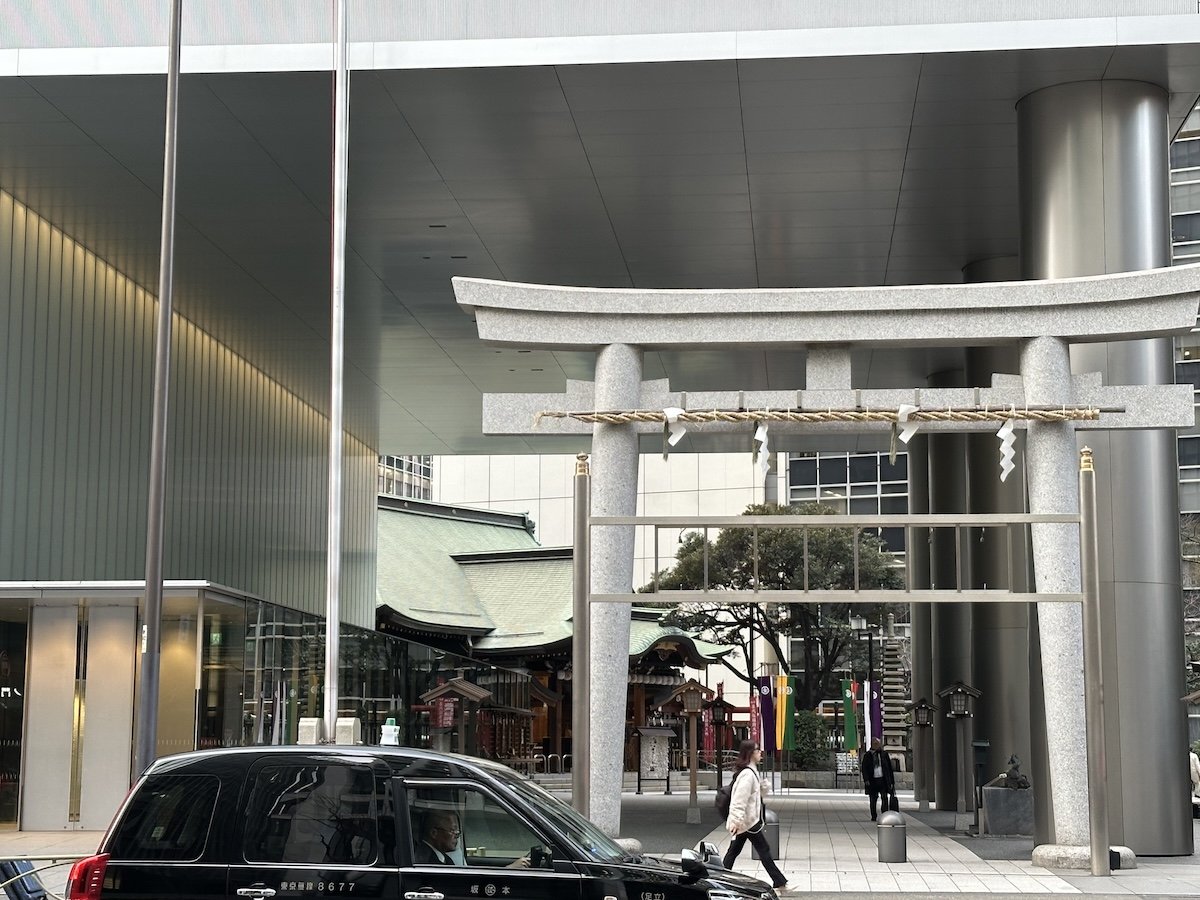
Old neighborhoods are being torn down, and Tokyoites have mixed feelings about that. The small buildings and teensy stores that gave the pre-war wood-built neighborhoods their charm are dwindling. In the old parts of the city, the rattle of a glass door, a worn concrete floor, old beer posters, and well-worn benches were a large part of Tokyo's character.
But practicality is another force in Tokyo, a powerful one that responds to the pressures of a large population just trying to get through the day. People adapt to the city, but the city adapts to people, too.
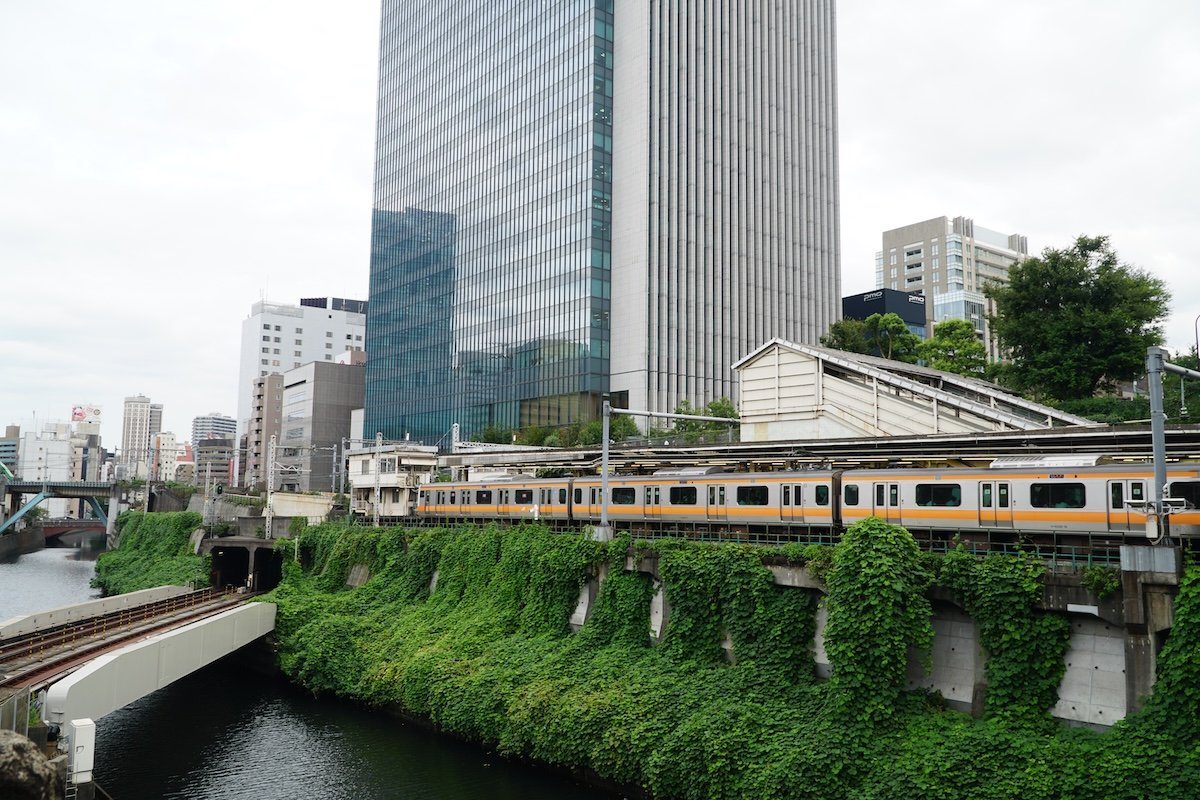
I miss the funky former station along the Chuo Line near my house. It had real Showa era (1926-1989) charm, as if the cartoon character Sazae-san might come bounding up the stairs at any moment. However, during the morning rush, trains passed so frequently that it was impossible for pedestrians, cyclists, or drivers to cross the tracks. And the trains had to slow down for safety at every crossing.
Raising the tracks (a years-long project) allowed trains to rocket along overhead, and cars, bikes, and pedestrians to move without breaking their natural flow. I guess that's progress.
While the old designs had their delights and distractions, the flow of people, trains, and traffic is an inner, persistent drive in Tokyo's life. When traditional charm and modern functionality conflict, the resolution isn't always neat. And yet, that tension fuels Tokyo's ongoing dynamism.
As areas like Shibuya and Nihonbashi become remodeled into Godzilla-provoking designs of business offices, skyscraper malls, and residences with expensive views, I miss the enchanting clutter of those old areas. They were like grandparents you chatted with (in your mind at least) as you walked, surprised by what you didn't know about history, experience, and ways of living. The writer L. P. Hartley's famous quote, "The past is a foreign country; they do things differently there," used to fit those older parts of the city perfectly. They were endlessly intriguing.
The older Tokyo always fit me because I never minded getting lost and rambling around a bit. Long before cell phones, a friend and I used to board buses without knowing where we'd end up. I'd never heard most of the stop names along the bus route, so when we hopped off, we had to ask around to get back to somewhere we knew. Tokyo's intricate expanse meant adventures, big and small, were always possible and never disappointing.
But now, many urban reforms feel overambitious, overly commercial, and too easy to figure out. The planners erased all mystery and surprise from their designs. Still, as soon as each new pristine shopping/living/working venue has its grand opening, people flow in to check it out. Curiosity is a powerful force in Tokyo. What alienates some people lures in others. The city's mystery, too, keeps changing its shape.
The city is unquestionably changing for the better for people with disabilities. Having a large swath of the city accessible via yellow Braille blocks is a reminder of what planning, technology, and common sense can achieve—inclusivity. The yellow, bumpy blocks now run down the middle of most sidewalks, wrapping up the city's streets and sidewalks like a giant yellow gift ribbon.
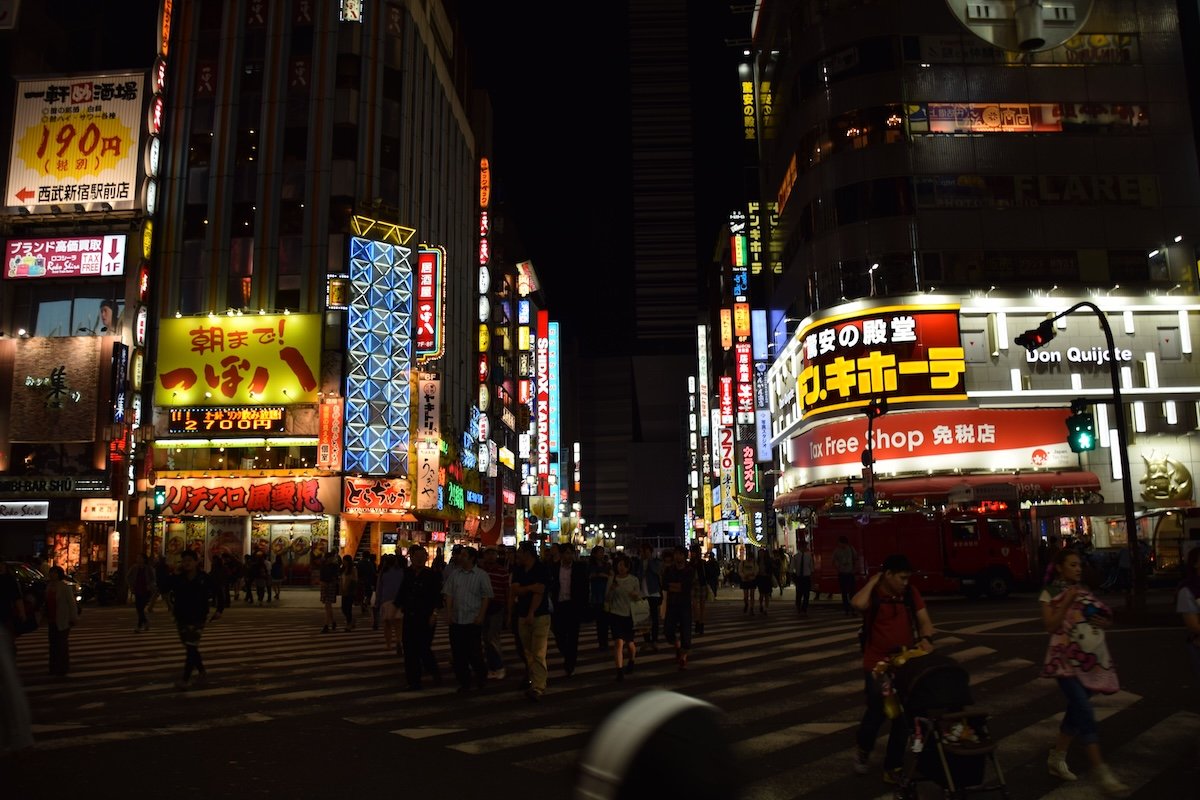
For sighted people, the city is now easier to navigate, too, with more signs, arrows, markers, and explanations in Chinese, Korean, English, and Japanese. Every station has a letter and a number. I remember squinting and guessing at the names of stations when I first came to Tokyo. I learned my station, then stations I often went to, and gradually added on more Chinese characters for other stations. It took years. But now, the entire of Tokyo is as well-marked, numbered, lettered, and directed as an airport. You hardly need language to get around.
If ever there was a city in need of technology, it was Tokyo. Cell phones have changed the experience of the city. Of course, people often seem lost in their little palm-sized screens, never looking up to see the city itself (sadly). My students often question me about "life before smartphones," and I can't help but laugh. They can't imagine that people in Tokyo used to find their way with just an atlas or a sketch diagram on a meishi. Somehow, Tokyo needed smartphones.
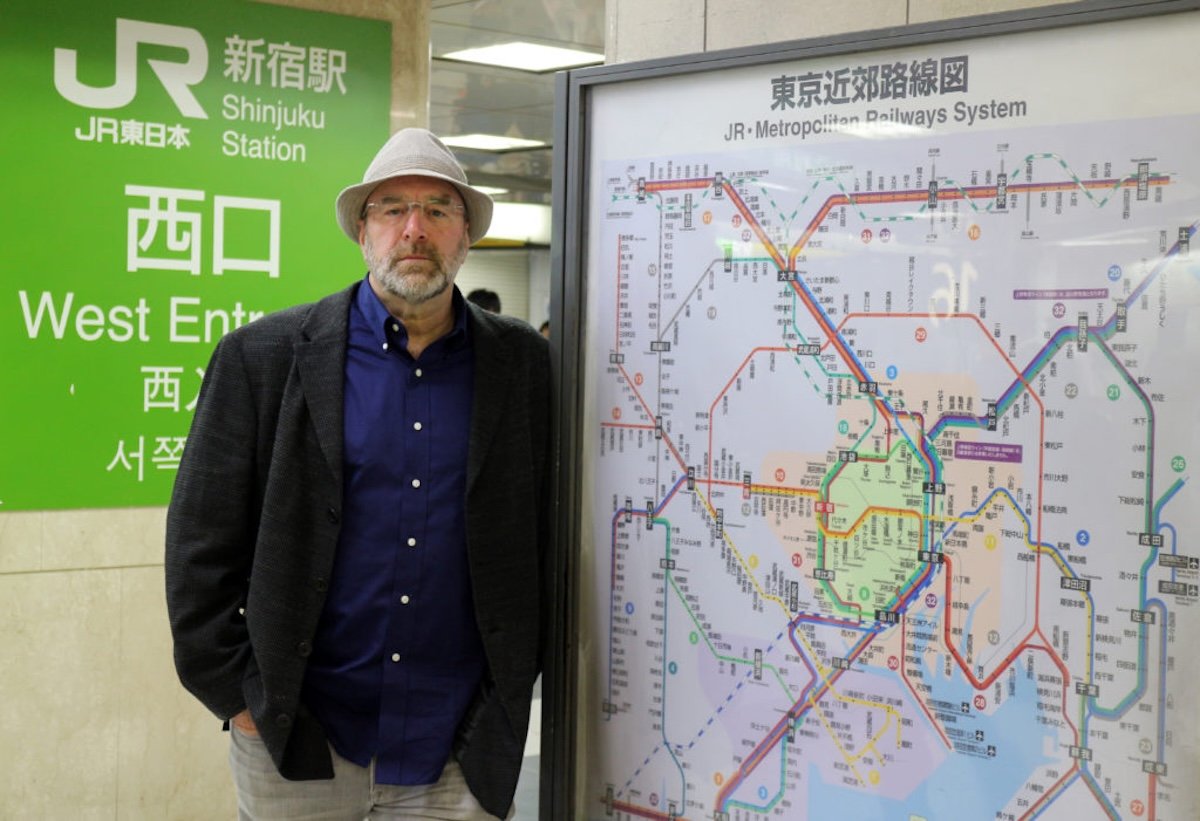
Meeting friends used to mean setting a time and place, and if someone was late, waiting patiently. Now, meeting friends involves a ping-pong of estimated arrival times. Reservations are easier, and logistics are smooth. But there used to be something exciting about waiting without a phone, watching strangers meet, and wondering when your friend or lover would arrive. It grounded you in the vast expanse of the city.
Maybe the best part of Tokyo is that it focuses on what works, intensifying and broadening past successes. The train system was always one of Tokyo's marvels. It's hard to imagine how more subways could fit underground, but new lines like the Fukutoshin, Nanboku, and Oedo (they're running out of names) now crisscross the city, and once outside the center, transform into extended local lines. Everyone in the city is more mobile than ever.
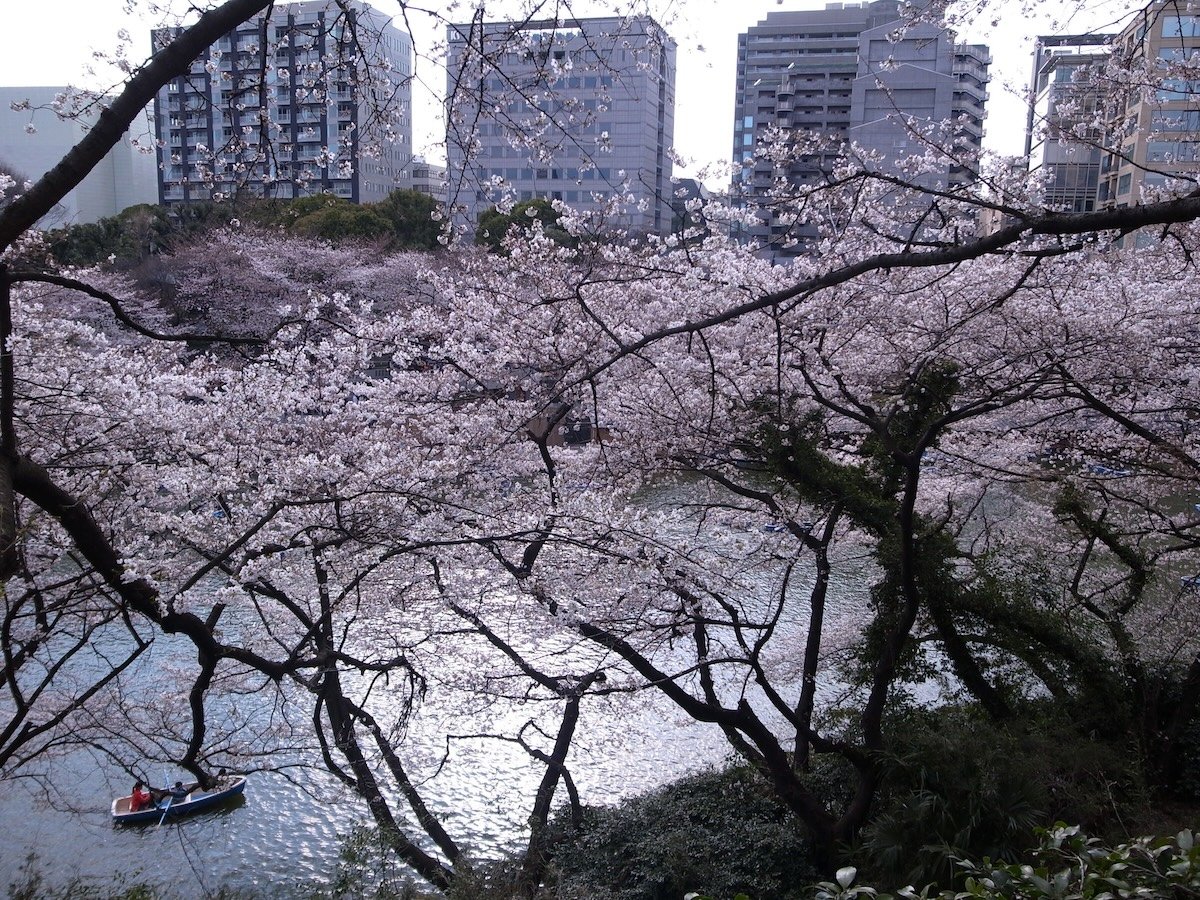
More long-distance trains run ever longer routes from one prefecture through Tokyo's center and off again to another prefecture. The Shonan-Shinjuku Line, which I take once a week, is actually several lines linked (in Tokyo fashion) in a complex, confusing way. Sometimes when I board, the sign tells me I'm on the Utsunomiya Line, Yokosuka Line, Takasaki Line, or Tokaido Line. I suppose I'm riding all of them at once.
Still, I miss the clack-clack-clack of train station attendants clipping and collecting tickets (once upon a time). Then, computerized machines took over, only to be pushed aside by prepaid cards, which were eclipsed by smartphone apps. I appreciate the convenience of not having to break my stride as I zip through stations, but there are worse things than slowing down from time to time. A faster Tokyo isn't necessarily a better Tokyo.
Over the years, Tokyo's food options have become more varied and more authentic. When the Michelin Guide swept through the city, awarding stars, it was no surprise to foodies in the city. Food lovers already knew the top-notch restaurants and, per Tokyo custom, kept most of them secret so they wouldn't be swamped.
And even as the price of a bowl of ramen broke the long-held 1,000-yen mark and new-style ramen places branched out to add cheese, tomatoes, and other unconventional flavors, the number of authentic ramen places seems to have only increased. It's the old Tokyo push and pull. The more it changes, the more it's the same. Tokyo has figured out how to balance opposing forces in ways few other world cities have.
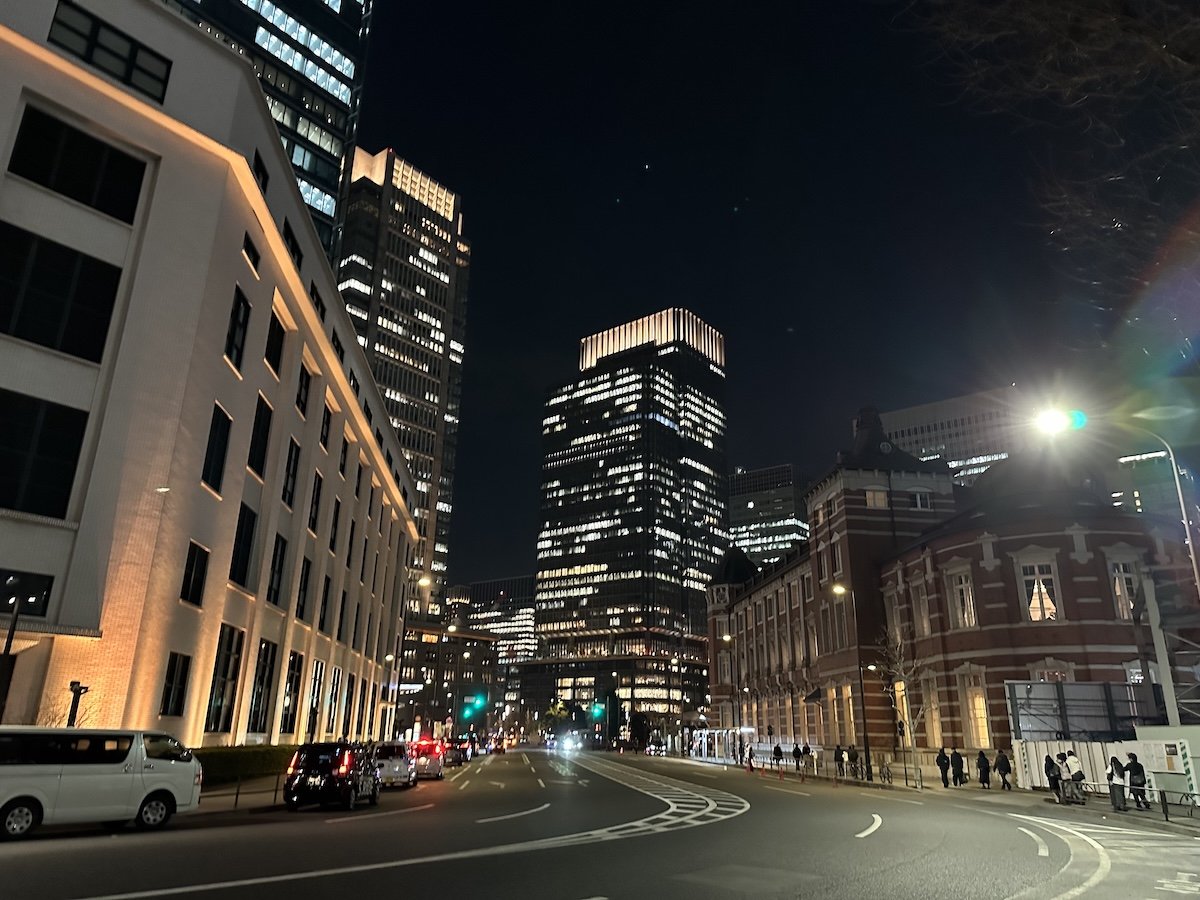
Tokyo long kept the world at a distance, content to be a quiet giant of a city that people loved from afar. Now that's changed with tourists pouring in. But with the essential dynamism of Tokyo still at work, the beauty and majesty of Tokyo's past will never entirely disappear, even as the city plunges, and occasionally zigzags, towards its future.
Michael Pronko