







A Parisianne Stroll Through Bunkyo
[CONTRIBUTED ARTICLE] Dora Tauzin is an international journalist and essayist living between Tokyo and Paris. Having long served as a cultural bridge between Japan and France through her writing, lectures, and media appearances, she now writes about Bunkyo City.


This audio is generated by AI, so pronunciation and expressions may not be fully accurate. The narration is only in English.
My encounter with Tokyo dates back several decades—a true love at first sight with the city, its contrasts, and its people. As a Parisienne, I have always loved great capitals and the distinctive character of their neighborhoods, in Paris the "arrondissements", in Tokyo, the "ku".
For many years, I lived in Kagurazaka, a charming area I once described as "the little Paris of Tokyo" for its cobbled slopes, hidden alleys, and lingering French presence.
Today, however, I would like to take you somewhere quieter, less frequented by tourists yet filled with charm: Bunkyo. Over the past few years, I have grown deeply attached to this district—a place that does not dazzle at first glance but gradually reveals its elegance to those who take the time to wander. It is a neighborhood full of history and culture.
Elegance Without Ostentation
What strikes me most about Bunkyo is its absence of display. There are no flamboyant neon lights, no towering screens flashing advertisements. The streets are calm and residential, punctuated by houses, schools, and neighborhood shops. It does not try to seduce; it allows itself to be discovered.
A Left Bank (Rive Gauche) Spirit—Tokyo Style
The very name "Bunkyo" means "literary capital." As a Parisienne, I cannot help but think of the Latin Quarter and the intellectual atmosphere of the 5th arrondissement, which is "my" arrondissement in Paris. I studied at the Sorbonne, one of the oldest universities in the world. And when I am in Paris this is where I live.
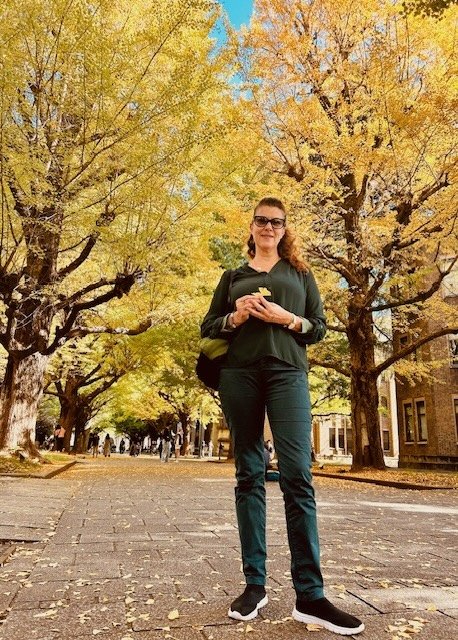
In Bunkyo, Universities structure the landscape here as well. At the heart of the district stands the prestigious University of Tokyo, whose Hongo campus blends Western-style red-brick buildings with a deeply studious ambiance. The famous Akamon—the "Red Gate"—stands as a proud testament to its historical legacy.
In autumn, the ginkgo trees (icho) lining the campus turn a luminous gold. Students cycle past, professors walk thoughtfully beneath the trees...being mesmerized by the quiet beauty of falling leaves.
In Bunkyo, culture does not announce itself; it seeps quietly into daily life. Small specialized bookstores, discreet publishing houses, and confidential galleries give the district a rare intellectual density. For someone accustomed to the animated debates of Parisian cafés, this quietude is almost disconcerting—yet delicious.
A Literary and Publishing Hub
Bunkyo also houses publishing houses such as Kodansha, one of Japan's most influential publishers or Daiwashobo, where my long-seller book Suki na koto dake de ikiru (Living Only by Doing What You Love) is published. The presence of academia, publishing, and quiet scholarship gives Bunkyo a rare coherence. There are also some great libraries which play a more and more important role, like Masago Central Library.
Bunkyo seduces through balance and refinement. For a Parisian, it feels like a meeting point between two cultural capitals: the same respect for heritage, for history, the same love of study and the arts—expressed with Japanese delicacy.
Gardens: Same Names, Different Moods
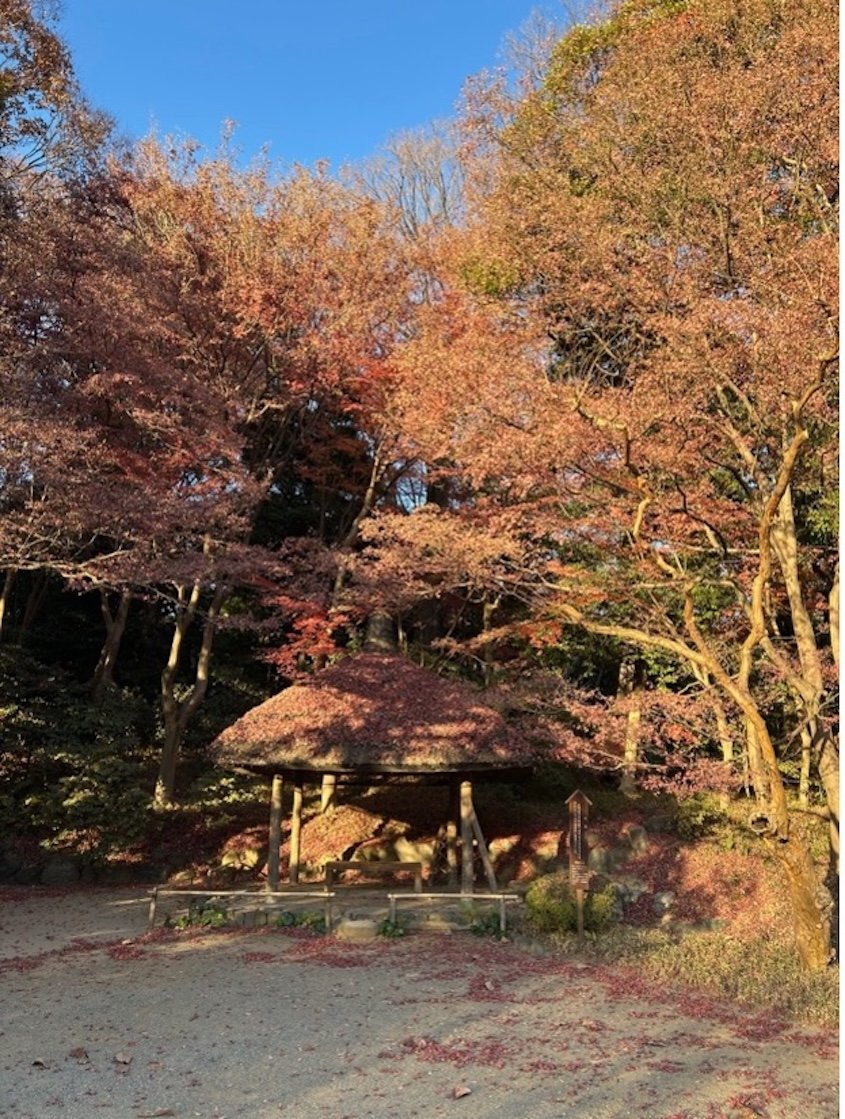
Among Bunkyo's many treasures are its gardens—places where time seems to pause.
One of the most renowned is Koishikawa Korakuen Gardens, particularly magnificent in autumn. Easily accessible, it offers an escape from the city's rhythm. I love admiring the koyo, that magical Japanese moment when maple leaves turn crimson. Although in recent years, the reds seem less flamboyant—perhaps a sign that true autumn grows shorter, the transition from summer heat to winter cold increasingly abrupt.
There is always something slightly surreal about hearing rehearsals for a massive concert at the nearby Tokyo Dome while standing within the serene landscape of the garden. But that, too, is the charm of Tokyo: permanent contrasts—noise and silence, large and small, modern and traditional. Here, modernity does not replace the past; it coexists with it.
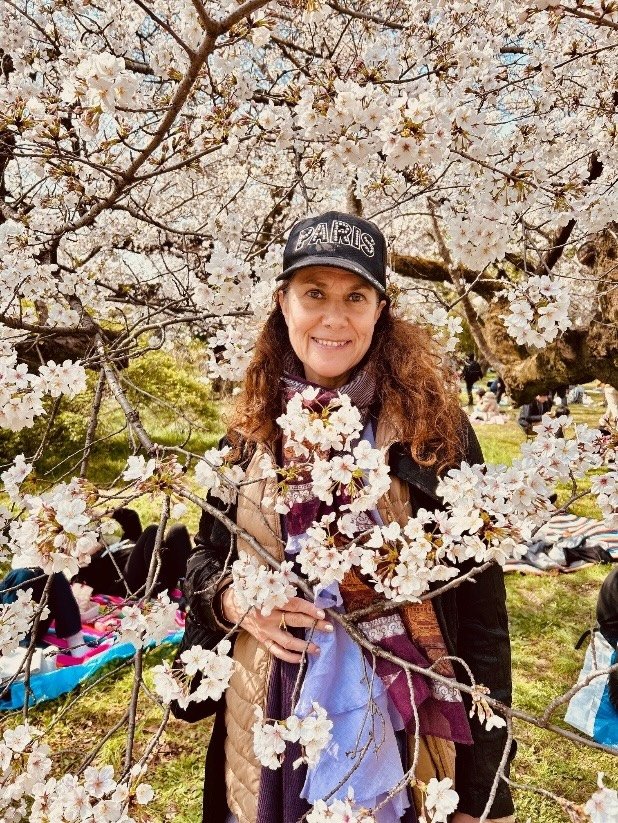
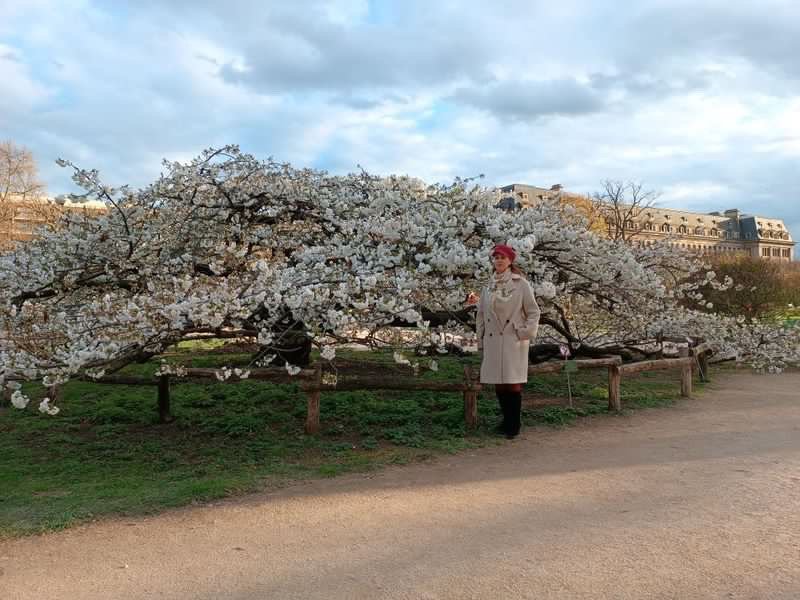
In recent years, I have also made a beautiful discovery: the Koishikawa Botanical Gardens, now more widely open to the public. During hanami season, when the sakura bloom, it becomes sublime. The variety of cherry trees, some with cascading white blossoms, reminds me vividly of the Jardin des Plantes (which is also the Botanical Garden) in Paris's 5th arrondissement. The incredible cherry tree brings so many visitors around every spring.
Another gem nearby is Rikugien Gardens, known for its poetic landscapes and refined seasonal beauty. Bunkyo offers not one but several invitations to step outside of time. For example, Higo-Hosokawa Garden, lit at the end of November, or Nezu Shrine, where 3,000 azaleas bloom in spring.
And then there is Chinzanso, a lush garden complex where fireflies glow in early summer, offering yet another expression of refined tranquility. I made some long creative books' meetings at the tearoom facing this garden with some publishers choosing this place to stimulate the inspiration.
Gentle Hills and Hidden Corners
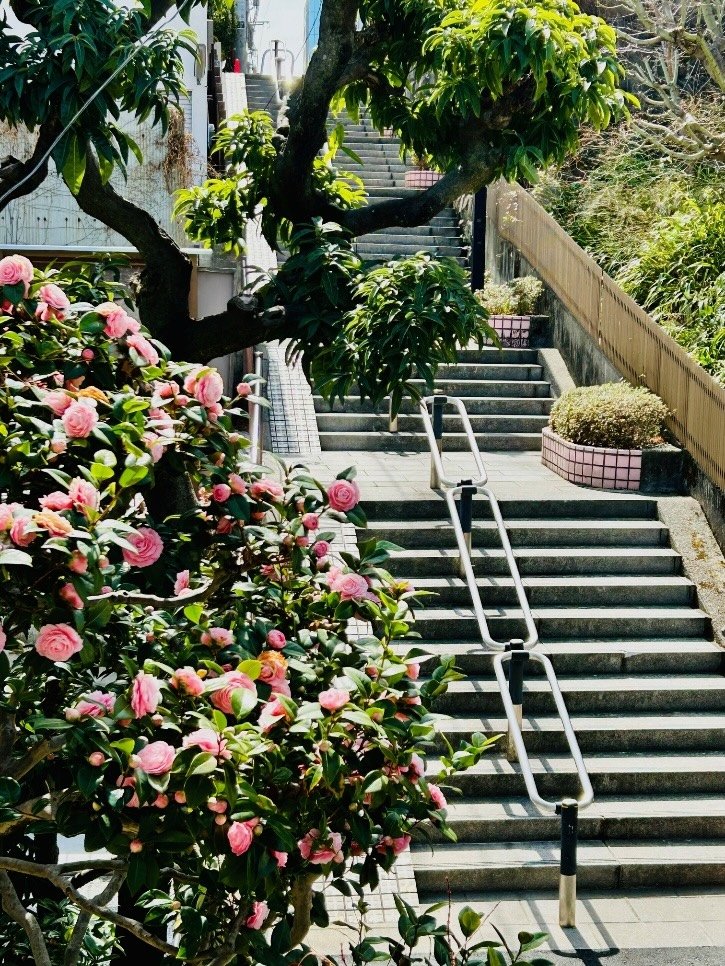
Bunkyo's charm also lies in its slopes—its "zaka." Walking through neighborhoods like Nezu or Hakusan, one encounters narrow stairways, small shrines tucked between houses, and surprising viewpoints at the top of quiet hills. These gentle elevations remind me of my years in Kagurazaka, whose very name contains the word zaka—slope—and whose atmosphere once felt so close to Paris with its hidden passages.
One unexpected symbol of friendship stands in the form of Kaiserslautern Square, a reminder that cities, too, cultivate bonds across borders. I hope one day soon, Paris 5th arrondissement will also have this kind of symbol following the partnership launched in July 2025.
A Pact of Friendship
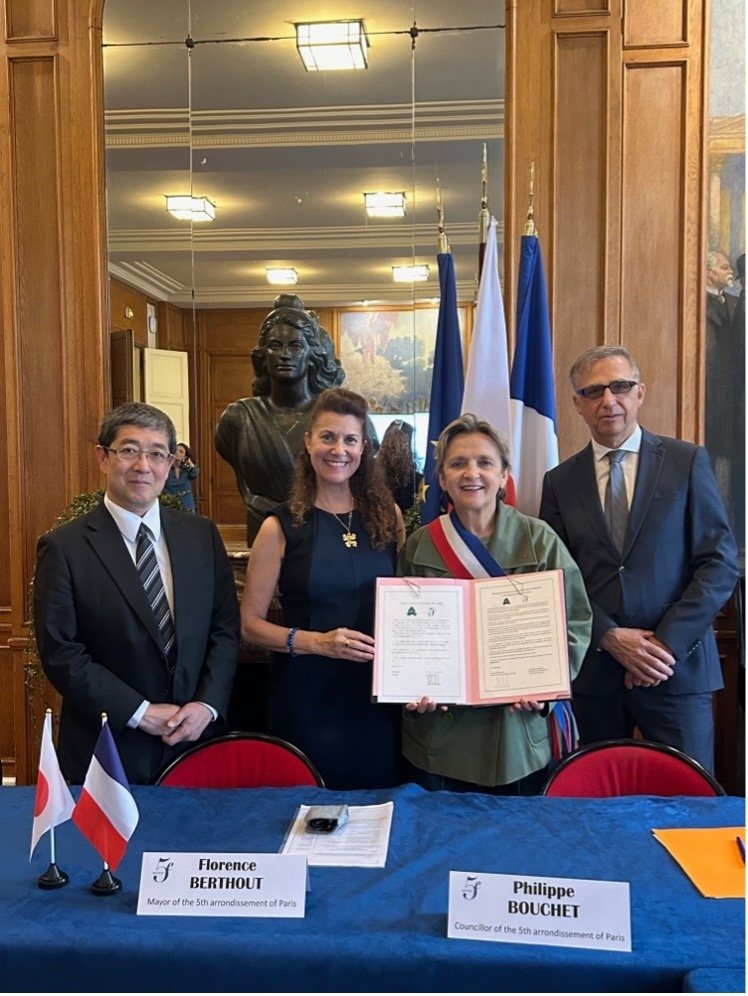
Perhaps you do not yet know that Bunkyo has signed a friendship pact with Paris's 5th arrondissement—the Latin Quarter on July 7th, 2025.
In parallel, the Amicale Franco-Japonaise du Quartier Latin (AFJQL; Nichi-Futsu Quartier Latin Kyokai) was created to foster deeper mutual understanding between the two cultures.
For me, this connection feels natural. When I walk through Bunkyo's calm streets, past its libraries and gardens, I sense a kind of echoes of the Latin Quarter of Paris. The same devotion to study, the same respect for history, the same balance between intellectual rigor and the poetry of daily life.
Sport and Discipline: The Martial Spirit
Bunkyo is not only about literature and gardens; it is also a world center for martial arts.
Near the two stands the Kodokan, the global headquarters of judo. Founded by Kano Jigoro, whose statue stands proudly nearby, the Kodokan attracts practitioners from around the world. It is extraordinary to think that the discipline practiced in so many Parisian dojos trace its spiritual home to this district.
Equally significant is the headquarters of the Japan Karate Association, an institution that has inspired countless students internationally. Many instructors regularly travel to France to teach.
In Paris's 5th arrondissement, karate and judo clubs flourish; here in Bunkyo, their roots run deep.
Sweet Discoveries
No stroll would be complete without a small gourmandize. At Yanagawa (Hongo 3-chome Station) to enjoy a dorayaki filled with Tamba red bean paste—a simple yet refined treat that perfectly matches the district's spirit: traditional, unpretentious, quietly delicious.
A Discreet Art of Living
It charms through subtlety: residential lanes, hidden sanctuaries, preserved traditional houses. At times, it feels almost provincial—an intimate Tokyo far removed from the city's frenzy.
A stroll here flows gently from a centuries-old garden to a quiet street, from an ancestral shrine to a modern complex, without abrupt rupture. That harmony is what makes the district so deeply endearing. To walk through Bunkyo is to discover another face of Tokyo—more contemplative than spectacular, more cultivated than commercial. It does not seek to impress; it invites you simply to slow down. And sometimes, in Tokyo, that is exactly what one needs. 🌿✨
Dora Tauzin
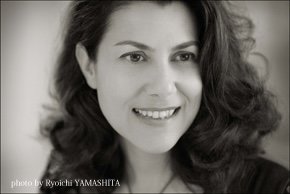
An international journalist and essayist living between Tokyo and Paris.
A graduate of the Sorbonne University and Paris Institute of Political Studies (Sciences Po), she speaks five languages and has lived in various parts of the world. After working for the Public Information Department of the United Nations, she moved to Japan to present NHK television's French language program.
Since then, she has been active as a bridge between Japan and France through writing, lectures, and media appearances. Her publications (mainly in Japanese) include Living Only by Doing What You Love. She has received the Commissioner for Cultural Affairs Award in Japan and has been awarded the Legion of Honour by the French government. She also founded the Japan―France Quartier Latin Association (AFJQL).