







The Enchanting Voice of a Chanteuse Shaped by Diversity


This audio is generated by AI, so pronunciation and expressions may not be fully accurate. The narration is only in English.
A Direct Pitch to a Jazz Singer Leads to an Apprenticeship
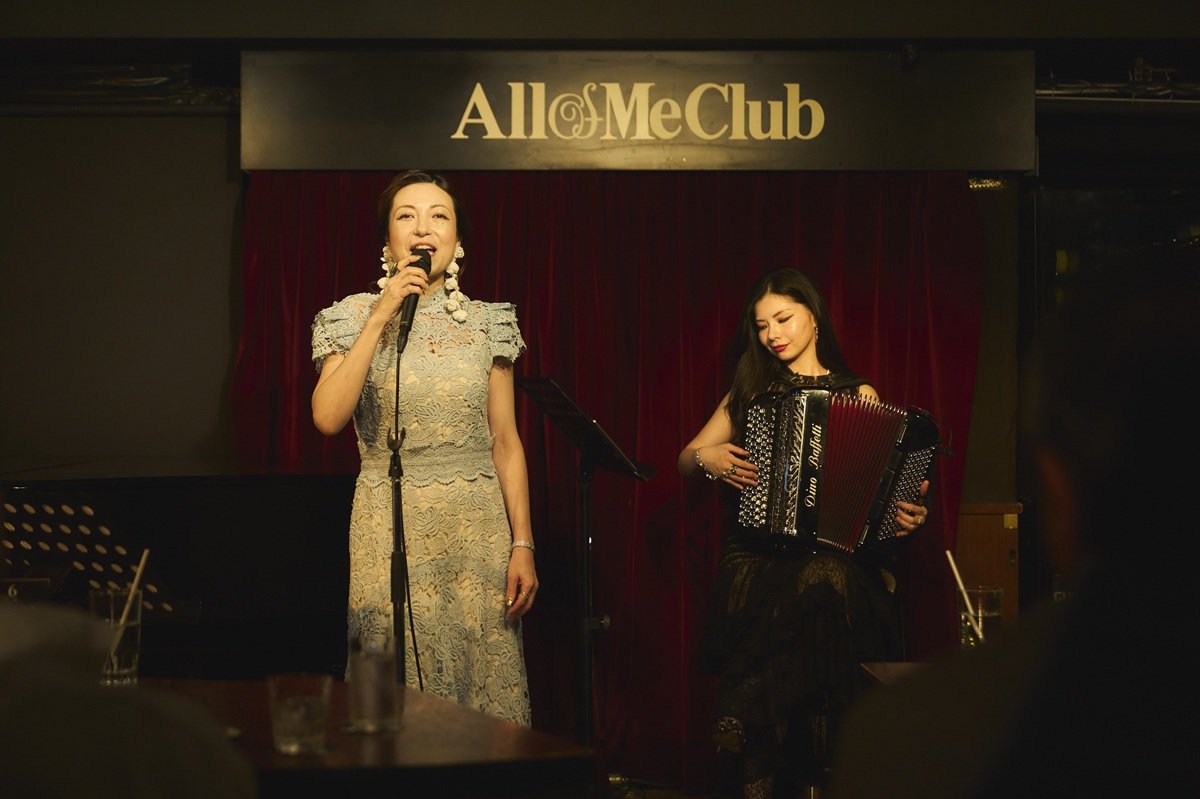
All Of Me Club, a jazz club in Roppongi, is one of Tokyo's popular long-established live music venues. Its stage regularly hosts professional musicians from Japan and abroad performing a variety of genres, including jazz, chanson, and bossa nova. At one performance, Reichel was accompanied by accordionist Meme (Tsuchiya Megumi) as she sang more than a dozen songs spanning chanson, tango, and other styles. Her crystal-clear voice and powerful, passionate performance captivated the audience.
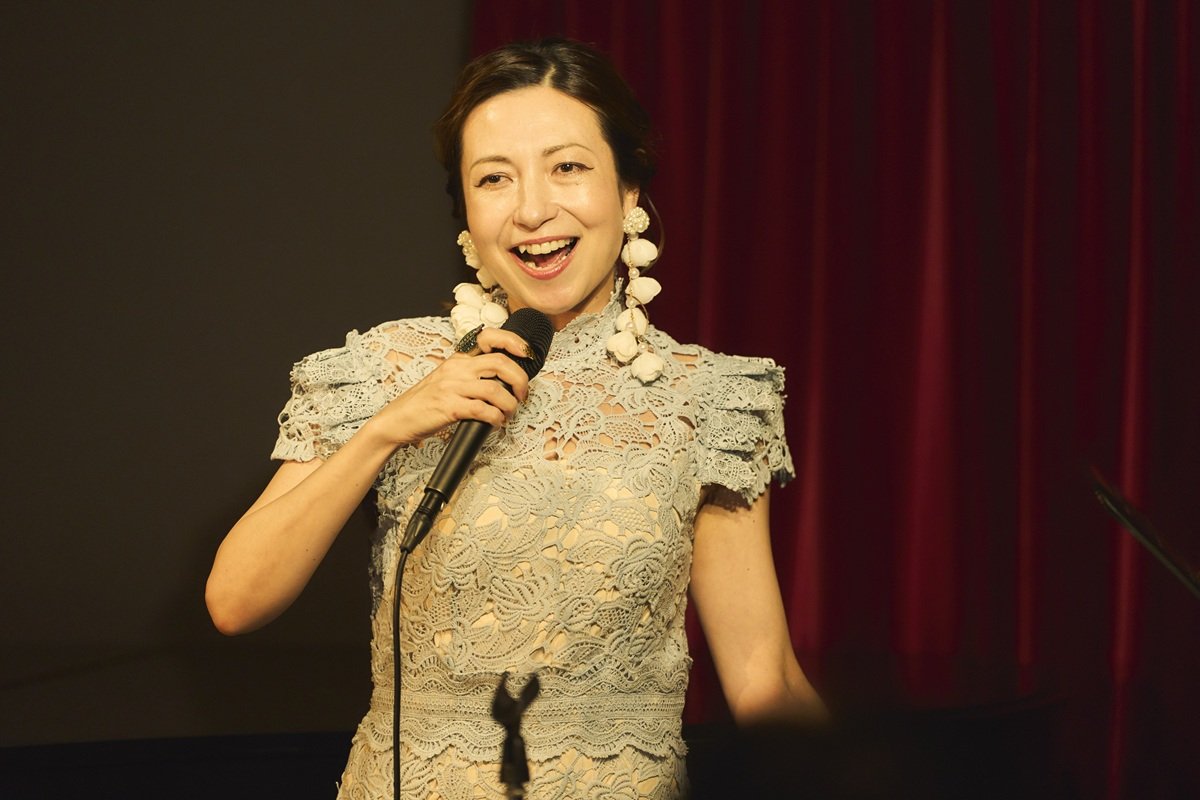
The daughter of a karate master, she recalls being made to practice karate from an early age. But singing was her true passion. She often sang at home and for friends, and she also joined a choir.
"I practiced karate until fifth grade, but looking back, the core strength I developed during those years became the foundation I rely on as a singer," Reichel recalls.
While at university, she was drawn to the glamorous world of modeling through her older brother, who was working as a model, and made her debut as an exclusive model for the lifestyle magazine Fine. However, she never felt at home in the industry and joined a real estate company after graduation.
In 2007, two life-changing encounters followed in quick succession. The first was the biographical film La Vie en Rose, released that same year. The second was hearing Philippine-born jazz singer Maria Eva perform at All Of Me Club.
"That film sparked a real fascination with chanson for me, and it made me want to try singing professionally, so I started taking voice lessons. Not long after that, I heard Eva perform up close. The power of her voice completely drew me in—it was both shocking and deeply moving. I remember thinking, 'Someday, I'm going to sing on that stage,'" Reichel reflects.
She went straight to Maria Eva after the show and asked to study under her. It was the beginning of her journey into the world of jazz.

Success at Three Premier Chanson Competitions
From then on, Reichel's mentor rigorously trained her in the fundamentals of jazz, with lyrics, of course, in English. At the same time, her fascination with chanson deepened, and she taught herself French, making the language her own.
Perhaps because of her roots, French—the language of chanson—came more naturally to her than the English used in American-dominant jazz.
She also began appearing on stage as her mentor's opening act, performing jazz. While jazz remained her foundation, she gradually expanded her repertoire to include chanson. Before long, she began considering entering competitions to test her abilities.
"Tokyo actually has quite a few chanson competitions," Reichel says. "I didn't attend a conservatory, so I wanted to know where my singing stood. At the same time, I wanted a title to my name as a professional performer—and I wanted to challenge myself."
However, she did not place in her first competition. She later learned from people involved that performances in Japanese translation tended to be judged more favorably at Japanese chanson competitions. Even so, she remained determined to perform in French.
In 2022, she earned the Excellence Prize at the Japan Chanson Competition, which boasts a history of more than half a century, performing Édith Piaf's classic Mon manège à moi. The following year, she won the Grand Prix at the 10th Tokyo Chanson Competition with another Piaf classic, Non, je ne regrette rien. Then, in 2024, she claimed another Grand Prix at the 11th Japan Chanson Canzone Concours with Yo soy María by Argentine tango revolutionary Astor Piazzolla, performing the piece in part in Spanish, Piazzolla's native language.
In doing so, she achieved the remarkable feat of placing in major competitions for three consecutive years.
Chanson often explores themes of life and love. For Reichel, the challenge lies in infusing each song with her own experiences and emotions, making it truly her own. She believes it was her ability to bring those songs to life for listeners—to help them visualize the scenes they depict and connect with them emotionally—that set her apart in competition.

Tokyo: A Treasure Trove of Music
Having performed extensively overseas, including in New York, Reichel feels there is a greater depth to the way Tokyo audiences respond.
Abroad, audience reactions tend to be more direct—enthusiastic cries of "Bravo!" if they enjoy a performance and boos if they do not. While that can be nerve-racking, she says it also helps performers grow. In Tokyo, by contrast, audiences often listen quietly and attentively before telling her afterward that they were moved to tears. Those responses, in turn, deepen her own emotional connection to the music.
For Reichel, who is based in Tokyo, part of the city's appeal lies in the abundance of places to perform. Beyond the city center, live music venues, bars, and cafés where singers can connect with audiences can be found throughout the suburbs and even along quiet side streets.
"In Tokyo, you can experience world-class musicians from all kinds of genres performing right in front of you—singing, playing, and moving audiences in the moment. There aren't many cities like that. It really feels like a treasure trove of music. The sheer range of genres embraced here reflects Tokyo's diversity as a city. Being in that kind of environment pushes me to grow, and I want to keep sharing performances that move people," Reichel reflects.
Reichel

Photos by Fujishima Ryo
Translation by Luna Lys