







Tokyo Mine: Unearth Forgotten Electronic Treasure at Home
Listen to This Article in Governor Koike's AI Voice
This audio was generated using AI.


This audio is generated by AI, so pronunciation and expressions may not be fully accurate. The narration is only in English.
From Discarded Electronics to Olympic Gold Medals
The TMG encourages residents to recycle these devices to unearth untapped resources in the Tokyo Mine. Beyond the resource value, proper recycling also matters for public safety: lithium-ion batteries thrown out with regular trash can ignite and cause fires at collection and processing facilities. The TMG installed Bin-e, an AI-powered recycling box that automatically sorts items, on the first floor of its main building on a trial basis, hoping to collect resources lying dormant in Tokyo's households and put them back to use.
While Professor Nanjo Michio first developed the idea of "urban mining" from electronic devices in the 1980s, the concept really took center stage during the buildup to the Olympic and Paralympic Games Tokyo 2020. As one of the event's key sustainability projects, the Tokyo 2020 Medal Project collected 78,985 tons of small electronic appliances. Minerals extracted from these devices were used to create the gold, silver, and bronze medals awarded to Olympic and Paralympic athletes.
The success of this initiative at such a high-profile international event became a legacy the TMG wanted to build on, and it was eager to shift the public's perception of old electronic devices. Rather than viewing such items as waste to be thrown away, the government hoped to promote recycling as a way to recover precious metals with many important applications. Recycling these materials puts less pressure on natural resources and can also help offset rising prices.
Bin-e: Smart Recycling Technology
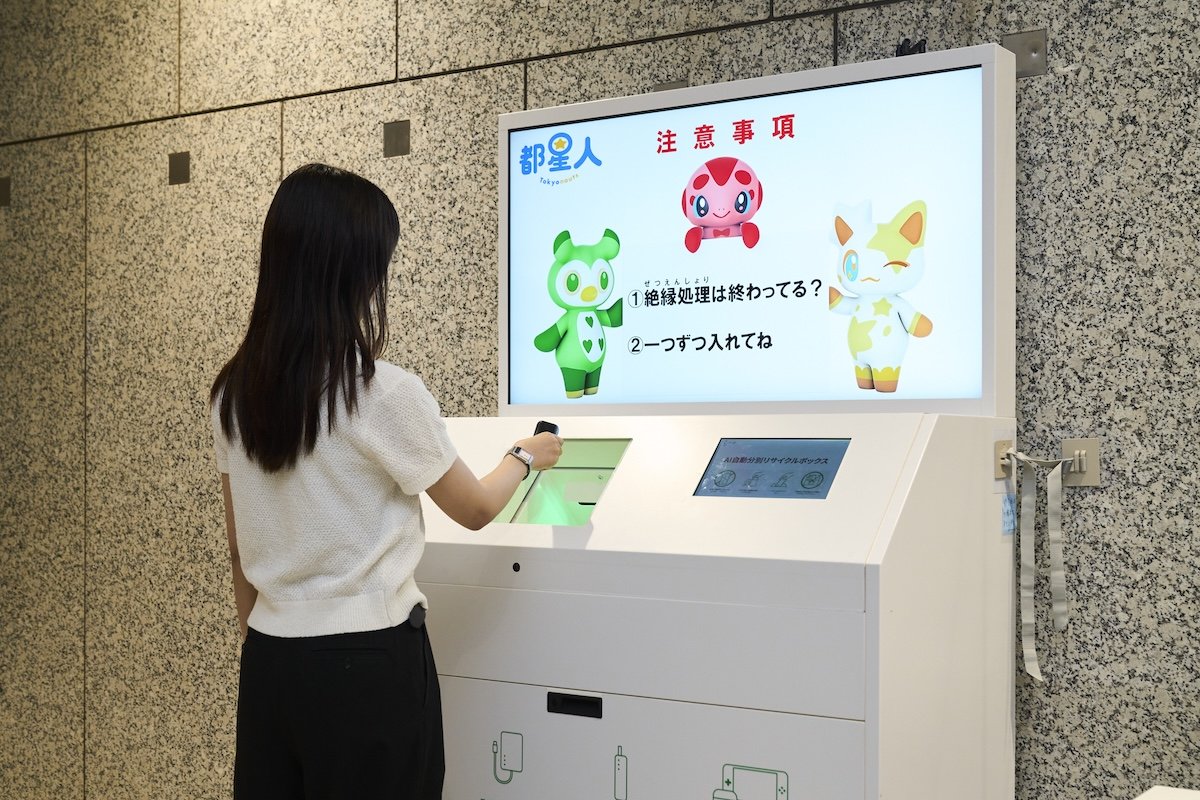
On June 26, 2026, the TMG announced a new initiative encouraging residents to recycle their unused devices and unearth the resources in the Tokyo Mine sitting in their homes.
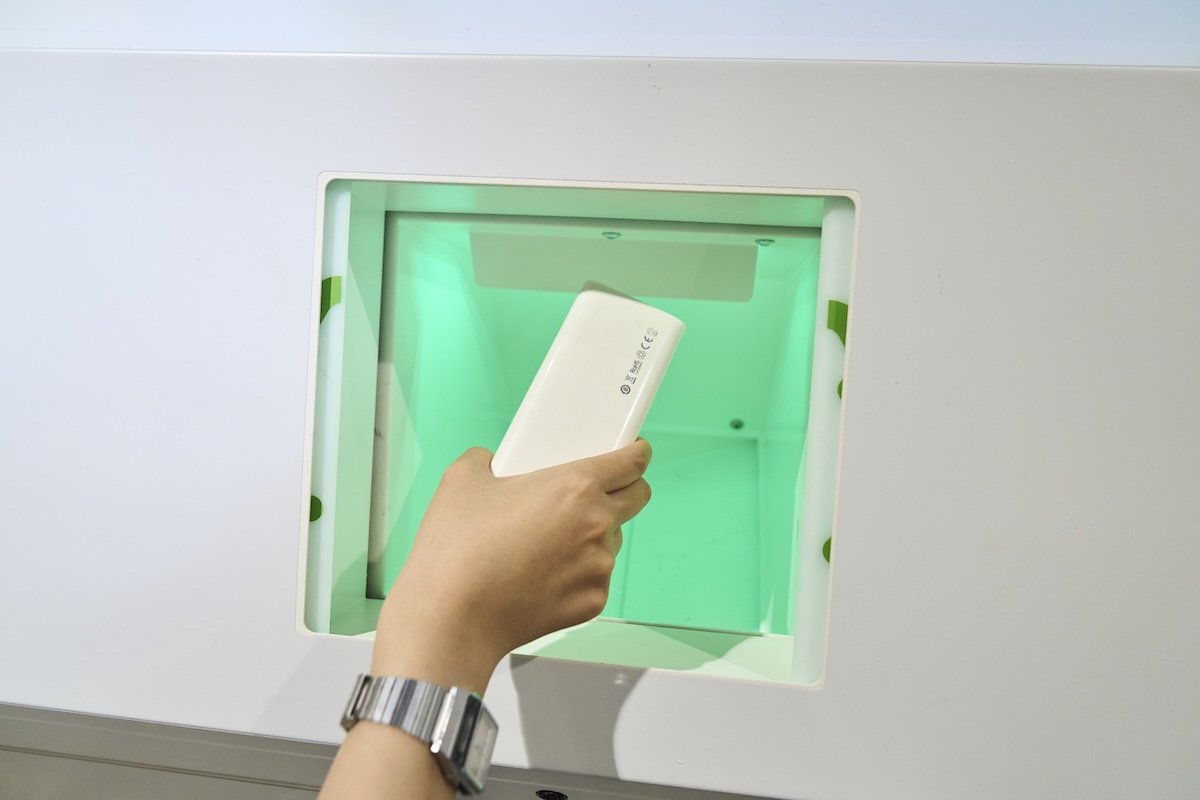
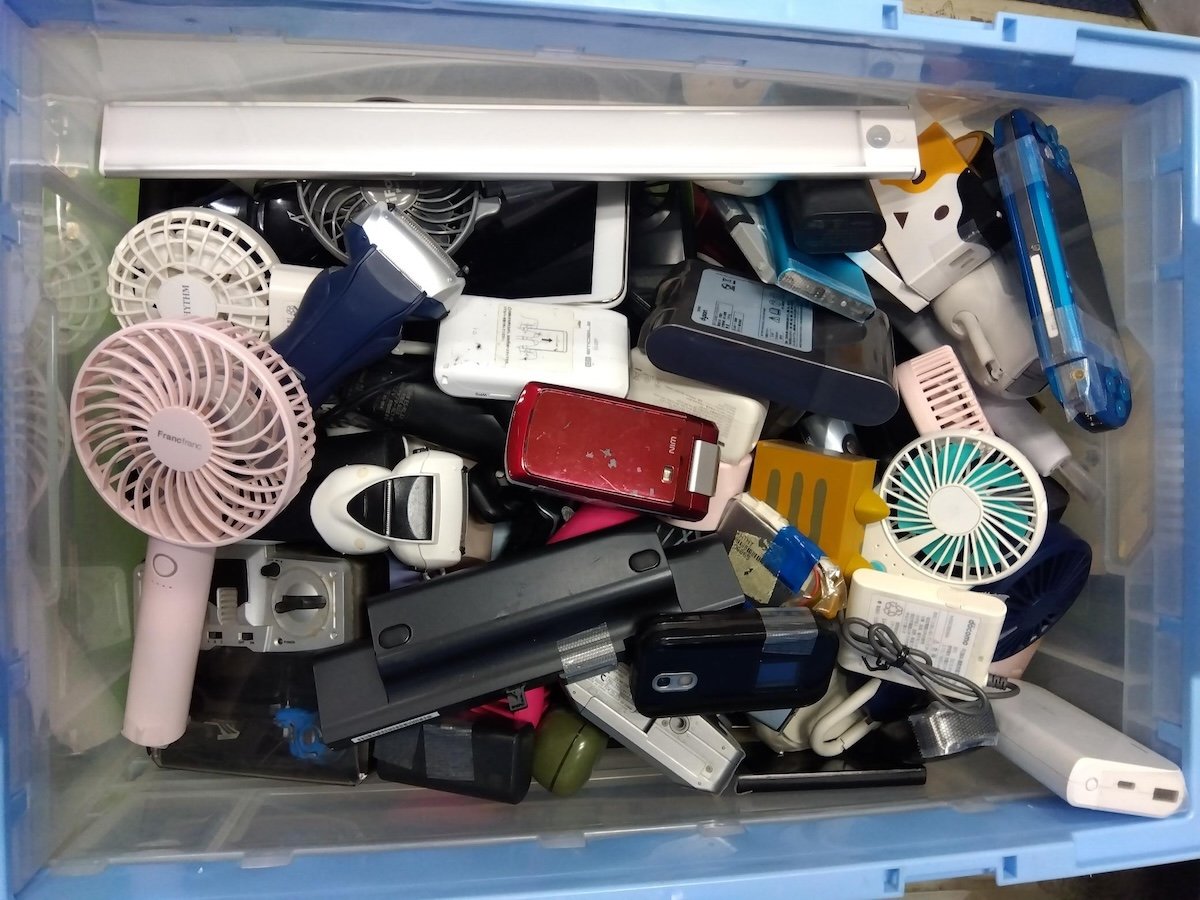
Developed by the Polish firm Bin-e and deployed in Japan by Forcetec, the Bin-e machine functions as a collection point that automatically sorts small electronic devices (including smartphones, flip phones, and e-cigarettes) into separate containers. These are then picked up and taken to recycling facilities for processing. The machine is also the first project under the TMG Startup Strategy Promotion Headquarters' Rapid-Response Public-Private Collaboration Boost-Up Program, which fast-tracks proven startup technology into city services. Smart recycling technology like this makes it easier to dispose of small electronic devices responsibly, which is better for the environment, the economy, and public safety.
Encouraging Tokyo Residents to Participate
From June 26 to September 30, 2026, Bin-e was available to anyone visiting the Tokyo Metropolitan Government Building. Visitors could freely bring their items to the machine, placing them one by one into its reception chamber and watching the display screen light up with Tokyo's colorful Tokyonauts. These characters are the TMG's AI-powered communications avatars, designed by Nishida Atsuko, who worked on many Pokémon, including Pikachu. The TMG and its private-sector partners both ask residents to fully drain devices' batteries and cover the terminals with tape before disposal, a precaution that prevents short circuits and fires during collection.
In about 3 months after its installation, the machine drew roughly 6,600 visitors and collected more than 16,000 items. A survey of participants found that nearly half did not know how to dispose of their old devices, and many said their own municipality offered no clear disposal method at all, suggesting a broad, unmet demand for accessible recycling options across Tokyo. The results also showed that letting people know where and how to recycle their devices encourages them to actually bring them in.
As an added incentive, Tokyo residents received a one-time reward of 200 Tokyo Points for using the machine. These points are accrued using the Tokyo App, which can be used to receive discounted tickets to specific Tokyo facilities and events. To alleviate concerns about parting with older phones containing cherished memories, the TMG partnered with KDDI to host events over a total of six days, where participants could reboot their old phones that no longer powered on and check the data stored on them.
Moving Toward a Circular Economy
As the drive toward a more sustainable future continues, the TMG is searching for new, innovative ways to accelerate the transition toward a circular economy. The government's efforts to support and incorporate innovative new technologies developed by startups like Bin-e through public-private partnerships are a major aspect of this endeavor. More efficient technology leads to more effective recycling of key materials. Certified recyclers disassemble collected devices by hand, resulting in approximately 99.8 percent of each device recovered as usable material, including gold, silver, copper, and rare metals destined for new batteries.
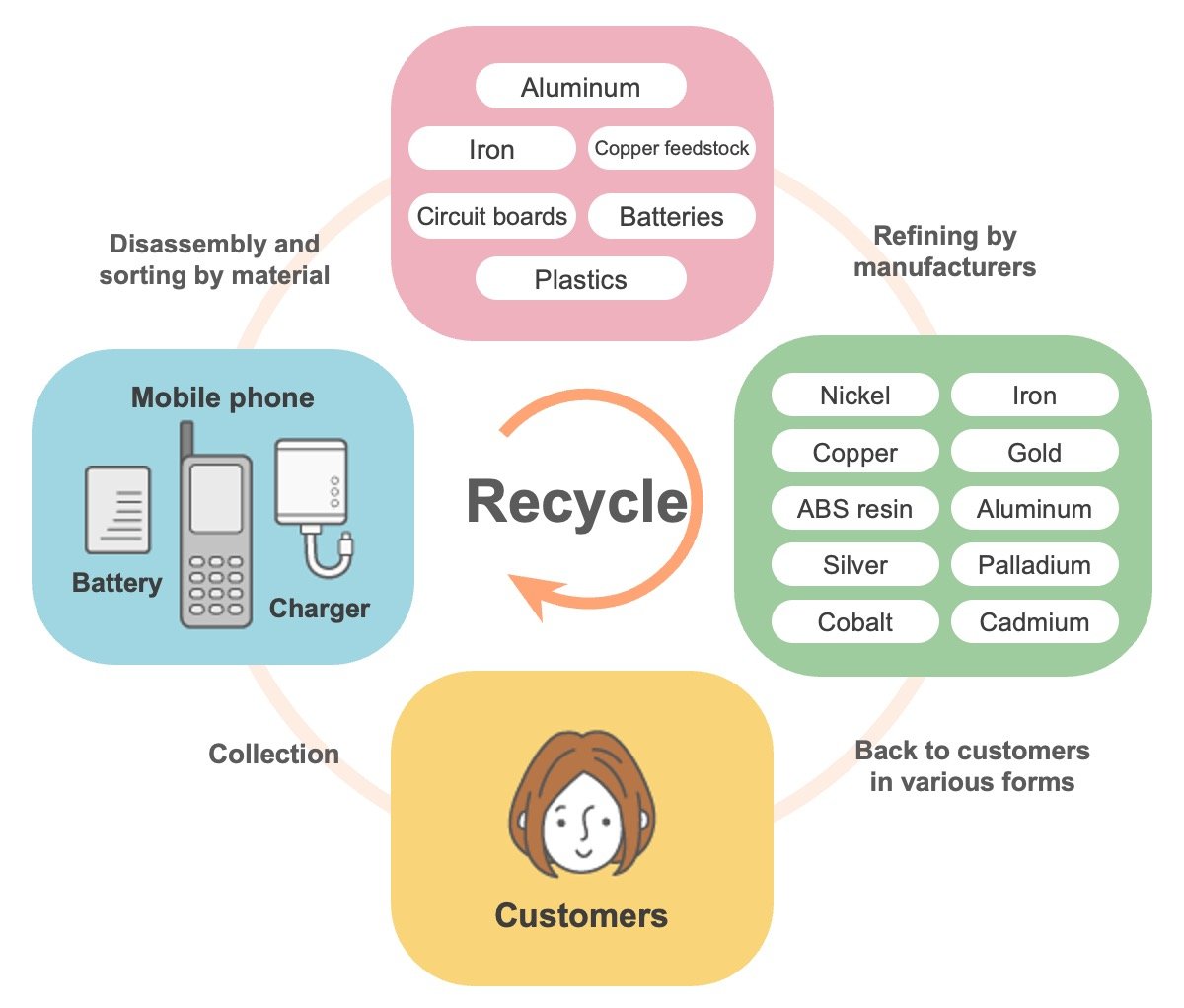
That said, the most important factor is the commitment of Tokyo's people to a more circular future. In such a huge city, the actions of an individual might seem insignificant, but when millions of residents decide to follow suit—it is a game changer. With an estimated 300 million unused phones still sitting in households nationwide, against only about 150 million collected to date, the potential for residents to begin to close that gap is enormous. Every electronic device disposed of properly is a contribution to the resources that will provide for future generations of residents.
Photos by Fujishima Ryo