







Fostering Connection and Community on the Sumida River


This audio is generated by AI, so pronunciation and expressions may not be fully accurate. The narration is only in English.
Floating the Idea for a Riverside Market
Following the relaxation of rules pertaining to riverside spaces in 2011, the Tokyo Metropolitan Government (TMG) has been promoting the active use of such areas, including the Sumida River Terrace, which now extends from upstream to downstream as a continuous waterfront promenade along both banks of the river, passing through 7 cities in Tokyo.
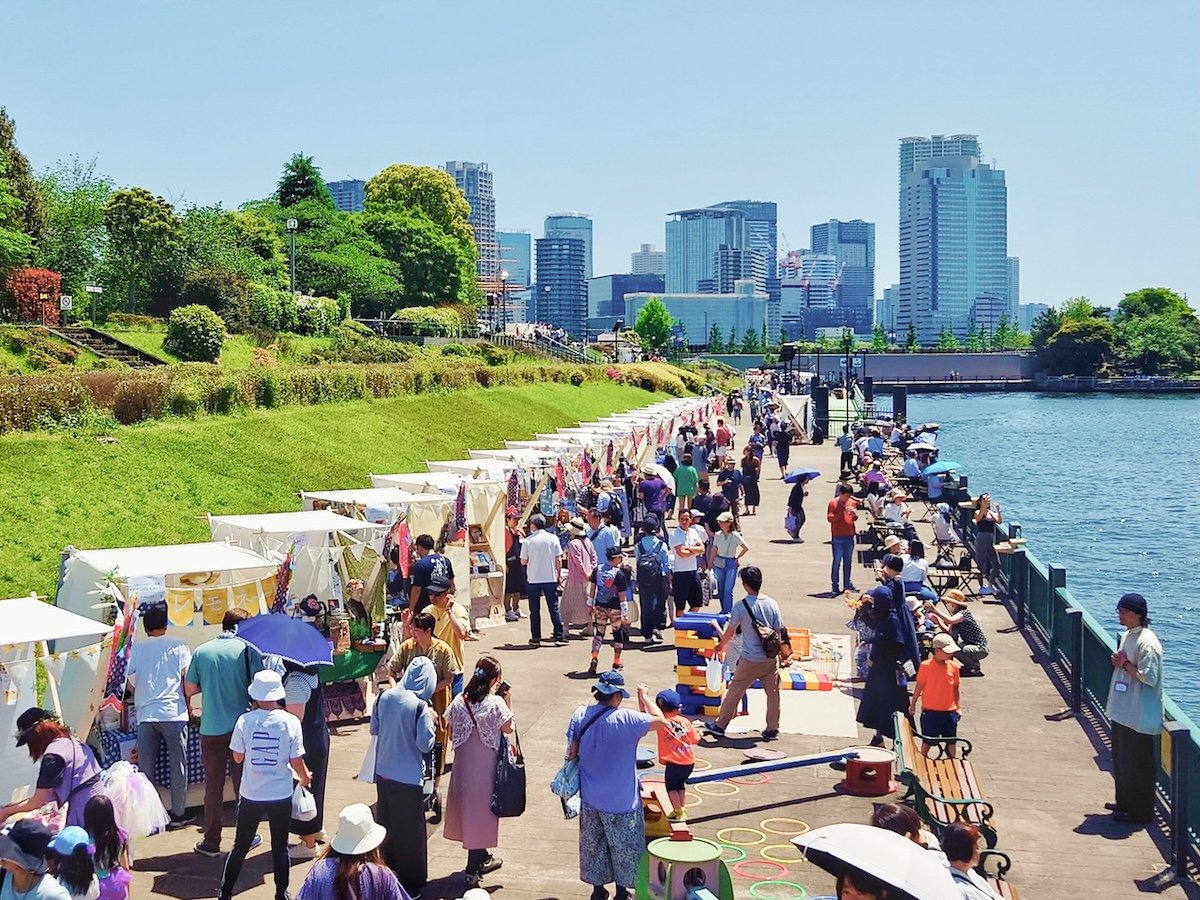
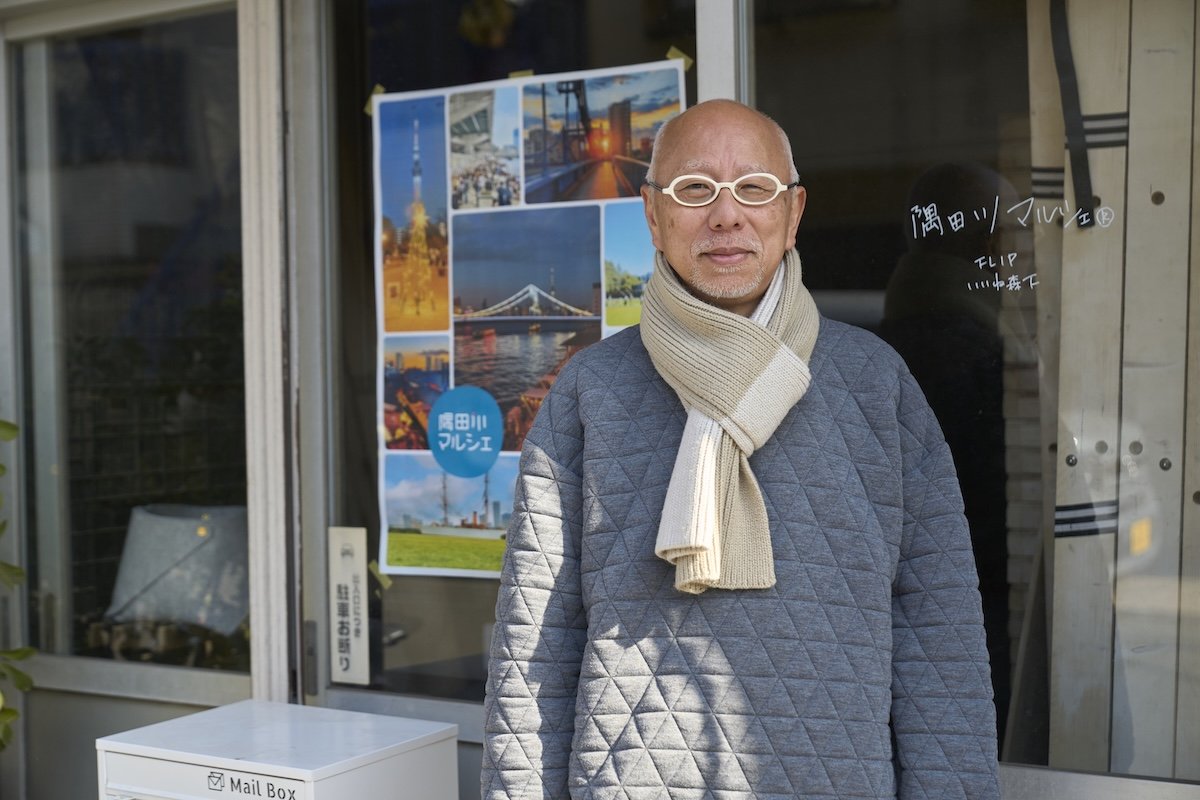
Among the initiatives is the Sumidagawa Marche, an open-air market held at various locations throughout the year, offering handmade crafts, food and drinks in a relaxed setting. The market was instigated by Iwata Masayoshi of the Sumidagawa Marche Planning Committee, based in Fukagawa in Koto City.
Iwata was born in Koto City in 1964, the year of the first Tokyo Olympic Games, which he describes as a pivotal time in the river's renaissance. Pollution had become a problem during Japan's high-growth period of the late 1950s and 1960s, but preparation for the Games ushered in a systematic approach to waste management.
While Iwata has lived in Fukagawa since 2000, he was focused on his career as a web designer for many years. Then in 2017, encouraged by a local friend, Hino Chizuru, he drew on his professional skills to create a community website and found that his circle of acquaintances quickly expanded.
"I realized that by stepping into the community myself, I encountered wonderful people and opportunities. From then on, I became increasingly involved in activities connected to the neighborhood," Iwata recalls.
After seeing a Japanese TV show featuring a marché (the French word for "market"), he thought the concept could work well in Sumida River Terrace. Unlike Japan's traditional morning markets, which are typically associated with provincial areas, the marchés have more of an urban character. Finding a suitable location was challenging at first. Some local business associations and shopping streets opposed the idea, concerned it might interfere with their operations.
"I often went to the Sumida River Terrace, taking some coffee. Then it struck me: The river is beautiful, and people could come and enjoy it. We could hold a marché on the Sumida River Terrace!" Iwata says. The Sumidagawa Marche Executive Committee was established in 2019, with Iwata and Hino at the helm.
Bringing People Together by the River
At the time, very few regular events were being held along the river. As Iwata points out, the river once formed the center of people's lives, serving as the main transportation route and shaping the city around its banks. Modern-day Tokyo, however, is structured around train stations, leaving the river somewhat removed from everyday life. Iwata hopes to change this.
Around 10 marchés are now held annually along the Sumida River. Anybody is welcome to participate and the executive committee receives applications from vendors across Japan. Most are small operators hoping to grow their ventures or who do not yet have a physical shop. "When people test their ideas here, they may decide to open a store nearby if they feel the area is a good fit," Iwata notes.
Approximately 50 small portable stalls are used, designed by Iwata himself, down to the structure and setup method. After encountering issues with existing models, he refined the design and even took out a patent on it. Chairs and tables are set up so visitors can relax with a drink and food purchases beside the water, while donated picture books are used to set up a temporary "waterside library" for children at each marché.
Although the number of international visitors is still relatively low, their presence is noticeable during events held in Asakusa, home to popular tourist attractions such as Sensoji Temple. There have also been some non-Japanese among the vendors to date.
"We describe our activities as 'social marchés,' creating opportunities for communication. Selling is the primary objective at most markets, but for us, interaction is equally important," Iwata says.
Early on, an encounter with a local resident offered an important lesson. Iwata recalls meeting a woman who objected to plans to hold a marché in her neighborhood, as she had chosen the area for its quiet atmosphere. He asked her to withhold judgment until she experienced the marché, and afterwards she admitted that she had found the event "wonderful."
"That made me realize that many different people live along the terrace. For some, it is their lifelong home. We must be considerate of everyone when planning events or thinking about how the river should be used," he points out. "Using public space carries this responsibility."
Towards a Vibrant Future for the Sumida River
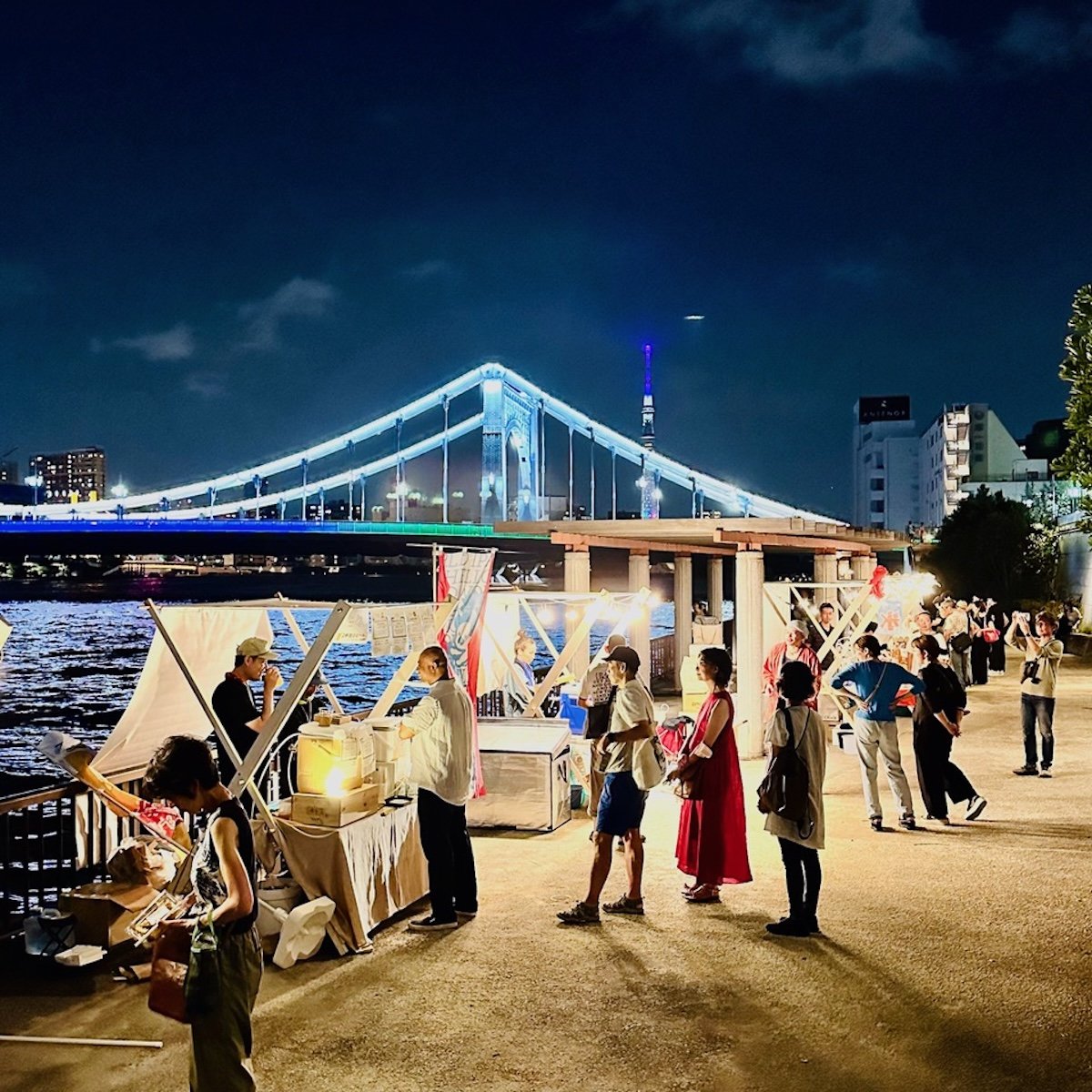
The Sumida River Terrace is part of the levee system, with embankments built parallel to the river to contain water flow and reduce flood risk. The terraces were later added to reinforce these structures, creating pedestrian walkways. Iwata notes that the TMG is making ongoing improvements, and the completion of connecting bridges along the terrace has resulted in an almost seamless walking route.
Iwata is also appreciative of the collective of volunteers who support the marché, affectionately known as the "Kofunetai" (Small Boat Brigade). "There are core members who are deeply involved, while others participate occasionally," he says. The important thing is that the system allows flexibility, so people are free to help out as their schedules allow.
Iwata has held frequent discussions with the TMG's promotion team about the terrace's long-term role. The theme of the Sumidagawa Marche is 'Slowly and comfortably—creating a place that connects the river, the city and the people.' "We hope this could become a kind of catchphrase for the entire Sumida River," he says.
Iwata is pleased that the Sumidagawa Marche has become firmly established, with organizers gaining a clearer understanding of what works on the terrace. Still, rather than depending on events, the ongoing goal is to establish the Sumida River Terrace as a place for people to gather and truly enjoy as part of daily life.
"The river is such an important part of Tokyo, as it's one of the only truly natural elements that remains. It's something everyone should be able to use: the ultimate 'common' space in Tokyo," he explains. "And I'd like that to carry on to our children's generation. So, we're not only thinking about the present generation—we're always trying to plan with the future in mind."
On a personal level, community initiatives through the marchés have offered a new direction for Iwata, who is now retired. "I feel I've found something truly meaningful for the second half of my life," he says with a smile.
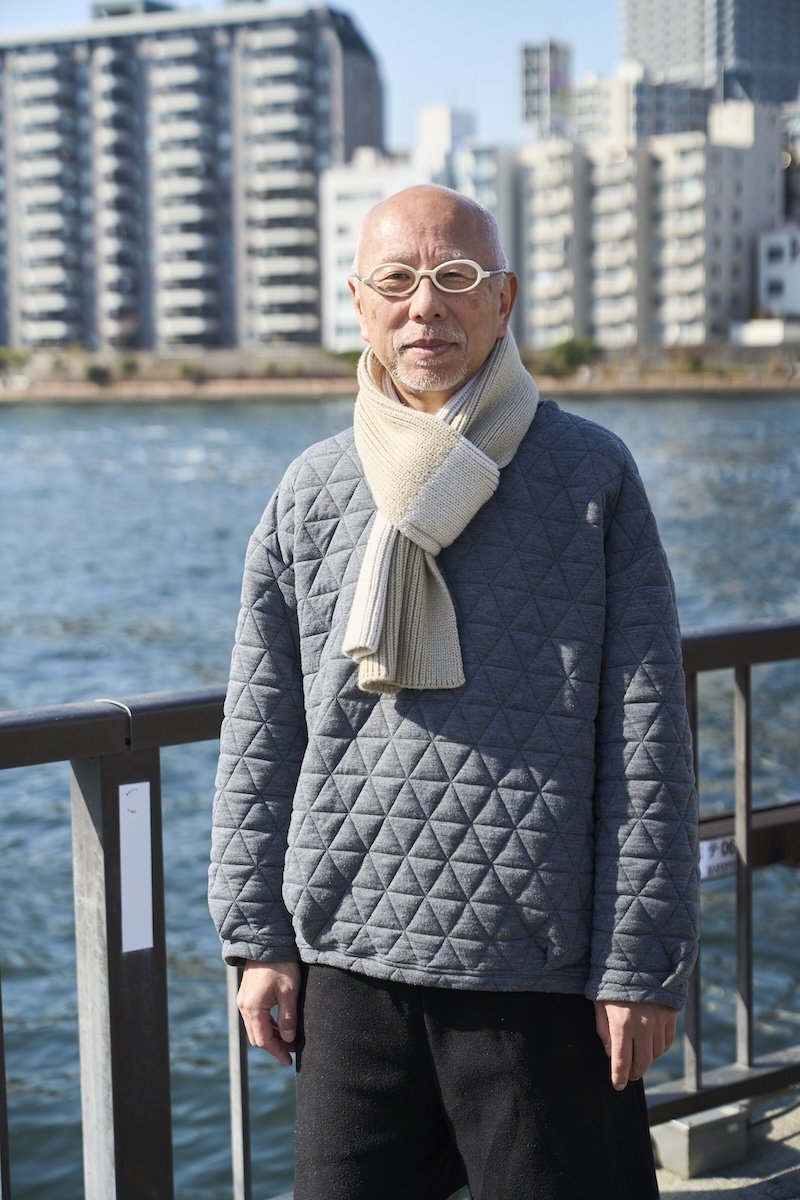
Iwata Masayoshi
Photos by Fujishima Ryo