







Reviving a Fading Tradition: Tokyo Matsuya's Challenge to Connect to Edo Karakami
"Edo Karakami" is a traditional Japanese art paper used for Fusuma (sliding doors) and wallpaper, which has adorned the merchant culture since the Edo period (1603-1868). Tokyo Matsuya is a long-established Washi (Japanese paper) wholesaler and publishing house that has been in business for 330 years in Higashi Ueno.
The 18th generation, Rihei Ban, played a pivotal role in reviving Edo Karakami, which was lost due to the rise of machine-made Washi and machine-printed production in the post-war era. Furthermore, to solve the successor problem, he established his own workshop as a publisher. Together with craftsperson Takasugi, who manages the workshop, we will hear about the charm of "Edo Karakami" and their efforts for the future.


This audio is generated by AI, so pronunciation and expressions may not be fully accurate. The narration is only in English.
Techniques from the Heian Period Continue into Modern Times
―Please tell us about your company's history.
Ban: Tokyo Matsuya is a publishing house and wholesaler of Edo Karakami. We manufacture, sell, and wholesale Washi interior materials for Fusuma and wallpaper.
Founded in the 3rd year of Genroku in Edo (present-day Tokyo), this year marks our 336th anniversary. Due to numerous fires, very few records remain. Each time a disaster struck, we wrapped our treasures—our protected Buddha statue, past register, and memorial tablets—in a Furoshiki (wrapping cloth) and fled to Ueno Mountain. I am now the 18th generation according to these cherished artifacts.
Initially, the founder Ihei Matsuya began as a book planning and publishing company, which after three generations evolved into a paper shop. During this change, Ihei took on the name Rihei, and since then, the name "Rihei Matsuya" has been inherited through generations. This area is a temple town, so we have operated as a specialty store handling materials used by craftsmen for Shoji (sliding rice paper doors), Fusuma, and decorative fabrics for hanging scrolls, including Kinran & Donsu (金襴・緞子), Fusuma-bone (襖榾), Fuchi (椽), and Kazari Kanagu Hikite (錺金具引手).
―Please tell us about the history of Edo Karakami.
Ban: It dates back to the Heian period. The paper used (詠草料紙, "Eiso Ryoshi") was domestic Washi decorated to imitate the pattern papers brought over from the Northern Song dynasty. This beautiful paper was used by nobles to write Yamato poetry. Initially, it was used for partitions and folding screens in noble households, later its use transitioned to Fusuma.
Karakami that developed in Kyoto made its way to Edo in the early Edo period. Fires frequently occurred in Edo, a city of one million, leading to a high demand for fusuma, which allowed the Karakami industry to flourish. Historical records show that there were more than ten craftsmen at that time. Edo Karakami was stylish and favored by townspeople. Patterns featuring motifs such as sparrows and vegetation, which convey simplicity and a sense of the seasons, were cherished.
During the Meiji and Taisho periods, as the paper-making techniques improved, the Fusuma paper became larger, and the Edo Karakami woodblocks followed suit, allowing for larger and more generous patterns to be created.
―Can you tell us about the features of the techniques that have been cultivated over a long history?
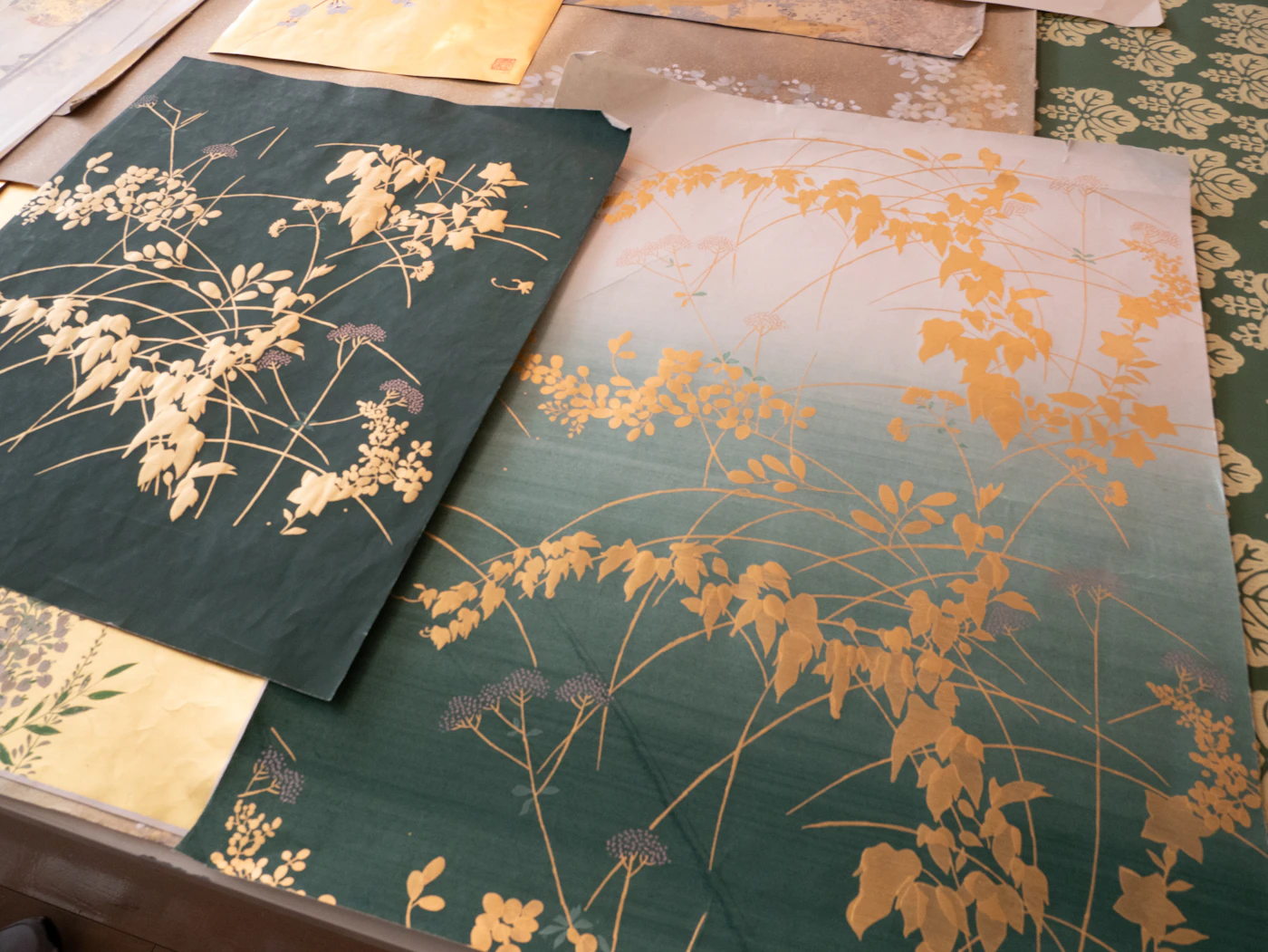
Ban: The characteristic of Edo Karakami is the combination of three techniques. Craftsmen called "Karakami-shi" (唐紙師), "Sunago-shi" (砂子師), and "Sarasa-shi" (更紗師) have developed their skills through division of labor.
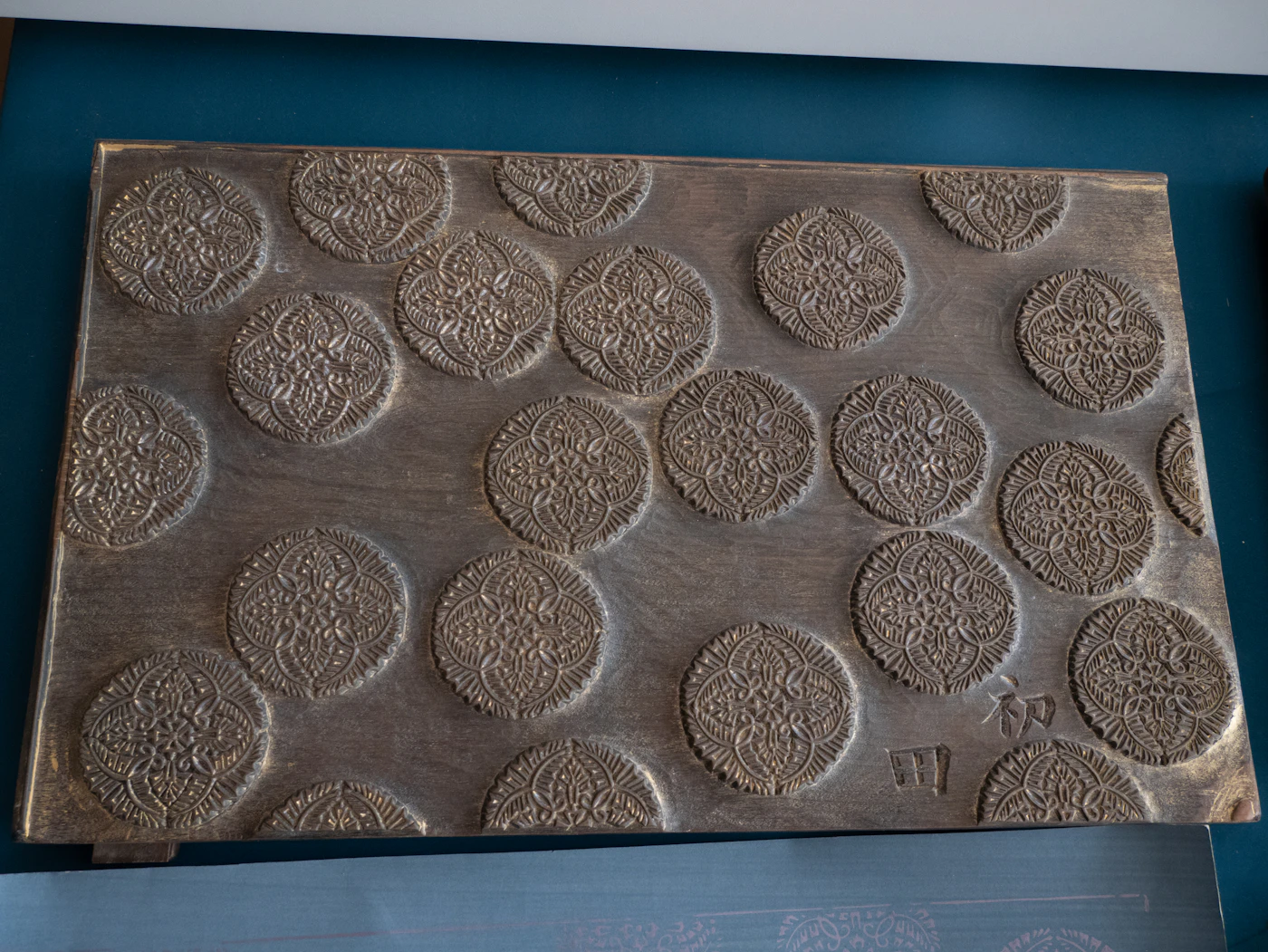
The technique of the "Karakami-shi" is the woodblock mica printing known as "Mokuhan Kiratezuri" (木版雲母手摺り), where patterns are printed using a wooden printing block. Paint made by mixing mineral pigments, mica, and seaweed "Funori" is transferred to the block using a sieve, and Washi is placed on top of it, then gently rubbed with both palms to transfer the pattern.
The technique of the "Sunago-shi" involves something called "Kingin Hakusunago Temaki" (金銀箔砂子手蒔), where gold and silver leaf is put into a bamboo tube and sprinkled onto the paper. This process of sprinkling and drying is repeated to create richly textured designs.
In the mid-Edo period, the "Sarasa-shi" emerged from the fabric-creating techniques. Patterns are printed onto Washi using mineral paint applied with a round brush, with Ise-style stencils (Shibu-gata) placed on top, allowing for multi-color printing using multiple stencils. Stencils were easier to carry away in case of fires compared to wooden printing blocks, leading to a prosperous business in Edo.
The "Pattern Book" that Revived Edo Patterning Was Lost During the Post-war Mass Production Era
―When you took over the family business, Edo Karakami was said to be in a difficult position due to changes in the times. Can you share about that period?
Ban: I was born as the second son of five siblings and grew up feeling like taking over the family shop was a given. Shortly after graduating from university, I joined the company alongside my older brother. My father was a kind-hearted person who was easily deceived, which contributed to my sense of urgency to take over the business early.
At that time, we were in the midst of rapid post-war economic growth. The introduction of machine papermaking and machine printing transformed the Fusuma paper industry. Even with craftsmen skilled in Edo Karakami techniques, they had no market to sell paper. At Tokyo Matsuya, the handling of Edo Karakami had ceased.
However, there were many beautiful pieces of Edo Karakami in the warehouse. I wondered why such beautiful paper wouldn't make it into the world. I decided to create a pattern book incorporating traditional patterns, believing that there would surely be customers who would choose from it when building new homes and applying paper to Fusuma or walls.
―How did you collect the patterns that had become extinct and compile them into a pattern book?
Ban: I visited each craftsman's workshop, rediscovering the obscured wooden blocks and stencils, and researched the patterns. It took quite a long time. Over about 30 years, we published a pattern book titled "彩" in 1992, which included 393 pieces of hand-made Washi and hand-printed Edo Karakami from various regions across the country, in celebration of our 300th anniversary.
Moreover, the year before, I formed the Edo Karakami Sogokai cooperative (江戸からかみ協同組合) with craftsmen who supported the pattern book. Thanks to these efforts, we were designated as a traditional craft of Tokyo in 1992, and in 1999, we were recognized as a national traditional craft.
Facing the Living Entities of Washi & Paints
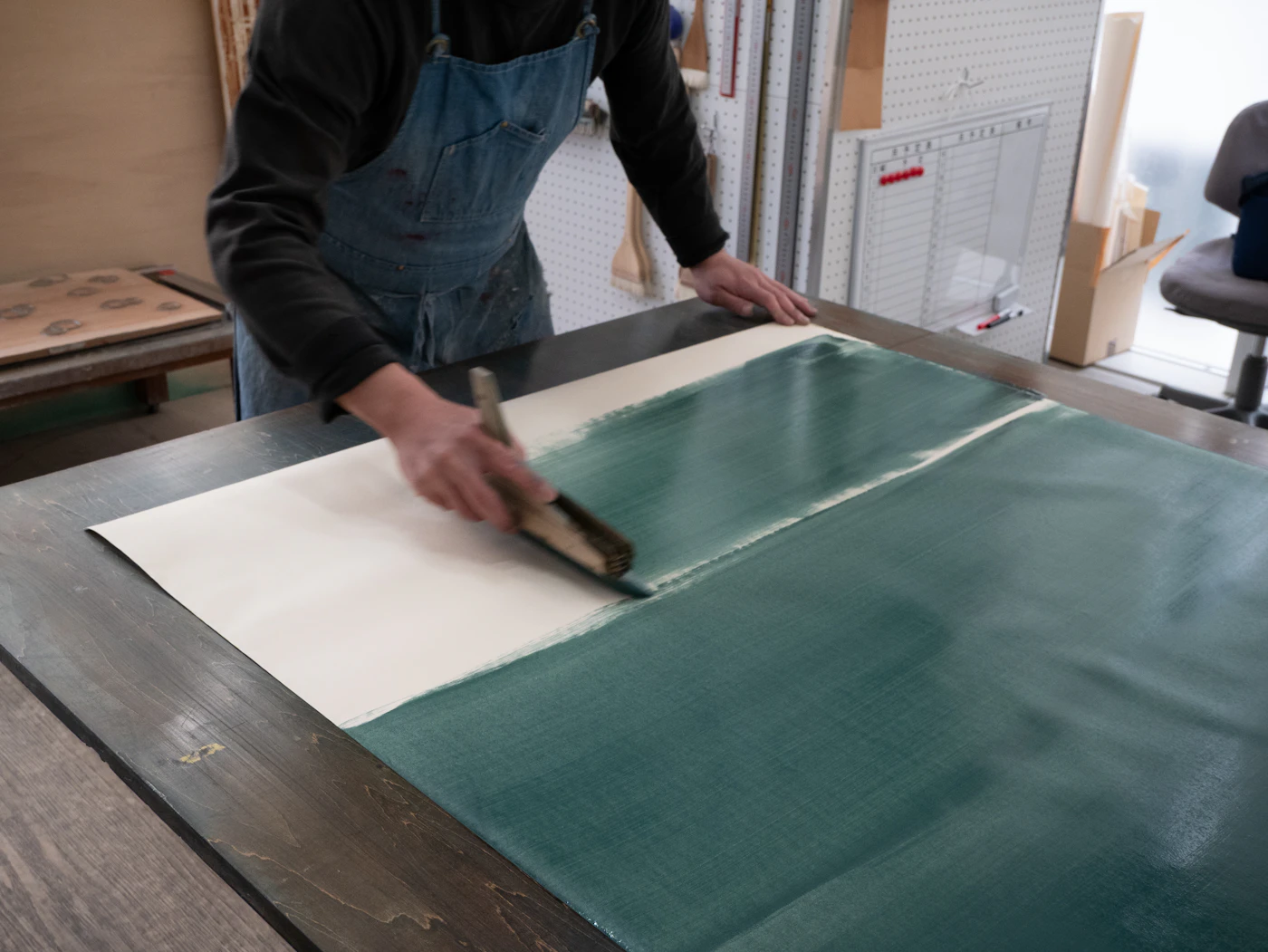
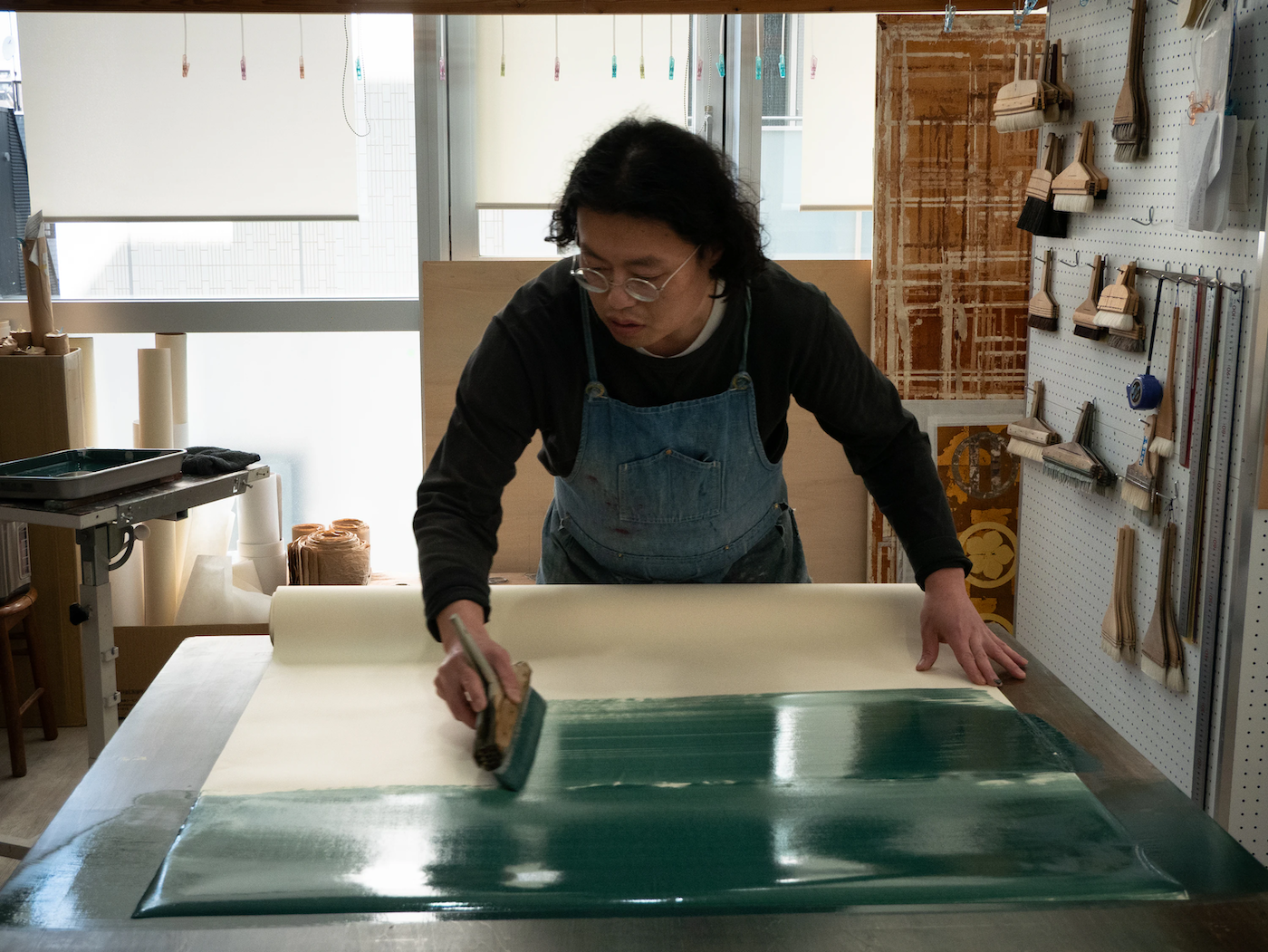
―Now, I would like to observe the techniques of "Hikizome" (引き染め) and "Mokuhan Tezuri" (木版手摺り) for uniform dyeing of Washi. Takasugi, please guide us.
Takasugi: First, I carefully moisten the back side of the paper. If only the front gets wet with paint, the paper can stretch and curl, so it's important to moisten the back to balance it. The conditions change with the environment, as summer dries faster and winter is dry, so it's essential to adjust accordingly. I roll the paper and let it rest before applying the thoroughly kneaded paint, made of mineral pigments and Funori, using a large brush all at once.
―The speed at which you move the brush is remarkable.
Takasugi: It's crucial to dye the entire surface before the paper dries, so speed is key. However, since Washi is soft and delicate, any mistake could cause wrinkles, so you need to concentrate and hold your breath while painting. The goal is to minimize brush strokes and dye each section evenly. I repeat the process of dyeing and drying to layer the colors.
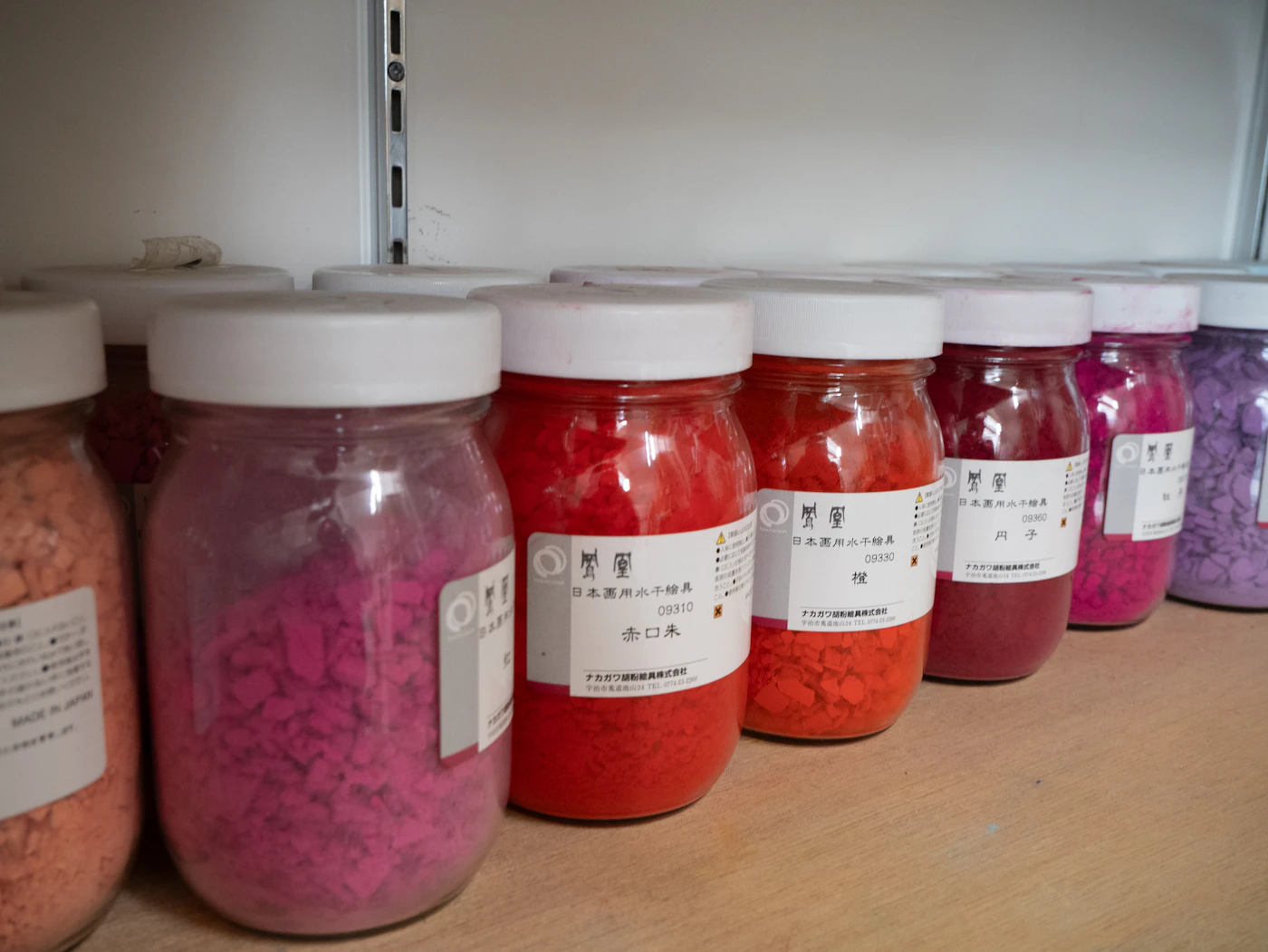
Paper affects the way water seeps in, its softness, and thickness. Furthermore, different colors of paint have their own unique characteristics, and blue, in particular, is challenging as it tends to leave grainy particles like sand, creating bold blue lines on the paper known as "Ao-ga Hashiru" (青が走る, literally "the blue runs"). We carefully adjust while observing the condition of the tools.
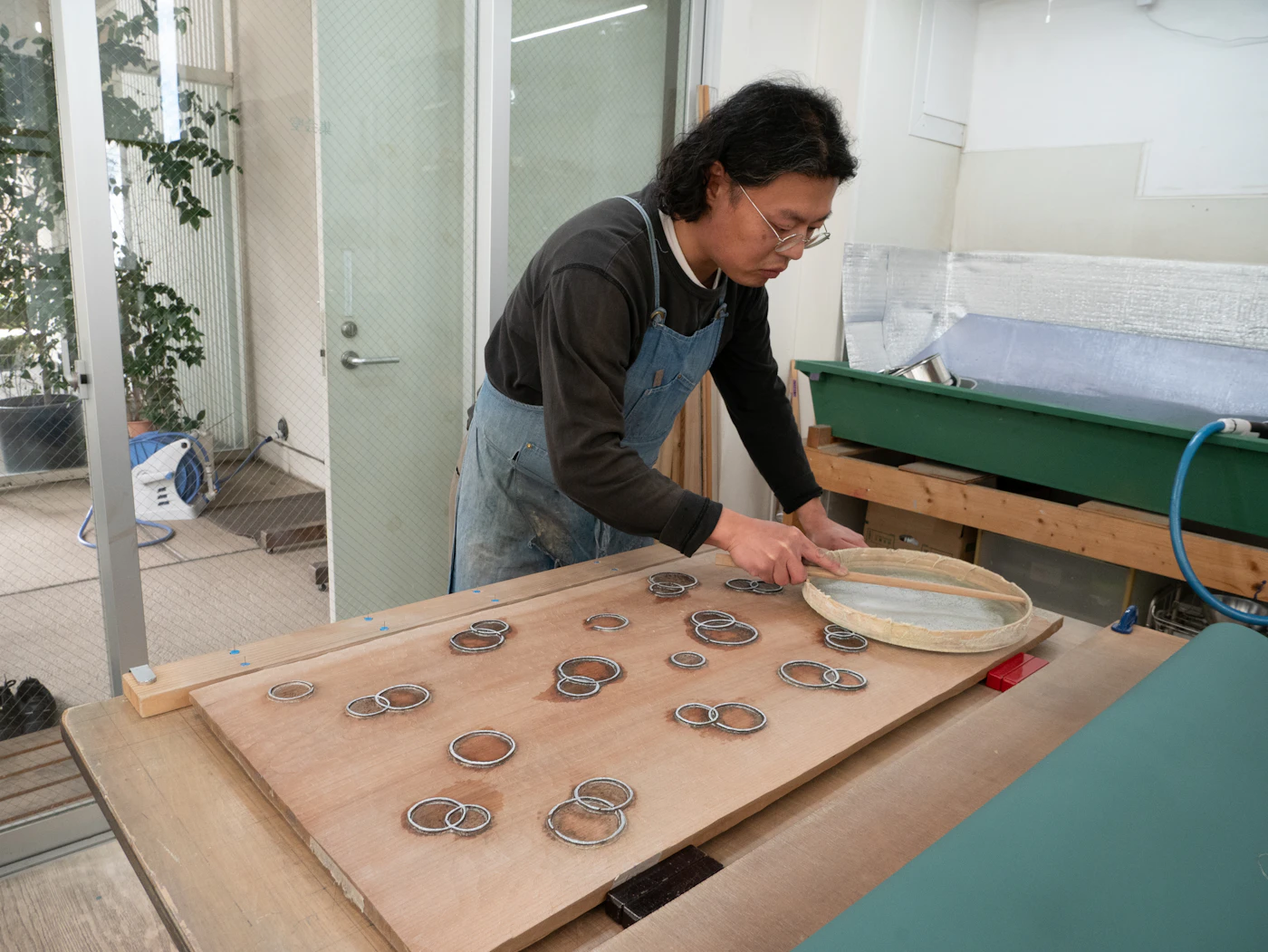
―We are printing patterns onto the prepared paper, correct?
Takasugi: Yes, we will imprint a pattern called "Wa-chigai" (輪違い). We mix the paint made from mica and Funori, transferring it onto the raised sections of the wooden printing block using a sieve. Then, we place the Washi paper and gently rub it with both palms to capture the pattern. Continuous patterns, such as the Ichimatsu pattern, must be perfectly aligned horizontally and vertically; any discrepancy in the paint's concentration or misalignment could affect the final outcome, making it quite delicate. The hands-on printing technique adds a gentle richness to the patterns of Edo Karakami.
Returning to Their Roots Repeatedly to Pass on Skills to the Next Generation
―Please tell us about Tokyo Matsuya's initiatives to train the next generation of artisans.
Ban: Edo Karakami has historically been produced through a division of labor system. As a publisher, Tokyo Matsuya provided artisans with Washi paper and inspected the printed sheets for wholesale distribution. However, due to the aging workforce and succession issues, more workshops have been closing or retiring recently. While there were about ten workshops when we established the cooperative, there are now only three or four. We realized that without creating our own workshop, we couldn't ensure the future of Edo Karakami.
Initially, we began in a part of our distribution warehouse as an experimental lab, but as demand for Edo Karakami increased, we gradually expanded our production and set up a workshop on the fourth floor of our store. Led by Takasugi, six young artisans are currently being nurtured. By producing in-house, we are able to maintain a stable quality.
―You are also working on product development to convey the charm of Edo Karakami through items like stationery featuring its patterns.
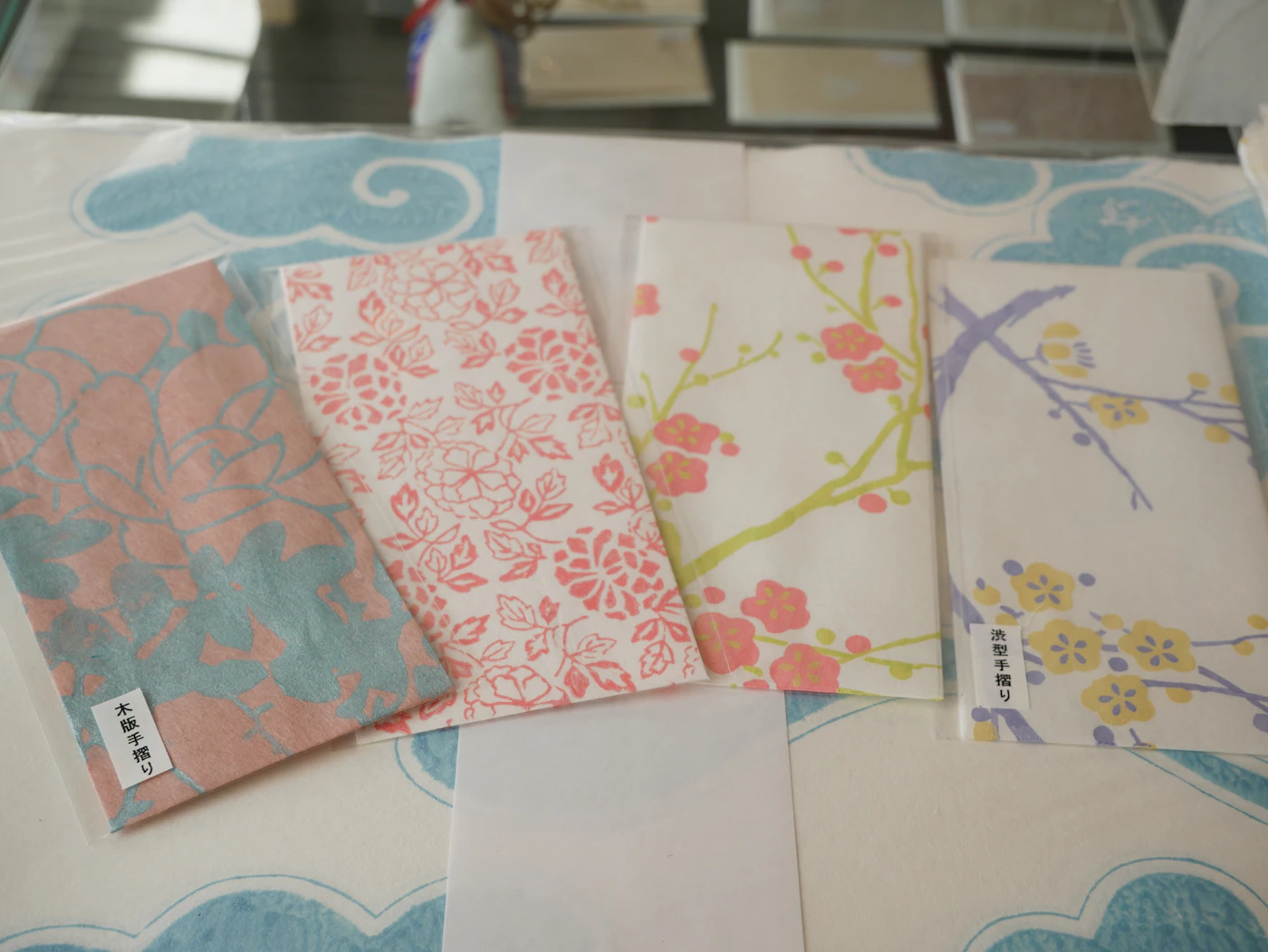
Ban: The patterns of Edo Karakami not only hold traditional value but also feature excellent designs that resonate with modern sensibilities. To widely promote this appeal, our young employees are developing products like paper boxes, celebration envelopes, small gift envelopes, and memo pads that are easy to incorporate into daily life.
To highlight the patterns, we choose vivid colors for the paper goods. Many young people are embracing Edo Karakami fresh and new, leading to increased availability in museum shops and department stores.
In addition, on the upper floors of our building, we have created a residential complex adorned with Edo Karakami for sliding doors and Shoji screens that is always fully booked. This has expanded the usage of Edo Karakami in local residences and apartment entrances, small shops in the downtown area, inns, and temples.
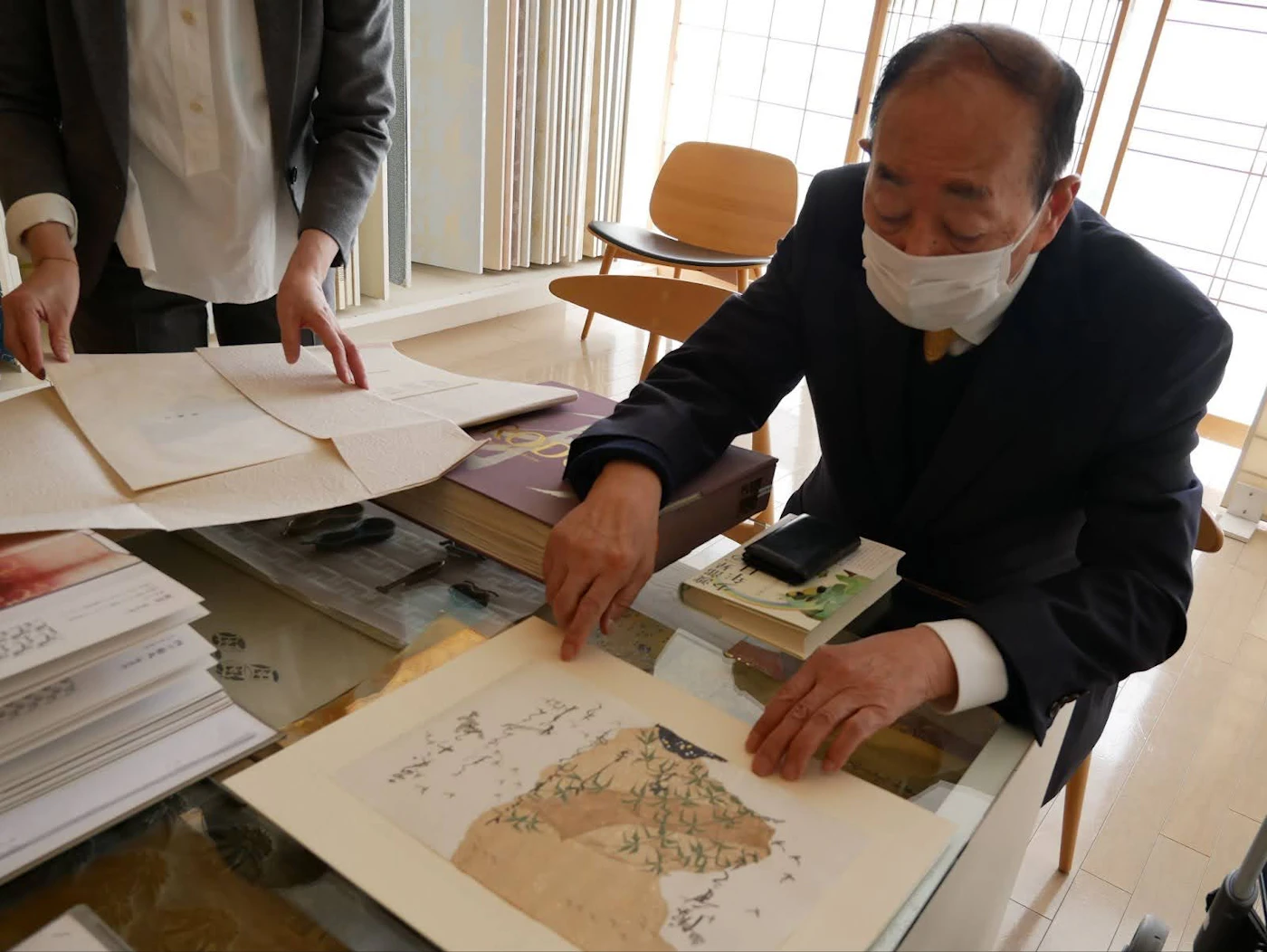
Edo Karakami is not the main subject, but rather a complementary element that enhances the beauty of the surrounding space and its inhabitants. Additionally, the moisture absorption property of Washi paper greatly benefits human health. It is chosen by customers who wish to create a pleasant environment.
―What do you value in order to convey the charm of Edo Karakami? Please share your future aspirations or challenges.
Ban: Our work has roots. Edo Karakami originated as paper used for writing waka poetry, and it spread to beautify rooms. If we neglect to return to this origin, we may inadvertently shift into mere self-expression. Therefore, it is crucial to revisit our roots repeatedly.
In the future, I would like to undertake the revival of patterns from the "Koetsu Utaibon" published during the Momoyama to Edo periods. This book, compiled by Hon'ami Koetsu, is abundant in Karakami patterns. By returning to what has long been established, we can consider new developments on that foundation. I believe the true beauty and value will surely be communicated.
Left: Rihei Ban, Right: Yuya Takasugi
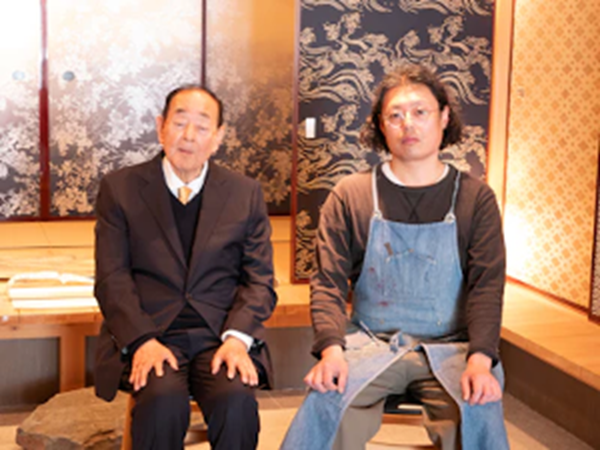
Rihei Ban
Born in 1940. 18th generation of Tokyo Matsuya. He has been challenging the revival of traditional hand-made washi and Edo Karakami, publishing a pattern book titled "彩" in 1992 containing 393 items. He is committed to the preservation and succession of Edo Karakami techniques.
Yuya Takasugi
Born in 1980. An Edo Karakami artisan. He joined Tokyo Matsuya at the age of 24. After learning skills as a craftsman at the Tokyo Hyougu Naiso Vocational School (東京表具内装職業訓練校), he now serves as the supervisor of their workshop.
Artisan by ZOZO NEXT
Artisan by ZOZO NEXT is a project guided by the theme of "connecting tradition with cutting-edge innovation to create new value." It engages with the techniques and philosophy of Japanese craftspeople across fields where craftsmanship is deeply rooted—such as crafts, brewing, and dyeing and weaving—encountering both the heritage and the innovation cultivated on site.Moving beyond observation, the project works alongside artisans as active participants, creating together and exploring unprecedented forms by combining craft with technology. From the intersection of tradition and the frontier, Artisan seeks to open new avenues for Japanese craftsmanship in Japan and abroad.