






Riverside Shop in Kuramae Spreads Joy of Writing, Love of Craftsmanship


This audio is generated by AI, so pronunciation and expressions may not be fully accurate. The narration is only in English.
Journey from Gunma to Tokyo's Kuramae District
Kuramae, an area whose deep history of traditional manufacturing combined with modern-day boutique shops has earned it comparisons with Brooklyn, New York, is one of Tokyo's most intriguing neighborhoods. Clustered with modern coffee roasteries and chocolatiers elbowing up against craftsmanship ateliers, and dotted with longstanding temples and shrines, the area is ideal to spend an afternoon shopping or just wandering.
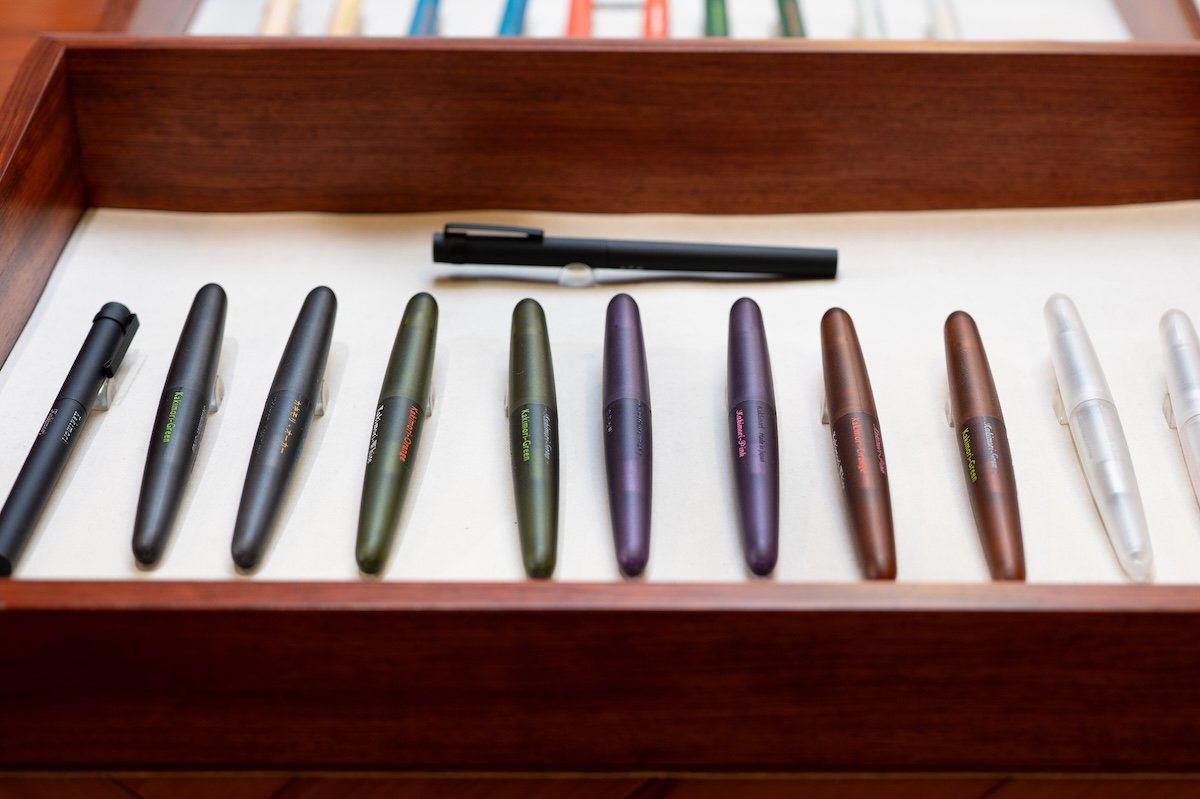
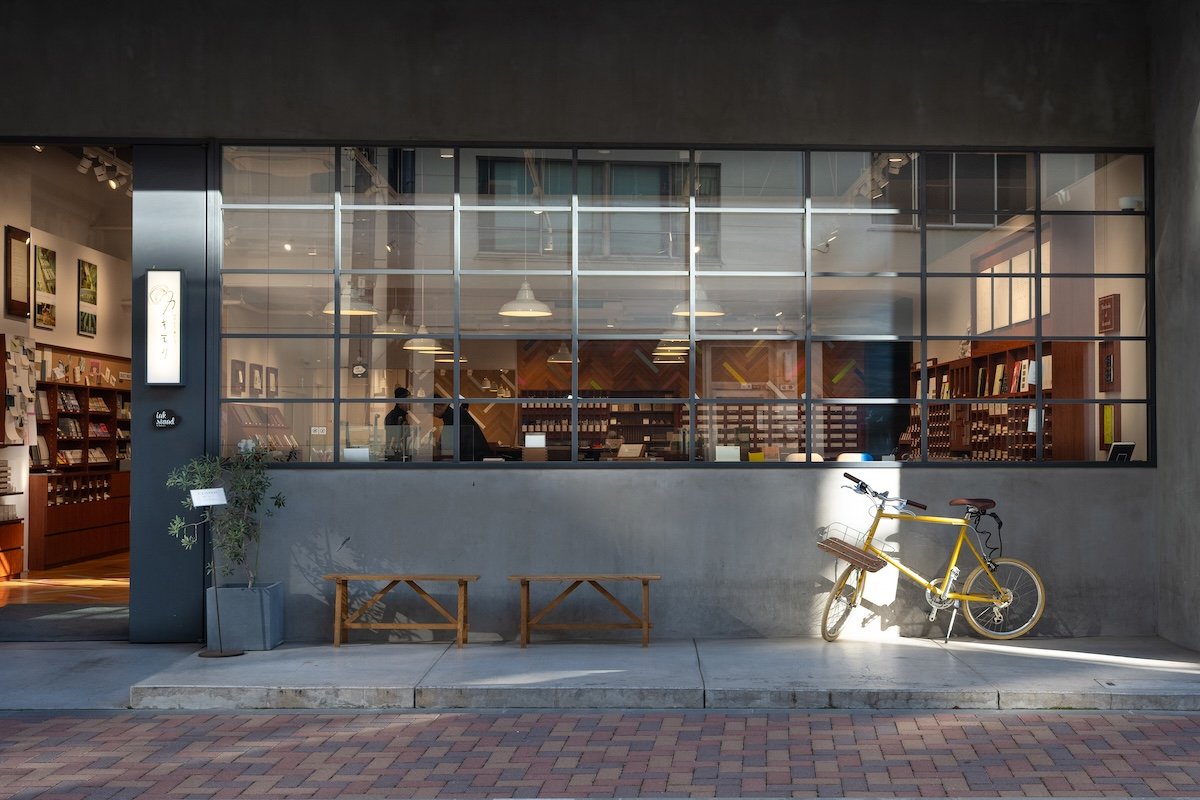
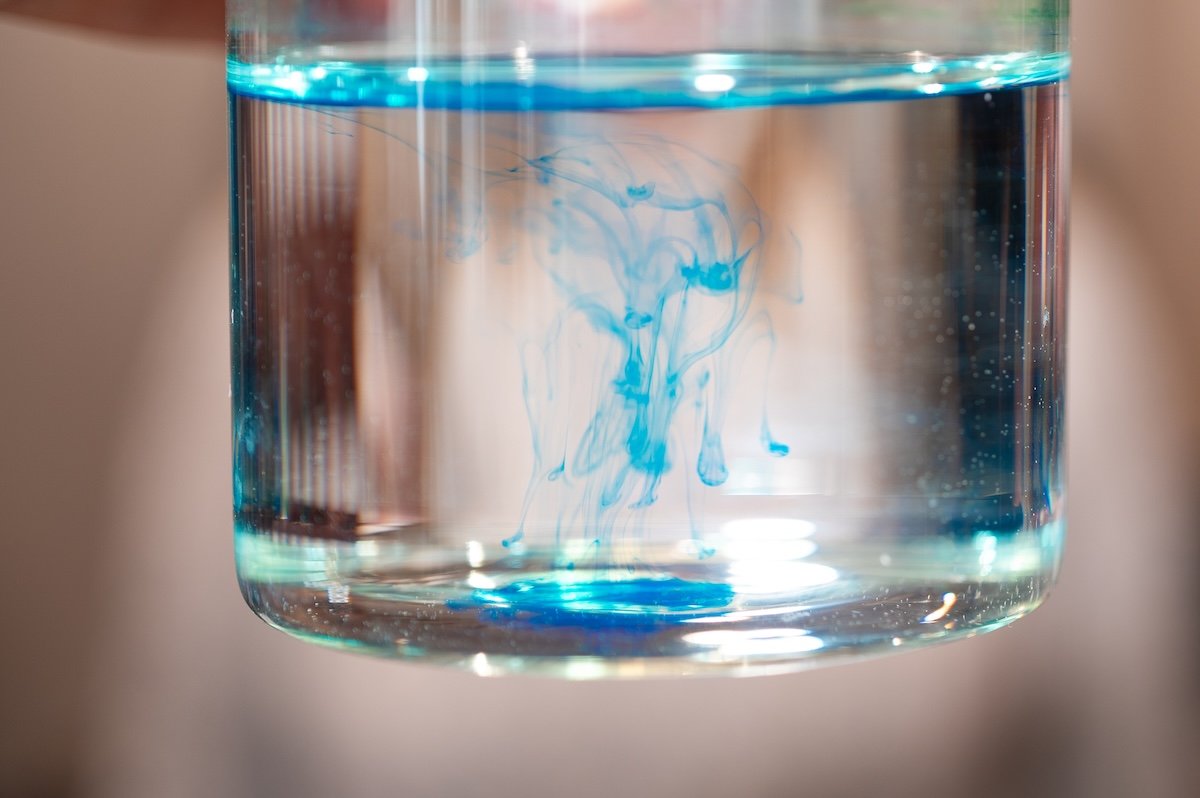
Kakimori, an atmospheric shop fronted by attractive tall glass windows affixed with grid-like steel patterning, is a must-visit for writing enthusiasts. The shop's interior of warm wood shelving and muted lighting are visible from the street, prompting passers-by to stop in and browse. Even non-writing aficionados may very well find their interest in the craft piqued by its collection of unique offerings, which include a multi-toned array of stationery, ink bottles, dip pens, notebooks, and paper-related items.
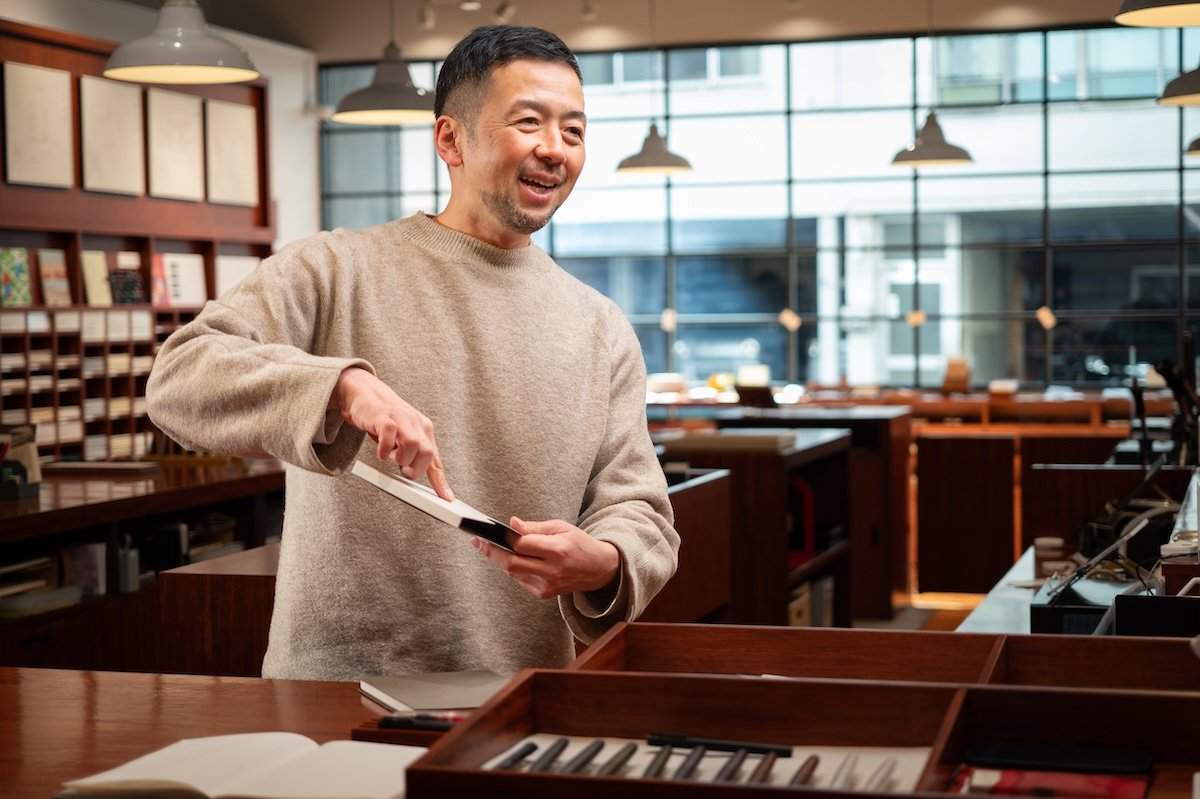
Hirose Takuma explains that the store's origins lie in Takasaki, Gunma Prefecture, located some 100 kilometers northwest of Tokyo, where he grew up. His grandfather opened a stationery shop there, amid deep post-war impoverishment, as a place for people to buy pens. The store blossomed under his grandfather's leadership, although his father did not share the same enthusiasm toward the trade, he says. And neither did Hirose himself at first, in fact opting instead to work in another field. "It's a common pattern seen here with family businesses," he recounts.
Hirose began working in 2006 at a B2B firm his father had bought in Tokyo's Jimbocho district, which sold office supplies to companies. Eventually seeking change, Hirose launched Kakimori in 2010 to build upon the roots of the family business by focusing on paper products. He also went on to expand upon the concept of handwriting—something he felt was important amid society's increasingly heavy digitalization.
"How wonderful would it be if everyone had their own unique notebook and pen to carry around?" Hirose says, recalling his initial inspiration.
Finding Local Connections Through Monozukuri
Hirose set about realizing his vision by first relocating his shop to Kuramae, due to the neighborhood's inexpensive rent costs combined with a sense of geographical familiarity.
"There were many shops on the west side of Tokyo that fit my business concept, but coming from Gunma, I felt that the gateway to Tokyo was the Ueno neighborhood and its environs," he explains. "It was actually much easier for me to imagine establishing the company in this east-side shitamachi (old town) area."
"I was also attracted to Kuramae's good access, and to its paper factories. Since there are also so many craftspeople here, I thought it would be interesting to look for customers together," he continues, noting Kuramae's historical atmosphere, which stands in contrast to the more hyper-modernized areas of the metropolis.
Hirose explains that despite arriving to Kuramae knowing absolutely no one and having no connections, he found the neighborhood to be extremely welcoming.
"Almost all shop owners here relocated from somewhere else," he explains, "and we found community through our shared connection to monozukuri (craftsmanship)."
Expanding on the open-hearted nature of people in the neighborhood, and in the metropolis in general, he adds: "Whereas people will judge and talk about you in countryside areas if you don't participate in shared events, here in Tokyo it's not a problem to opt out if you prefer. There is a real sense of freedom here." For him, that warmth and freedom are part of what makes Tokyo special.
Growing a Company Through the Love of Writing
"The joy of writing," which is the shop's core concept, is found throughout the entire company—beginning with the vibrant mélange of products within the physical store itself. This spirit also infuses the shop's bilingual (Japanese-English) website, which features handwriting alongside traditional digital fonts, along with rich descriptions and extensive storytelling that brings its products to life.
Kakimori is also committed to the precepts of sustainability, offering innovative programs to tackle the waste problem such as providing paper refills for its custom notebooks, as well as a Hagire Project to upcycle leather scraps into new products, and repurposing used paper into its paper bags.
While the shop now sometimes has a line of customers snaking out the door, Hirose says that during the early days, he was not at all certain that his concept would take off.
"During our first year of business, we barely had any customers at all," he recalls. This changed, he says, through the gradually increasing coverage by domestic media, which was followed by features in international publications such as Time Out and Monocle starting in around 2015.
Originally housed in a smaller space near Kuramae Station, Hirose says that the shop moved to its present location in 2017, after which time it experienced a so-called "boom" among the specific demographic of Japan's twentysomething women—to whom media bestowed the moniker bungu joshi (stationery girl).
"For several years, men found it quite difficult to come inside," he laughs, adding that the shop today sees customers of all ages and genders.
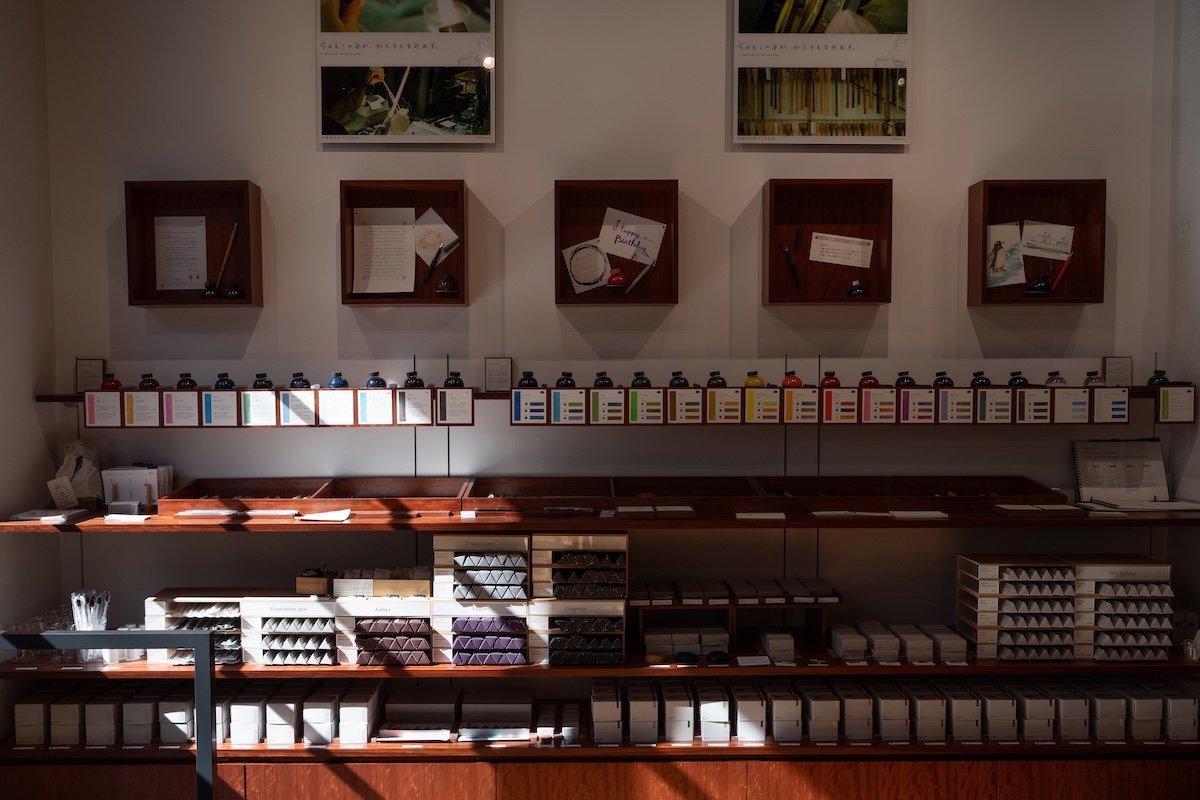
Hirose also explains that when the COVID-19 pandemic hit, the dwindling number of customers necessitated re-thinking the shop's entire business model. He began concentrating on bringing Japanese monozukuri to global customers—a shift that has seen success, he says, with Kakimori now selling to international companies in some 30 countries.
Nurturing Writers While Encouraging Community Exploration
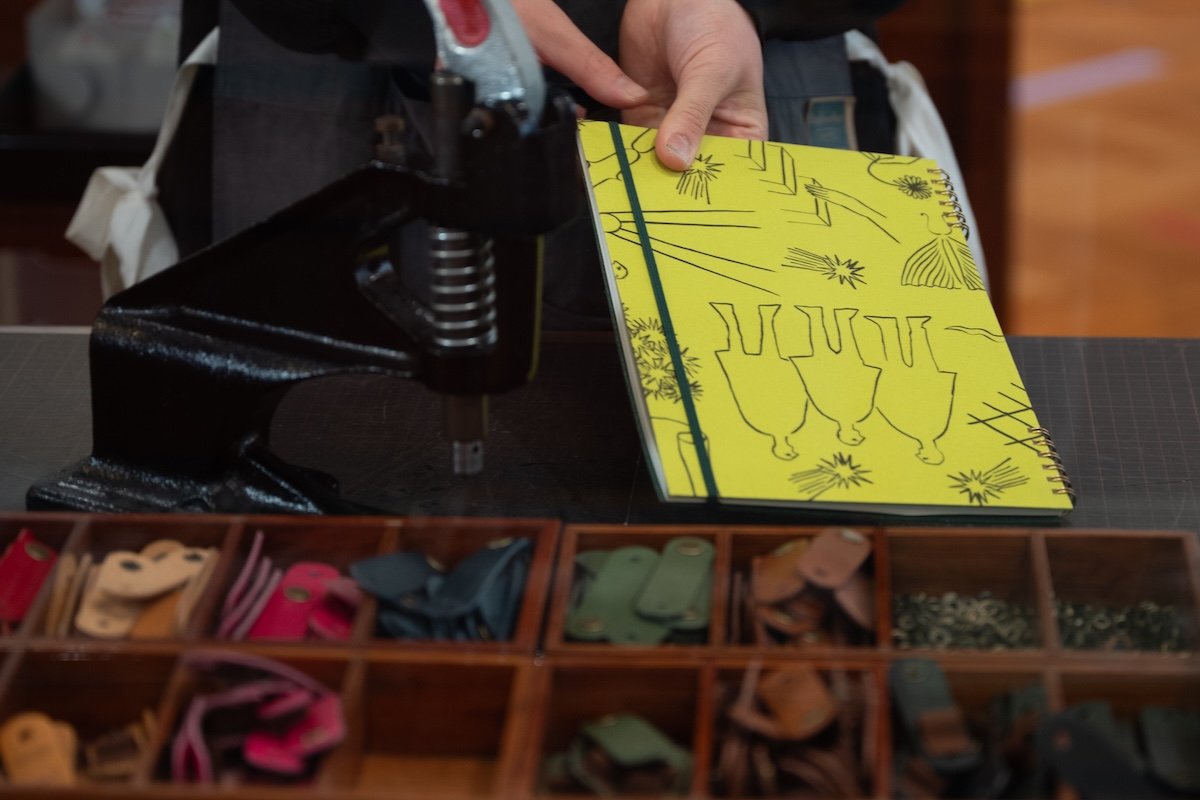
Kakimori's signature in-shop services include its order-made notebooks, wherein visitors are prompted to browse the shelves to select their desired front and back covers, inner paper, bindings, and any additional desired touches such as corner covers and personalized initials. The shop's knowledgeable staff members provide guidance during this process as appropriate, and then handcraft each individual notebook using the onsite machines and tools.
The time spent waiting for the notebook to be assembled is a prime opportunity to continue browsing Kakimori's interior space. Besides its offerings of stationery products, the shop's shelves also include stacks of attractive pamphlets featuring local happenings, along with a thin newspaper highlighting such signature products as a lineup of Frost pens. Also available free-of-charge are gorgeous hand-drawn illustrated maps highlighting local points of interest in the surrounding Kuramae district, which are printed on thin sheets that have a unique wrapping paper-like texture.
Hirose notes that another ideal way to spend time during the notebook assembly is to use the map as a guide while exploring Kuramae's unique offerings.
"People might consider going to one of the local coffee roasteries, and then visiting Misuji-yu, our local sento, which is a beautiful old bathhouse featuring imagery of Mount Fuji," he says. "While international tourists should be prepared to understand local bathing etiquette and pay cash there, they will find that its proprietors—like people throughout Kuramae in general—are very friendly and welcoming."
Amid Tokyo's numerous styles of neighborhoods, Hirose also notes that the attractiveness of the Kuramae district is found in its blend of traditional and modern elements—where boutique shops coexist with historical buildings—along with its proliferation of small, independently-owned shops as opposed to larger chains. He says that stores specializing in fashion umbrellas are particularly popular in the district, in addition to items such as wallets, children's toys and fireworks. While Kuramae is defined by this kind of blend, in other areas the old and the new may simply coexist or, over time, evolve into something entirely different, making Tokyo a city where the old and the new persist in many different forms.
And while the number of paper wholesalers in the area has dwindled in recent years, he also notes that thanks to Tokyo's deeply rooted stationery culture, it is generally far easier to find stationery products here compared to other large global cities.
"I think you could even call Tokyo a world-class stationery metropolis," he says.
Above all, Hirose hopes people understand that behind every product, artisans are working in studios and factories to produce the parts that go into them—whether that be metal, paper, ink, or other materials.
"Of course, we are happy to have people come in to our shop; but beyond this, we also hope that our customers will consider going to our website to learn about the stories behind the products," he says. "Monozukuri in Japan just has such incredible depth."
Movie: Tokyo Metropolitan Government
Hirose Takuma
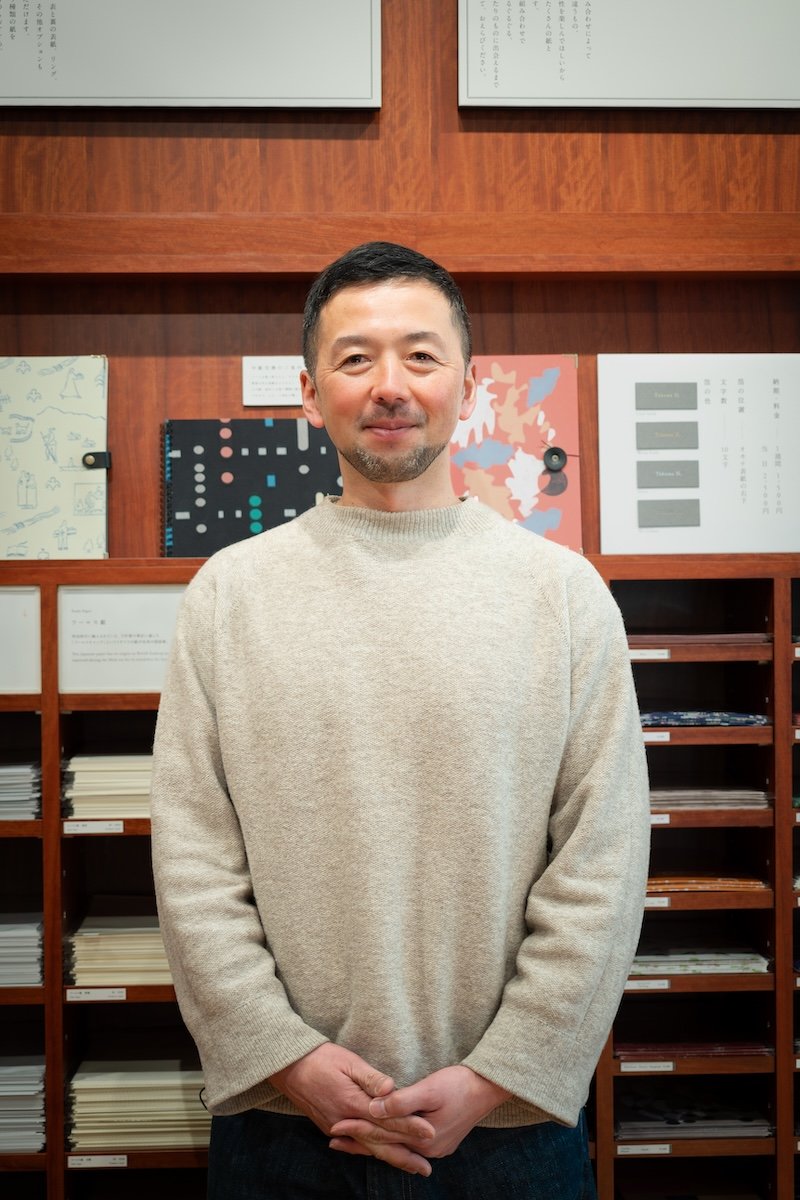
Kakimori
https://kakimori.com/enPhotos by Akiyoshi Yoko