







Tokyo Embassy Talk:
Switzerland's Ambassador to Japan Discusses Shared Goals Toward a Sustainable Future


This audio is generated by AI, so pronunciation and expressions may not be fully accurate. The narration is only in English.
A Shared Past and Future
Since the signing of the 1864 Treaty of Friendship and Commerce between the Tokugawa Shogunate and Switzerland during the Edo period, the two countries have continued to treasure their strong diplomatic relationship. Over 160 years later, both face new challenges and opportunities as the world moves into an uncertain future, one shaped by a changing climate and rapid urbanization. In the face of this future, their goals are aligned: to reach net-zero by 2050.
When it comes to addressing these challenges, both Switzerland and Japan are well positioned to tackle them. "Switzerland is often recognized as the most innovative country worldwide, ranking first globally for 15 consecutive years in the Global Innovation Index," Ambassador Dubach states, "Similarly, Tokyo, through initiatives such as the SusHi Tech Tokyo platform, is positioning itself as a global hub for sustainable technology and startup-driven innovation."
Sustainable innovation is not created in a vacuum, it is conceived and designed to address issues both existing and emerging. In a time of rapid urbanization, both Japan and Switzerland are making a concerted effort to sustainably develop their existing urban spaces while continuing to offer a high quality of life.
"According to the 2025 EIU Global Liveability Index, Zurich ranked second, Geneva fifth, and Tokyo fourteenth worldwide," Dubach remarks, adding, "These rankings highlight the strength of our urban environments and their ability to combine economic dynamism with livability—an essential foundation for attracting talent, fostering creativity, and sustaining long-term innovation. For both Switzerland and Tokyo, innovation is closely linked to addressing societal challenges—whether in sustainability, urban development, or digital transformation."
As part of his mission as Switzerland's Ambassador to Japan, Dubach works to strengthen these shared outlooks through mutual cooperation and exchanging of ideas. Since starting his role in Tokyo, there has been no shortage of opportunities for exactly that.
Startups for Sustained Collaboration
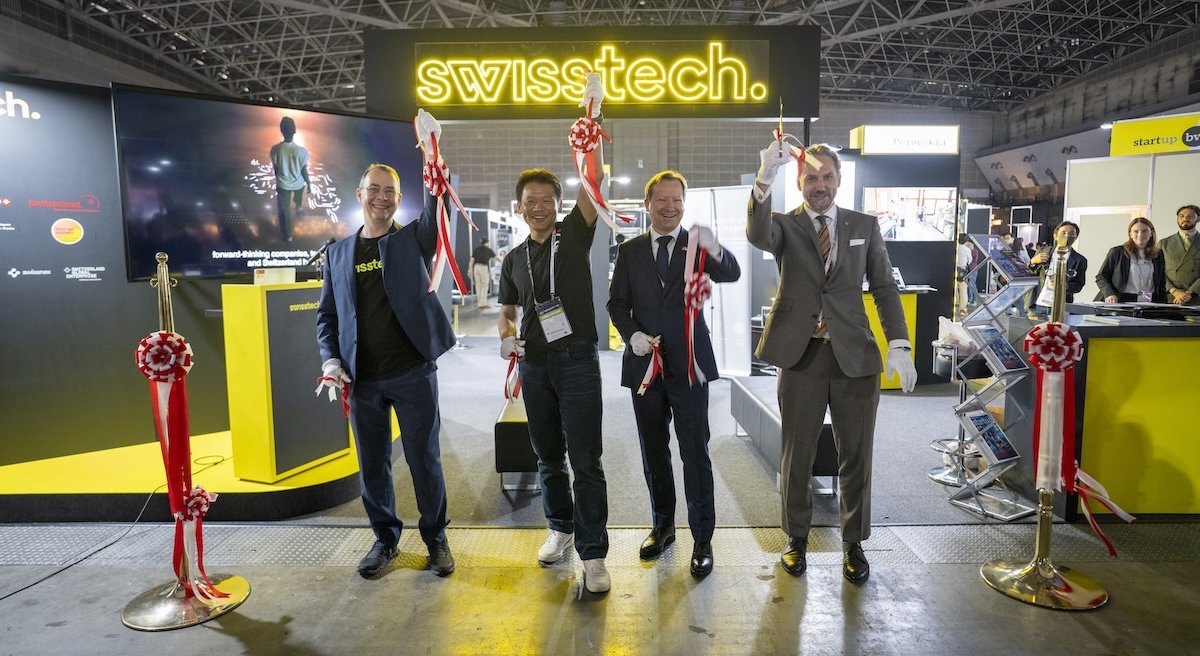
Less than one year into his role as Swiss Ambassador to Japan, Dubach took part in SusHi Tech Tokyo 2025, Asia's largest global conference hosted by the Tokyo Metropolitan Government (TMG) and others. "I had the honor of taking part in the ribbon-cutting ceremony at the inauguration of the pavilion, together with partners and representatives from Tokyo." Here, he could observe how SusHi Tech Tokyo can facilitate valuable encounters between Swiss startups and Tokyo's innovation community, including investors, corporations, and ecosystem builders.
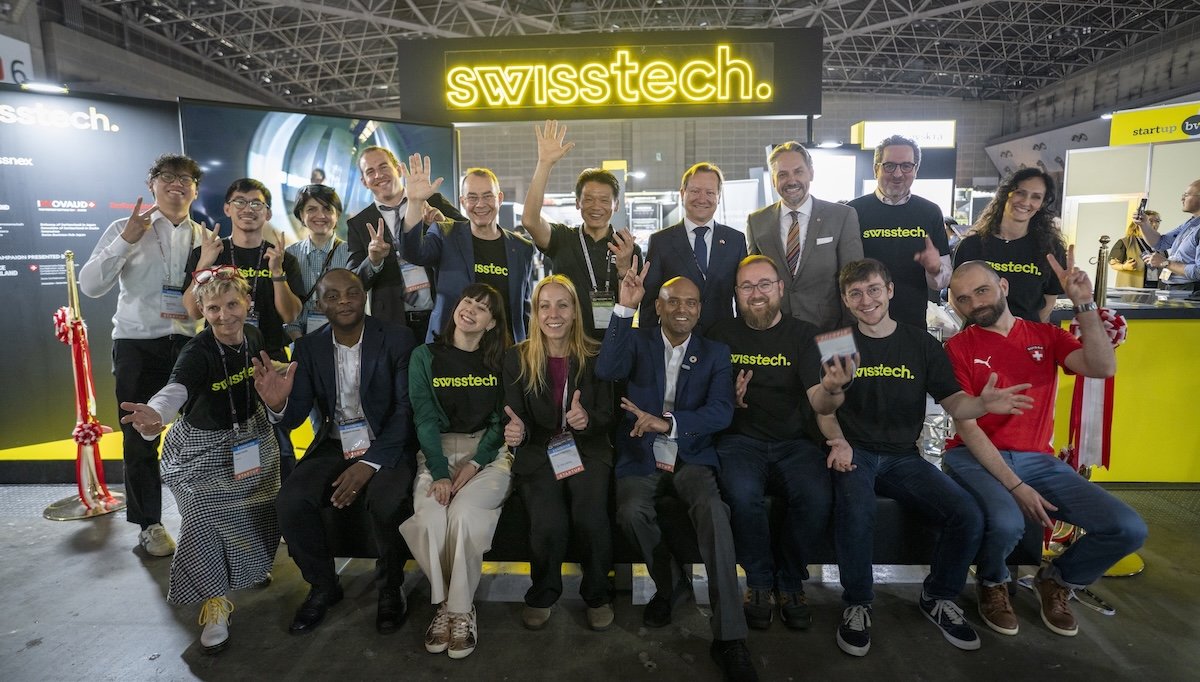
The Swiss Pavilion made quite the impression, earning it the award for the Most Innovative Pavilion; "a proud recognition not only for the 10 Swiss startups present, but also of Switzerland's strong commitment to open innovation and ecosystem-building." Another triumph was Swiss startup AVAtronics selection as a Top 8 finalist, beating out over 700 other startups participating in pitching opportunities at the SusHi Tech Challenge 2025. Of this achievement, Dubach says, "For me, this was a concrete example of how Switzerland and Tokyo connect: by bringing together government, researchers, entrepreneurs, and startups to address global challenges."
These acknowledgments were an important step for Swiss innovation within Tokyo, providing visibility and facilitating connections. From the event, a number of Swiss startups were selected for Japanese accelerator programs, such as the Keihanna Global Acceleration Program Plus (KGAP+). "We want to build on this," the ambassador says, "Our objective is not only to showcase Swiss startups in Tokyo, but to enable sustained collaboration between ecosystems."
While Swiss startups regularly attend Tokyo and Japan-based events—including SusHi Tech Tokyo, H2 & FC Expo (the Hydrogen & Fuel Cell Expo), N-Expo Tokyo (New Environmental Exposition), and Sea Japan—Switzerland and Japan are already working on sustained collaboration. One key example Ambassador Dubach notes is the partnership between Japanese energy company ENEOS and Swiss climate-tech company Climeworks. "ENEOS became the first company in the Asia-Pacific region to install a direct air capture unit from Climeworks" he explains, "it is a very tangible case of Swiss innovation meeting Japanese industrial capacity."
Seeing this strong match, Ambassador Dubach wishes to move the two countries to the next step: "long-term ecosystem integration."
Designing Cities for the Future
As Switzerland and Japan face rising temperatures, especially in urban spaces, both are addressing environmental and urban development. Both strive toward the common goal of becoming net-zero countries by 2050, and Ambassador Dubach sees how the similarities they already share can further aid this.
One similarity he notes is "spatial planning" and "land use." Cities in Switzerland and Tokyo both focus on how to best maximize the use of the existing urbanized space without expanding outward into the natural surroundings. As one of the most densely packed cities in the world, Tokyo is experienced in compact urban development. Likewise, with its policy of "inward development" Switzerland is focused on a similar goal. Ambassador Dubach believes that "exchanging experiences on compact urban development and the preservation of green spaces offers clear potential."
Some of the areas that he sees as the maturest for exchange and cooperation include mobility, energy efficient construction, and smart city infrastructure. The ambassador sees the opportunity to combine each country's mobility strengths, Tokyo, with its extremely efficient public transport system, and Switzerland, with its infrastructure for cycling and pedestrian mobility. "Combining Tokyo's strength with further innovation in last-mile mobility, cycling infrastructure, and smart traffic management could be an interesting field of collaboration," Ambassador Dubach posits.
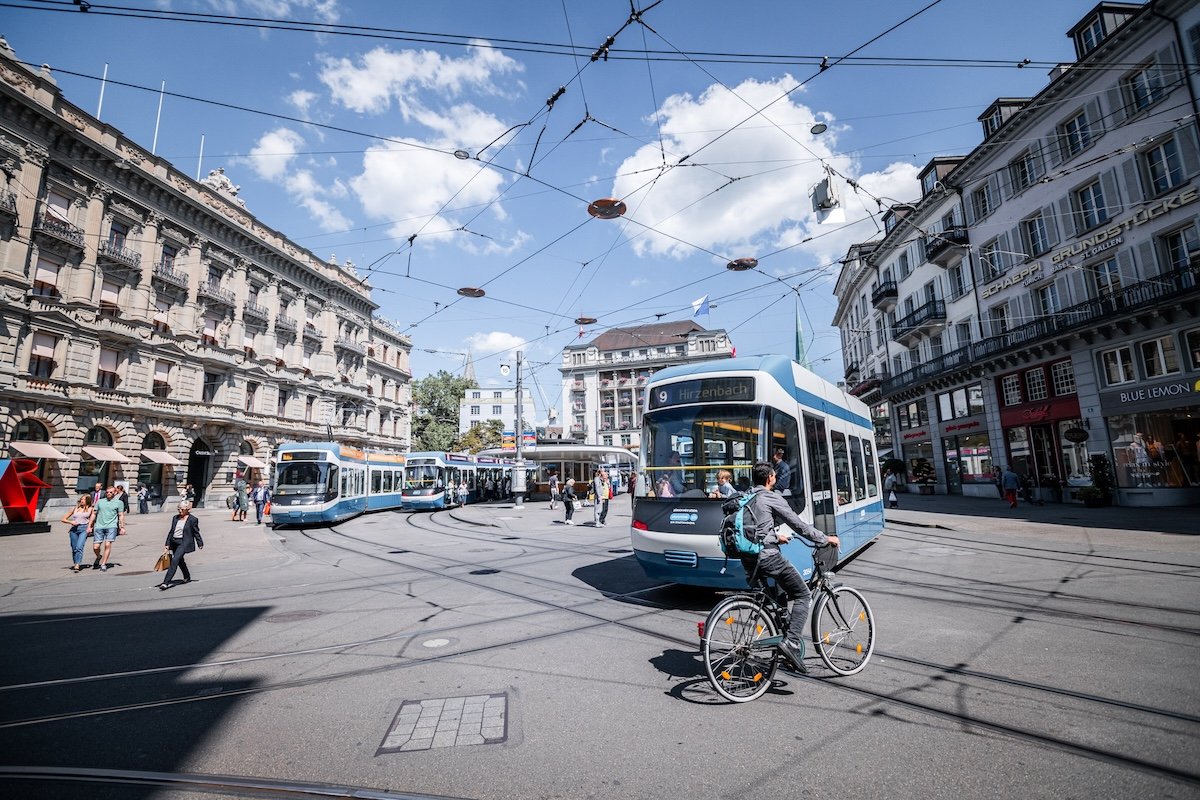
Both countries are working hard to promote energy efficient construction as well, through various paths such as Switzerland's CO2 Act and cantonal building regulations and Japan's Building Energy Efficient Act that was put in place in April, 2025. Due to its sheer scale, Ambassador Dubach sees Tokyo as a prime location to test and deploy smart urban planning solutions in a large, complex urban environment.
He has strong ideas for how Japan and Switzerland can move forward together on this matter, "I see strong potential in linking climate adaptation more closely to urban design." He elaborates, explaining that "collaboration could take the form of joint innovation platforms—bringing together urban planners, startups, architects, and technology providers from both sides. Tokyo's green urban development initiatives and Switzerland's experience in compact planning, sustainable mobility, and energy-efficient design could be combined in pilot districts or demonstration projects."
So Much Done, So Much Yet to Do
Both Switzerland and Tokyo are striving towards a sustainable future that provides a high quality of life with the lowest possible environmental footprint. "Quality of life is not only about infrastructure," Ambassador Dubach states, "It is also about clean air, quiet and attractive public spaces, access to greenery and water, cultural vibrancy, safety, and a sense of community. A sustainable city is one where families want to live, where talent wants to stay, and where older generations can age comfortably and remain connected to social life."
In creating this future, he believes that Switzerland and Tokyo are in agreement. "Tokyo and Switzerland both offer valuable perspectives on this balance—combining innovation with livability, and ambition with everyday practicality." Looking ahead, Dubach sees more opportunities between his country of origin and the one he now calls home, "I see the greatest potential in creating even more 'on-ramps' for collaboration between Swiss and Tokyo-based actors in cleantech and sustainable urban solutions." From expanding frameworks to make collaboration easier, to strengthening incentives for technology exchange and joint research, there are plenty of avenues to explore.
"Switzerland and Tokyo share a commitment to quality, innovation, and livability—and that shared commitment matters more than ever as cities face climate, resource, and demographic challenges. Our partnership is not only about exchanging ideas, but about building solutions together—through people-to-people ties, research collaboration, and startup ecosystems that can bring practical innovations into society."
Roger Dubach
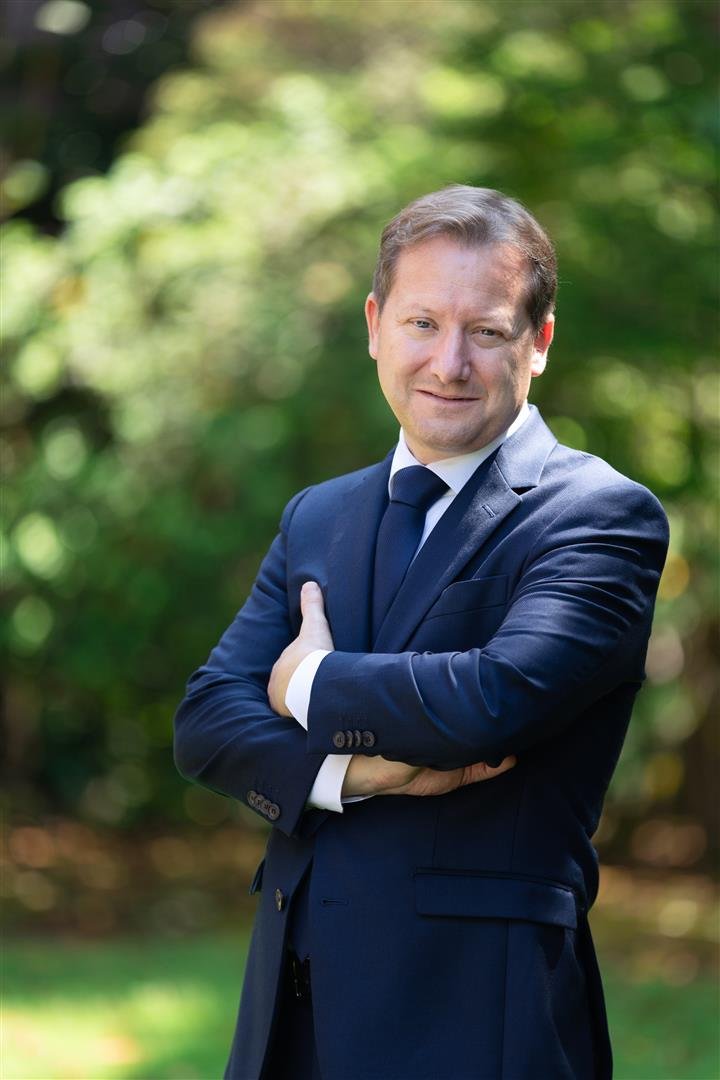
Embassy of Switzerland in Japan
https://www.eda.admin.ch/countries/japan/en/home/representations/embassy-tokyo.htmlPhoto courtesy of The Swiss Embassy