







The Joy of Running Again—Sports Prosthetics Expanding Parasports Possibilities


This audio is generated by AI, so pronunciation and expressions may not be fully accurate. The narration is only in English.
Sports Prosthetics Enabling Running with Expert Support
The Parasports Next-Generation Athlete Discovery Program is a joint initiative by the TMG and the Tokyo Sports Association for Persons with Disabilities to identify and develop future parasports athletes. In addition to physical fitness assessments and sports experience sessions, it offers opportunities for people with lower-limb and other impairments to try sports prosthetics and wheelchairs, helping to spark interest in competitive sports.
At this sports prosthetics experience event, prosthetists, physical therapists, and Para athletes provided expert support, prioritizing both safety and peace of mind so participants could enjoy physical activity comfortably and with confidence.
Sports prosthetics differ significantly from everyday prosthetic limbs, most notably in the carbon-fiber blade, which functions like a leaf spring. Its flexibility and rebound enable movements such as running and jumping that are difficult with everyday prosthetics. All prosthetics were provided by the organizers and fitted under the supervision of prosthetists, who also assisted participants on the day, allowing even first-time participants to take on the challenge with confidence.
Supporting Each Person's Pace—Safe, Reassuring, and Enjoyable
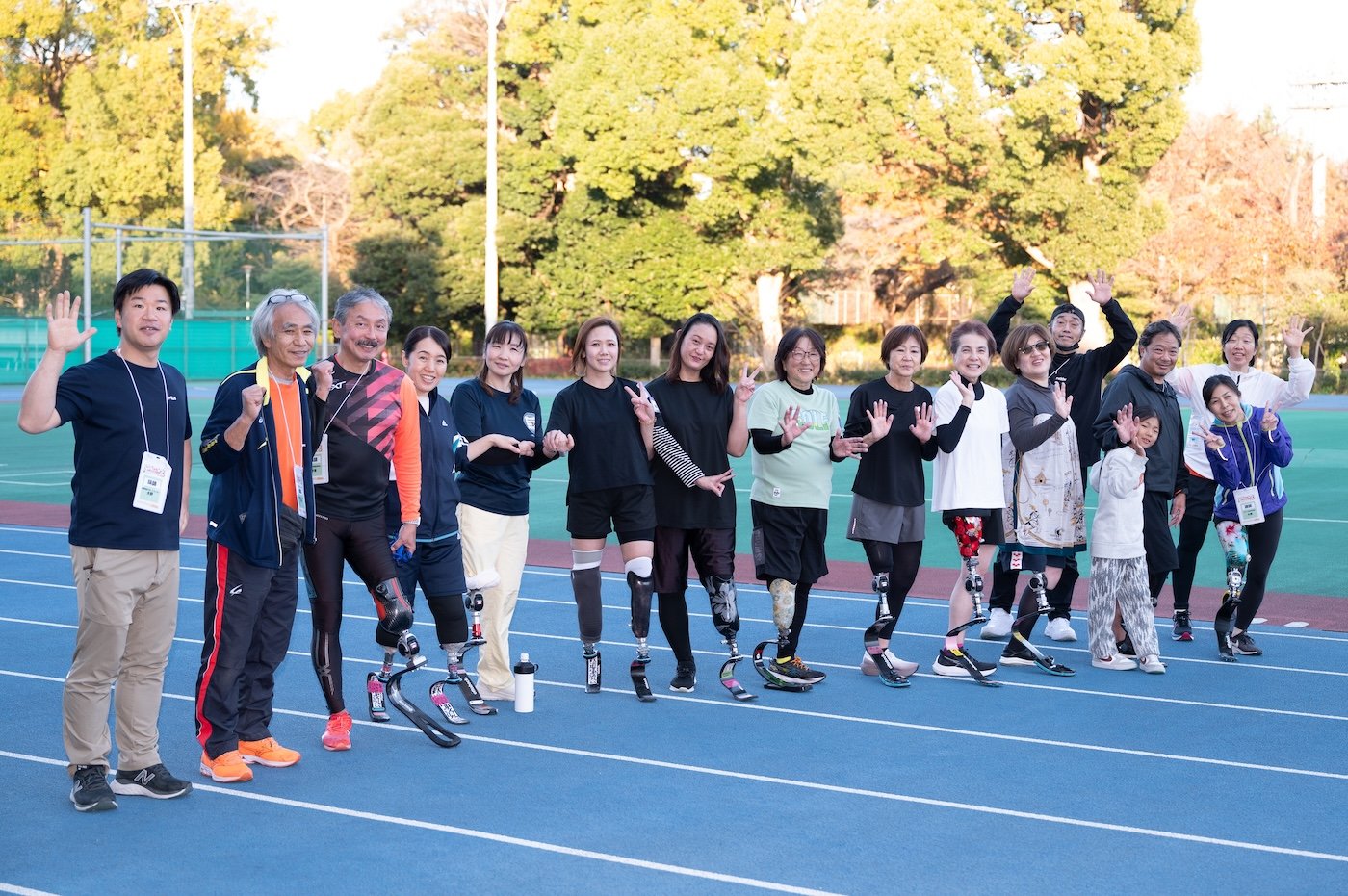
Nine participants gathered at Tokyo Metropolitan Kita Special Needs School, the event venue. Three were trying sports prosthetics for the first time, while six had previous experience.
The session began with warm-up exercises in the gymnasium. After stretching, participants walked or skipped at an easy pace, preparing in a relaxed, friendly atmosphere. After about 40 minutes, they moved to the track at the Tokyo Metropolitan Sports Center for the Disabled, just across the street.
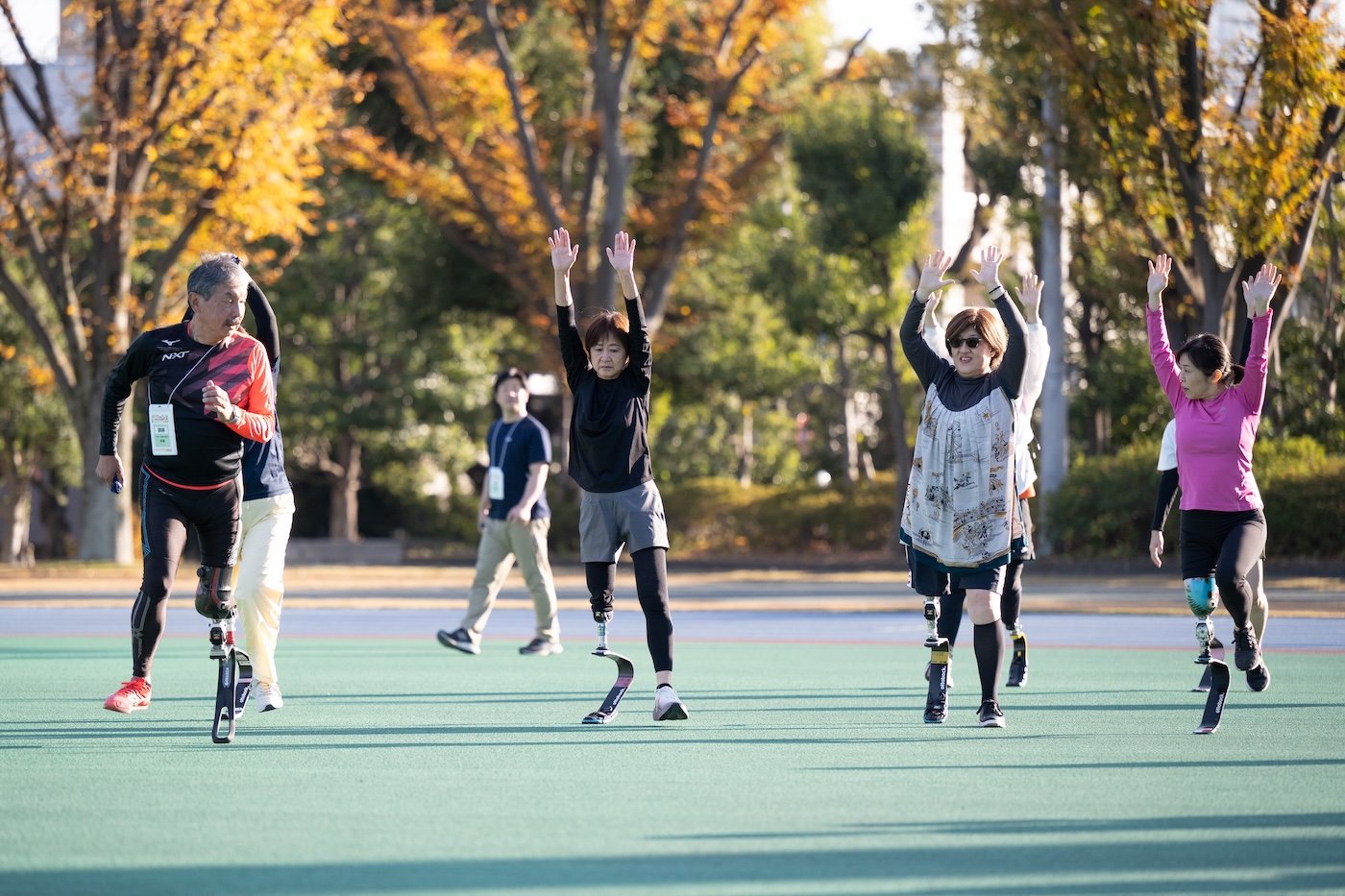
"Keep your back straight." "Don't look down—look ahead." "Swing your arms, and your legs will follow."
As Para-athlete experts called out guidance around the track, participants began by walking slowly, gradually picking up the pace. Prosthetists and other specialists stayed close, making fine adjustments based on each individual's condition to support smooth running.
The beginner group held hands and lined up side by side, gradually growing more comfortable with running. Experts and participants alike, breathless and calling out to one another, filled the stadium with laughter throughout.
The Joy of Running, Supported by Connection
"I've always wanted to run. I'm really happy I could run today."
Sugisaki Kazuki, a first-time participant, heard about the event through the Prosthetics and Orthotics Support Center of the Tetsudo Kosaikai Foundation. He had been using an everyday prosthetic limb for about seven months and initially found sports prosthetics completely different in feel, but said with a smile, "It was a bit difficult at first, but I gradually got used to it." As a student, he used to play soccer and was known for his speed, often being chosen for relay teams.
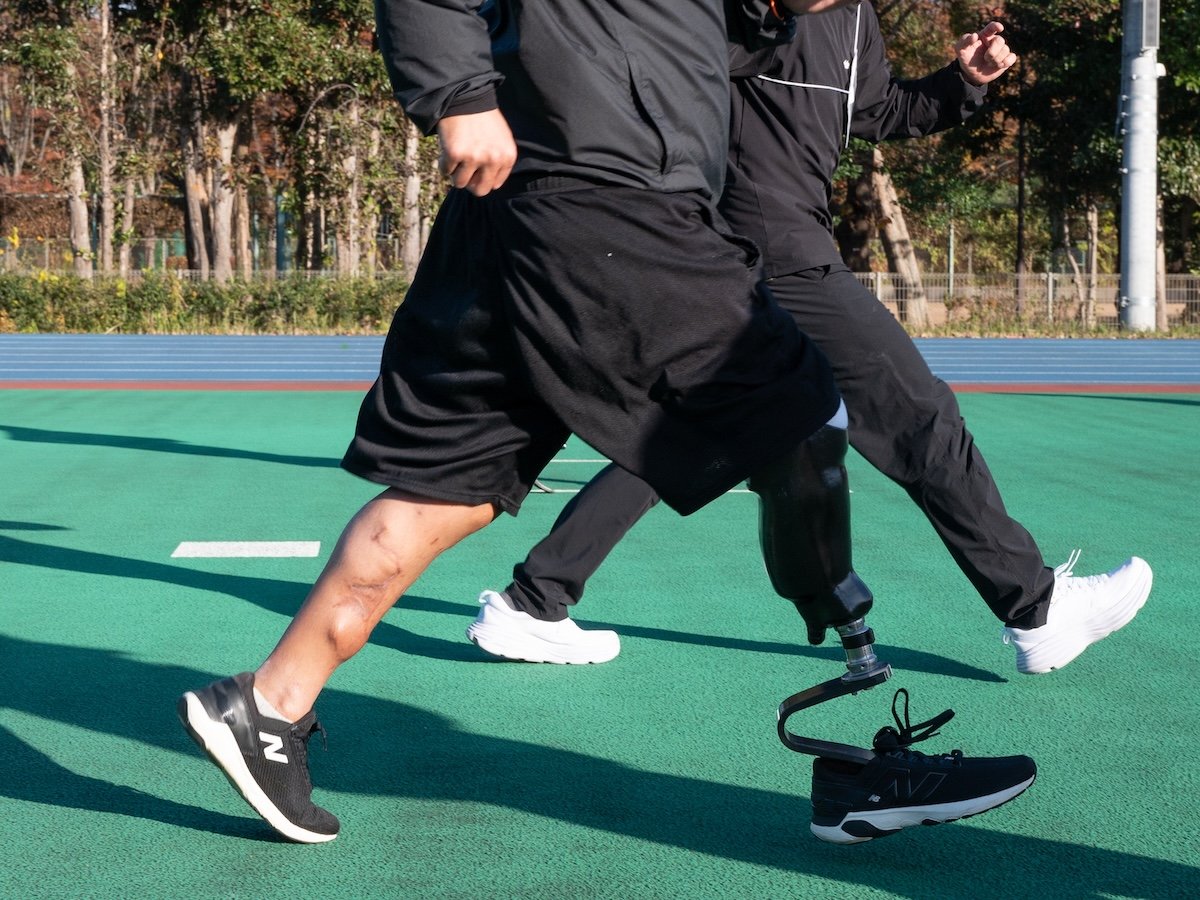
"Exercise helps people become more aware of their bodies and how they change, while also strengthening the non-prosthetic leg," explained the physical therapist working with Sugisaki. Experiencing running—something not possible in daily life—can also deepen body awareness and help build strength.
Like Sugisaki, Murakami Reiko learned about the project through the Prosthetics Support Center. She had previously experienced sports prosthetics several times at Start Line Tokyo practice sessions, but this was her first time taking part in the event.
Start Line Tokyo is a club for prosthetic athletes founded in 1991 by prosthetist Usui Fumio, a pioneer of sports prosthetics in Japan. It has continued to hold monthly practice sessions for more than 35 years.
Murakami noted that participants received close to one-on-one support from prosthetists, physical therapists, and professional athletes, allowing them to take part in a safe and fulfilling experience.
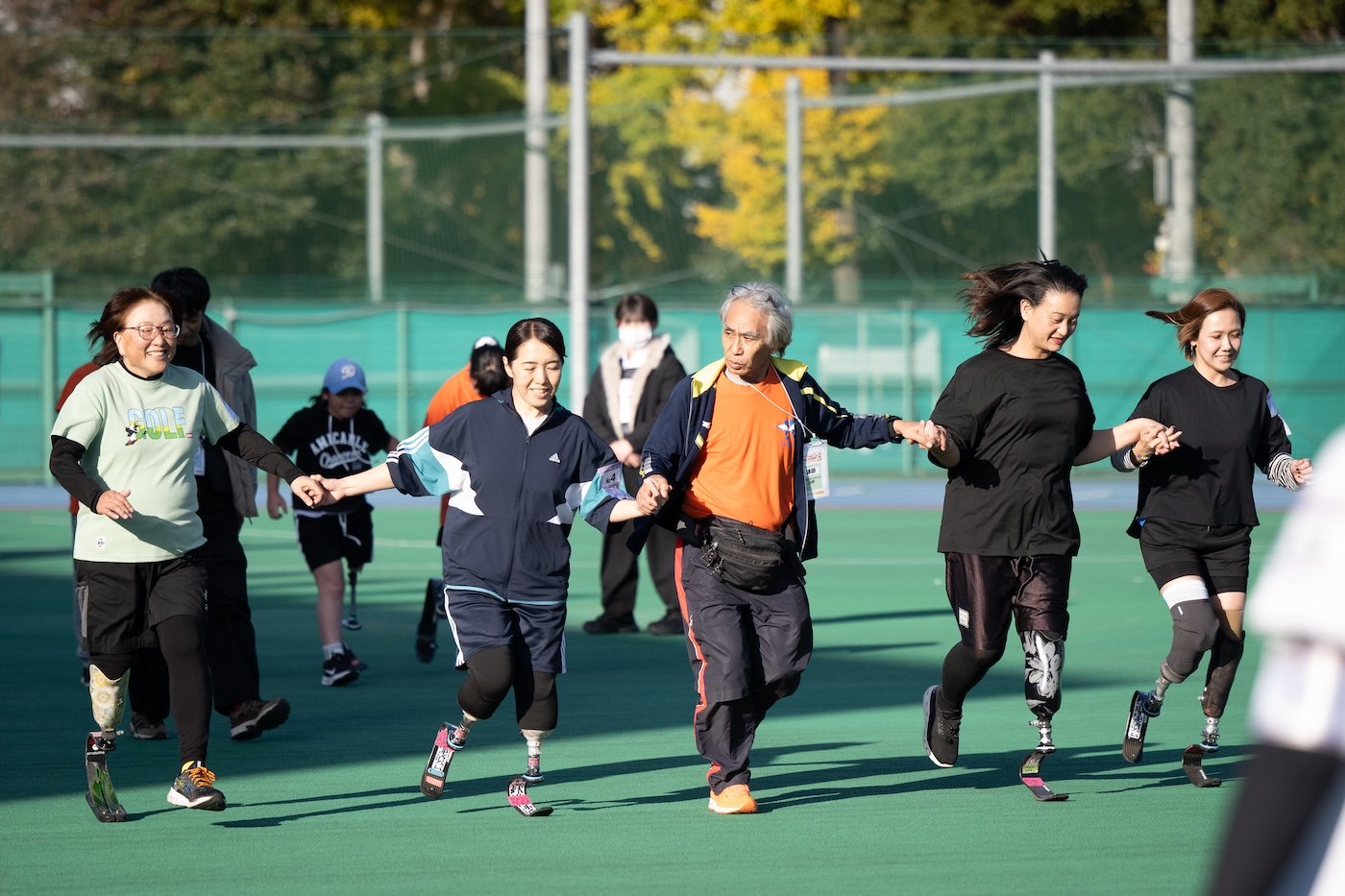
She also spoke about the connections formed through the event, explaining that even those meeting for the first time often became friends as they ran together, encouraging one another to keep going and sharing a sense of mutual support.
Supporting the First Step—Tokyo's Vision for an Inclusive Society
Tomiyama Takaaki, section chief for Para Athletes and Parasports at the Comprehensive Sports Promotion Division, Office for Sports Promotion, the Tokyo Metropolitan Government, said the event was launched in response to feedback from people who felt they lacked an opportunity to get started and wanted to enjoy sports with others. He expressed hope that the experience would encourage participants to take their first step.
Beyond this event, Tokyo is pursuing a range of initiatives to promote parasports.
Held annually, the Tokyo Sports Festival for People with a Disability serves as a gateway to competitive parasports, with many participants advancing to the National Sports Festival for People with a Disability. Tokyo also runs a program known as "Tokyo Para Athletes," which supports athletes with ties to the city competing on the international stage.
At the Deaflympics held in Tokyo in 2025, Tokyo Deaflympics challenge program tryouts recruited athletes nationwide in four sports—handball, shooting, taekwondo, and wrestling—where athlete development had lagged. Of the 43 selected, 10 went on to compete in the Deaflympics, with 2 winning bronze medals in wrestling and taekwondo—an impressive result.
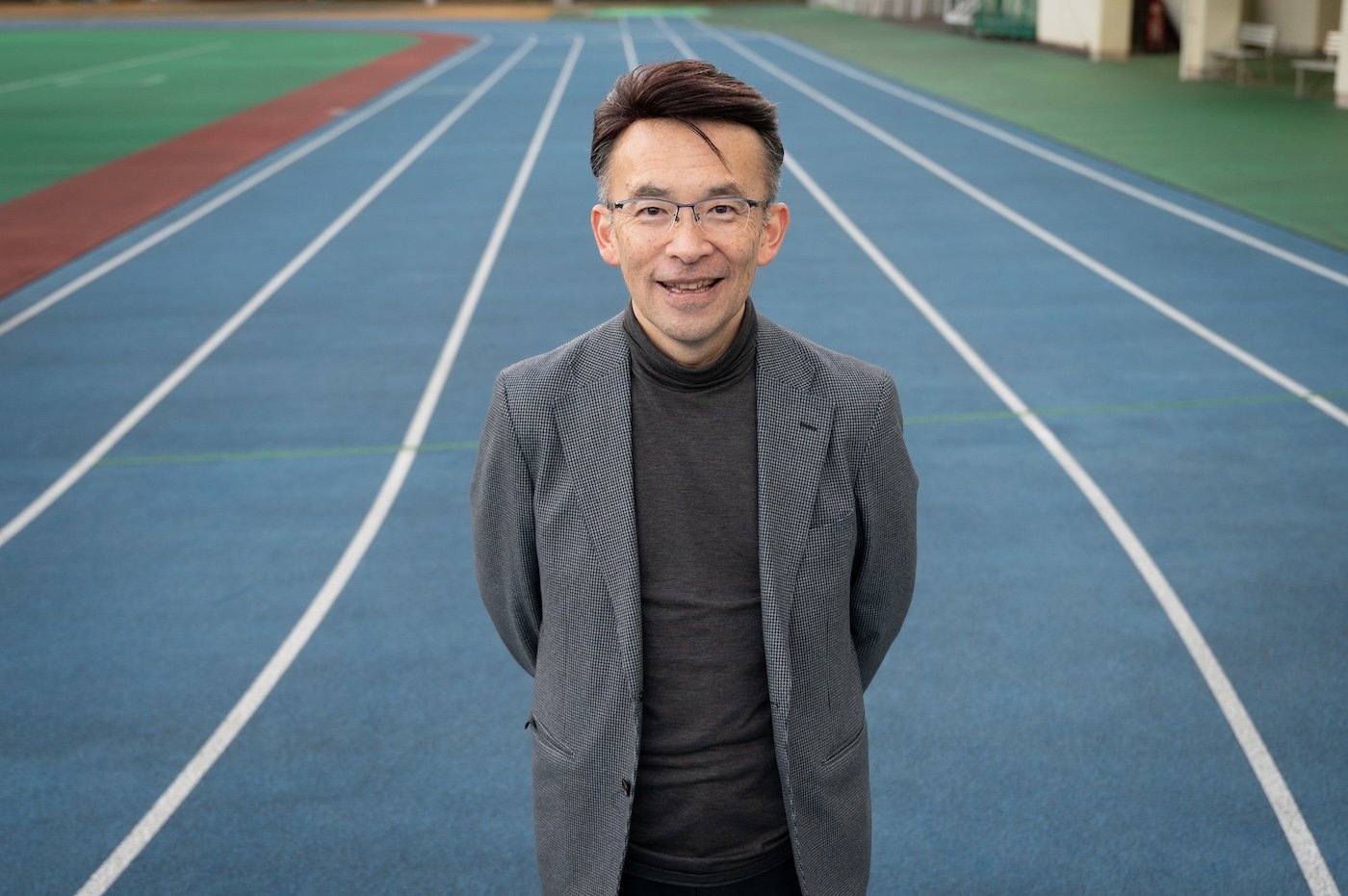
"I'd be delighted if, through the Next-Generation Athlete Discovery and Development Program, athletes go on to compete at the Los Angeles 2028 Paralympic Games and beyond, including Brisbane," says Tomiyama. He experienced a stroke several years ago and recalls the fear he felt when standing again after a period of living with hemiplegia and using a wheelchair. That experience underpins his emphasis on creating an environment where participants can take on new challenges without fear.
The experience of running is not only a gateway to competitive sport—it also promotes health, enhances quality of life, and, above all, brings a deep sense of fulfillment. By supporting each individual's desire to run, sports prosthetics experience events are steadily expanding the reach of parasports and helping drive progress toward a more inclusive society.
The Tokyo Metropolitan Government Parasports Next-Generation Athlete Discovery and Development Program
https://www.para-athlete.tokyo/*Japanese language site
Photos by Akiyoshi Yoko
Translation by Luna Lys