







Giving Robots a Human Sense of Touch


This audio is generated by AI, so pronunciation and expressions may not be fully accurate. The narration is only in English.
Teaching Robots to Feel
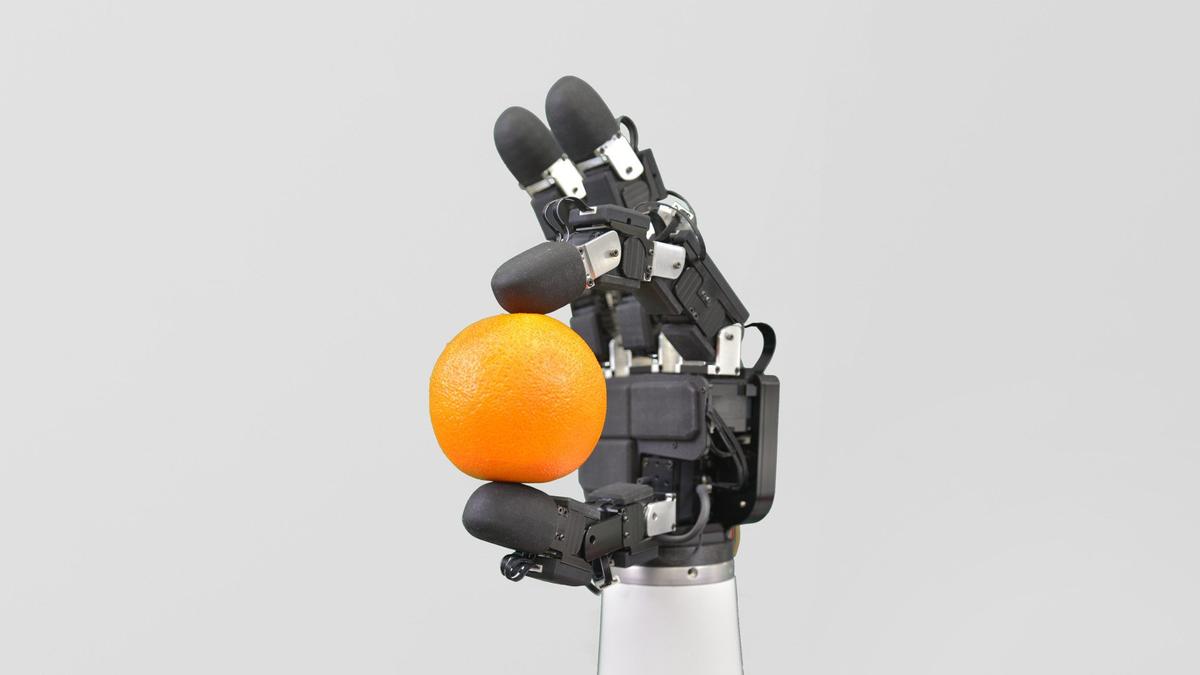
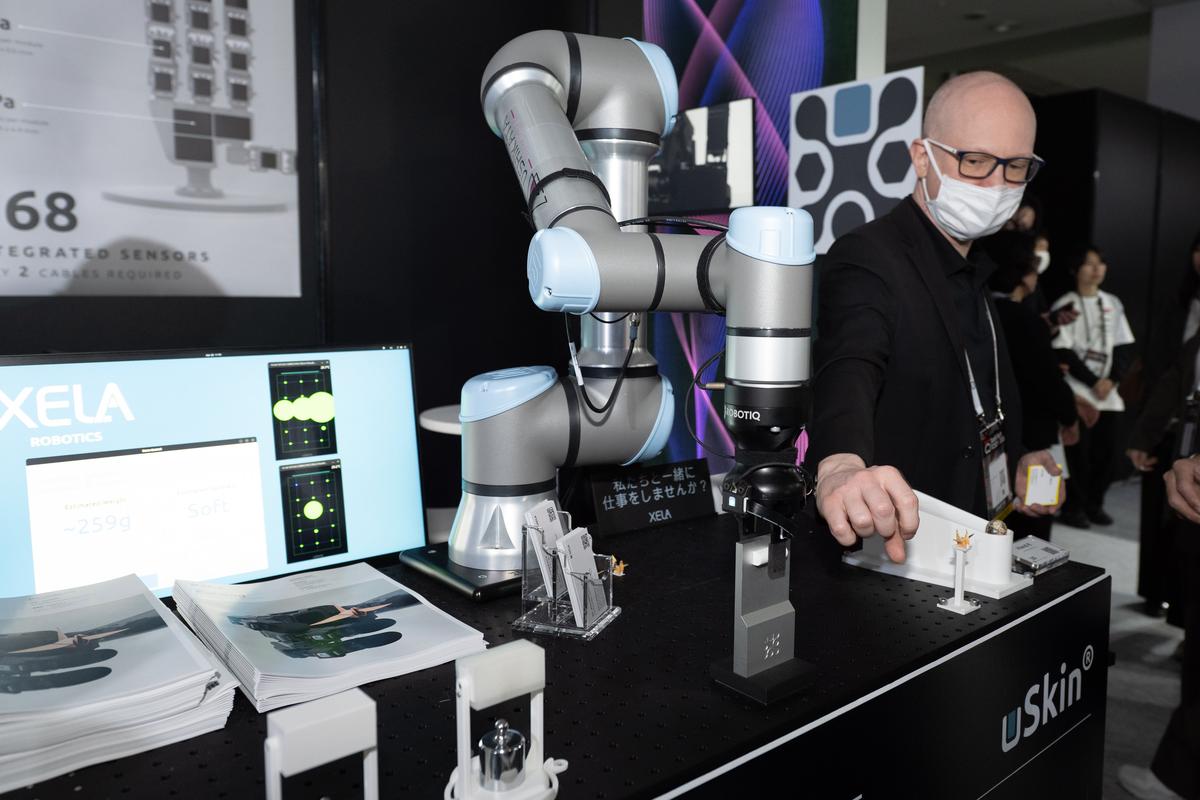
The egg was a fitting demonstration for XELA Robotics Co., Ltd., a Tokyo-based startup developing tactile sensing systems that give robots a sense of touch. Human hands adjust constantly when handling fragile, slippery, soft, or unfamiliar objects. Robots, by contrast, have traditionally relied on vision and programmed movements, which can struggle when conditions change. "Conventional robots have a very hard time with fine manipulation," says Dr. Alexander Schmitz, CEO of XELA Robotics. "You have to pre-program them for each individual object."
Founded in 2018 as a spin-out from Waseda University in Tokyo, XELA Robotics combines uSkin sensors with uAi software, allowing robots to detect and process physical contact in real time. Its sensors measure pressure and shear forces, helping a robot understand how contact changes as it grasps or moves an object. "If you want adaptiveness in the real world, then you need physical AI," Schmitz says. "That's what we provide. We provide robots with a sense of touch."
From the Lab to Real-World Robotics
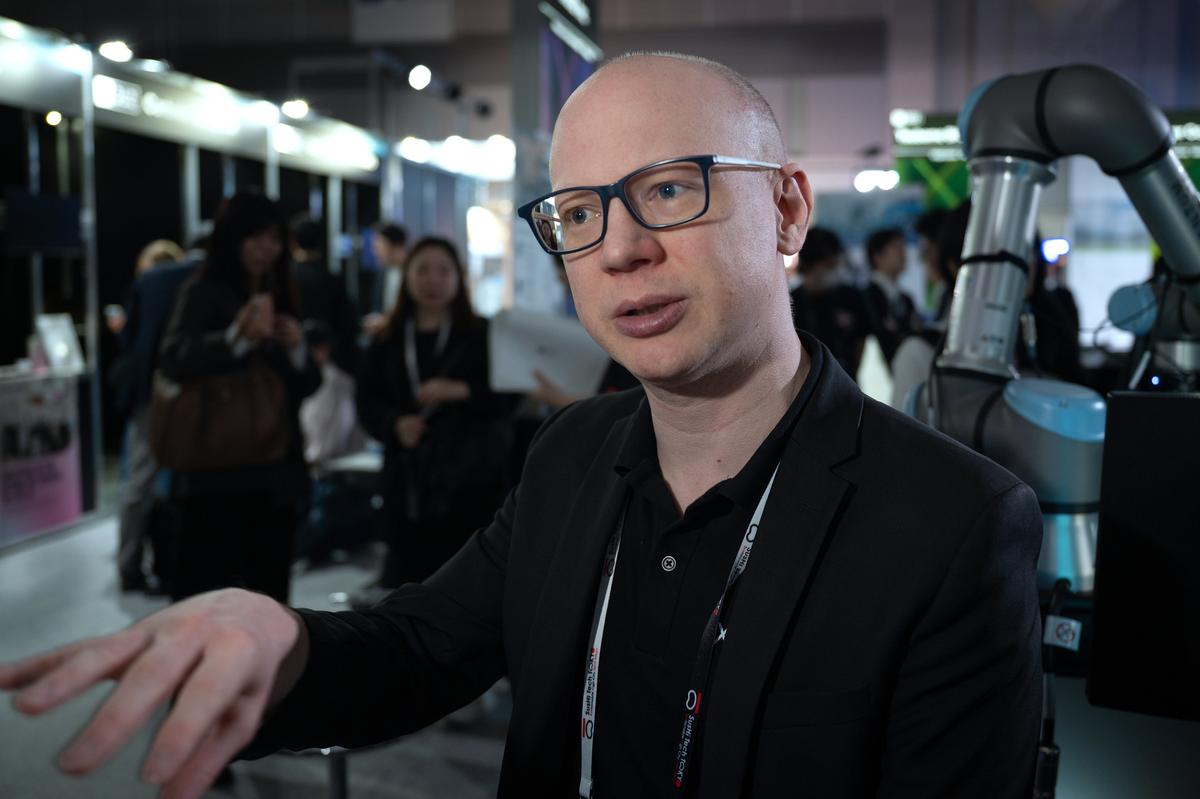
Schmitz's path from Austria to Japan began with research. After developing tactile sensors during his Ph.D. at the Italian Institute of Technology, he came to Japan in 2011 for a postdoctoral position at Waseda University's Sugano Laboratory. He later became an associate professor at Waseda, where his work continued to focus on robotics and tactile sensing. "Waseda University has a long history when it comes to robotics," he says. "Especially humanoid robots. But for me, it was especially the fact that they were very strong in tactile sensing as well."
Japan also offered a natural environment for turning research into a company. "A lot of people come because they like anime or manga," Schmitz says with a smile. "But I came for the robots."
For a hardware startup, location can shape what is possible. Robotics companies need manufacturers, engineers, parts suppliers, investors, and potential customers. Schmitz says Japan's manufacturing strength and Tokyo's concentration of corporate headquarters have helped XELA Robotics move from academic research toward practical use.
Industrial Support Beyond Strength
The most immediate applications for tactile sensing are in industrial settings, where robots are already common but still limited by what they can perceive. In automobile manufacturing, for example, robots may need to insert cables or wire harnesses into small spaces. Vision systems can guide a robot toward the correct location, but even a slight misalignment can cause problems. With touch, the robot can sense whether it is in the right position and adjust before applying force. "With vision alone, there can be small misalignments," Schmitz explains. "But with a sense of touch, you would know if you're in the right place or if you have to slightly move your position."
Warehouse automation offers another example. Fulfillment centers handle items with countless shapes, weights, and materials. A box, a bottle, and a soft pouch cannot all be grasped in the same way. A robot that can detect weight, hardness, and slipping and then based on that can adjust its grip more reliably, reducing the risk of dropped or damaged items.
Delicacy as a Robotic Skill
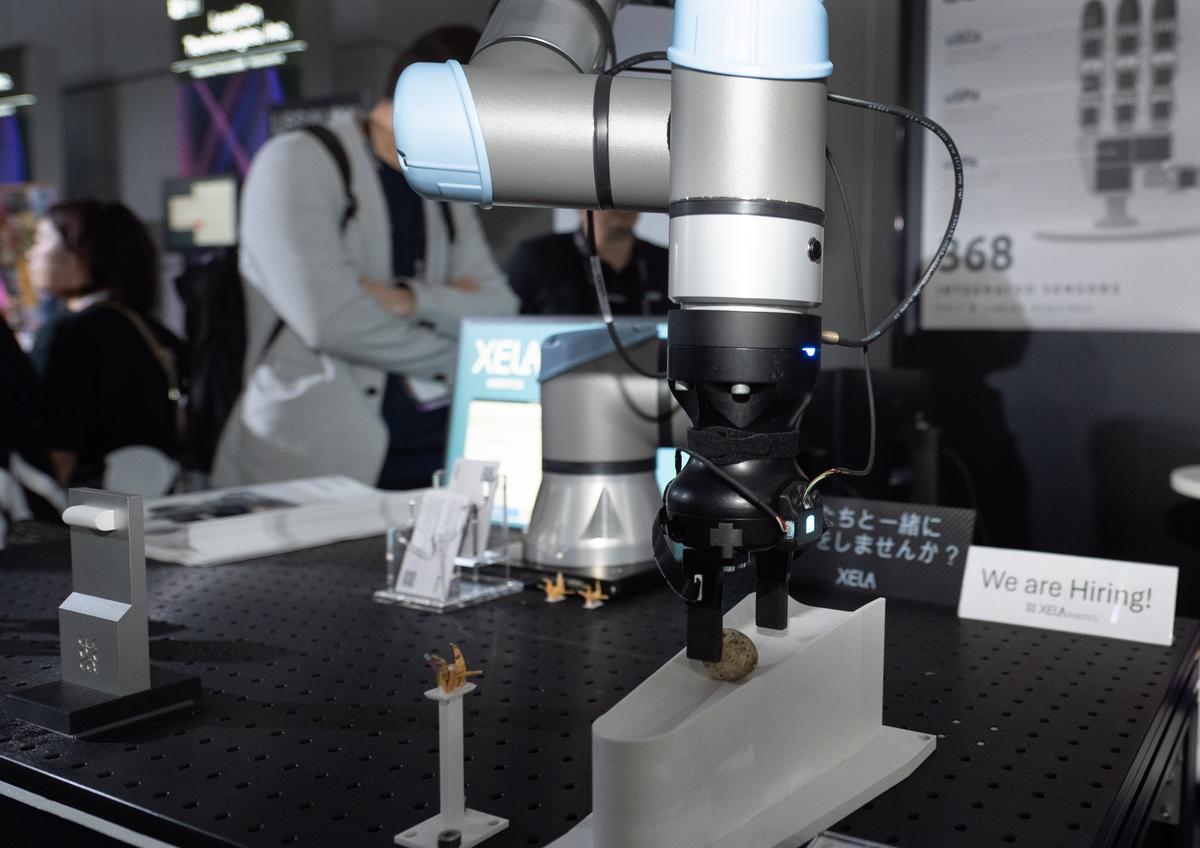
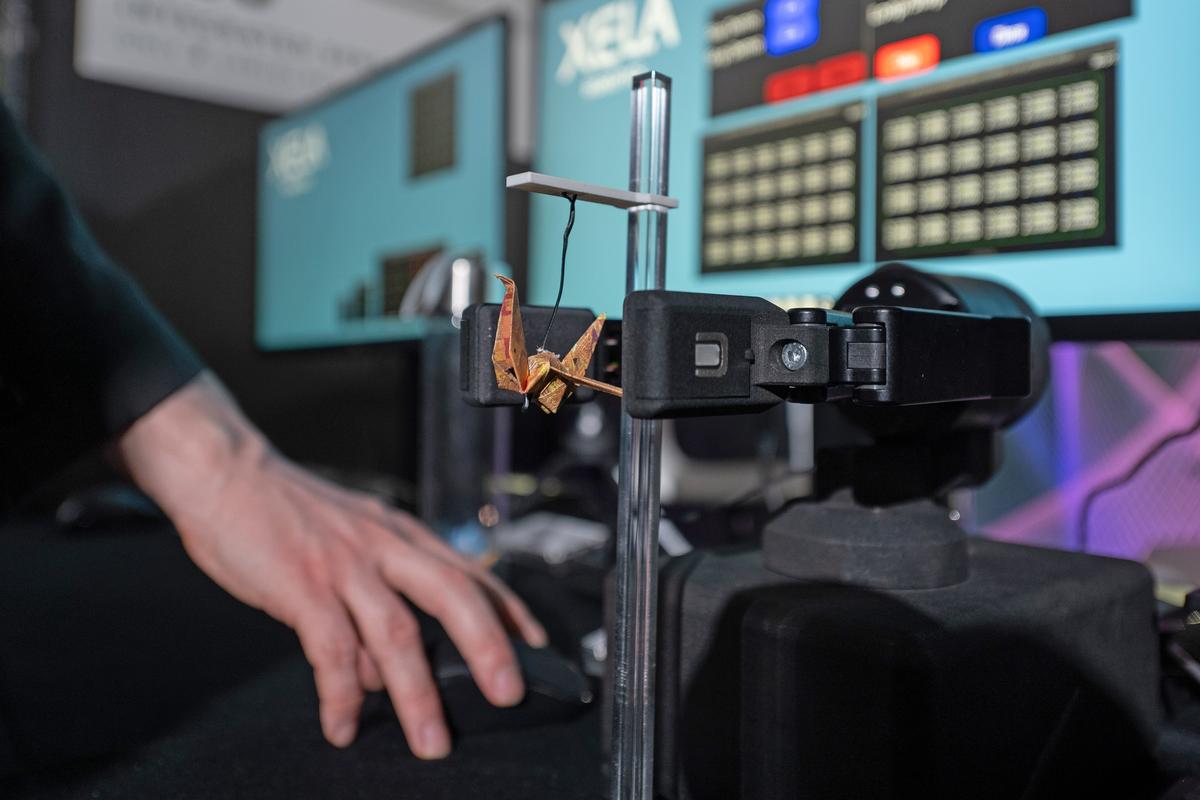
The quail egg demonstration made that value easy to understand. Too little pressure, and the egg rolls away. Too much, and the shell cracks. XELA Robotics also showed the grasping of tiny origami cranes made by Schmitz's coworkers, which he notes are even more fragile than the egg. In the future, he says, a robot folding origami may even be possible.
The scene pointed to a broader shift in what robotic support can mean. Robots are often associated with strength, speed, and power assistance. XELA Robotics is focused on a quieter capability: delicacy.
In agriculture, tactile sensing could help robots pick and sort fruit. Cameras can locate fruit on a branch, but lighting conditions change throughout the day, and each fruit differs slightly in shape, weight, firmness, and ripeness. Touch can help a robot avoid bruising the fruit while also sorting it by physical properties. "You don't want to damage it because then nobody wants to buy it," Schmitz says. "You can also sort the fruit according to weight and ripeness. Ripeness is interesting. That's part of the texture."
Robotics for a Super-Aging Society
The implications extend beyond factories, warehouses, and farms. Japan's aging population and labor shortages are reshaping expectations for automation, particularly in fields where human support is essential but increasingly difficult to secure. Schmitz sees tactile sensing as one part of that larger response. "Japan is a super-aging society, so it's very hard to find people, for example, for elderly care and for a lot of jobs in general," he says. "Robots are supposed to be one of the key parts to counteract this."
In daily life and care settings, robots cannot rely on power or precision alone. A machine assisting an older adult would need to sense contact, adjust pressure, and respond safely to human bodies and everyday objects. Touch becomes a form of caution, allowing robots to work closer to people.
Scaling Through Tokyo's Robotics Ecosystem
For XELA Robotics, Tokyo is not only where the company emerged from research. It is also where it continues to scale. In February 2026, the company was selected as a supported startup under SusHi Tech Global, a Tokyo Metropolitan Government (TMG) initiative that gives startups access to extensive support across Tokyo's public- and private-sector networks. XELA Robotics is also part of Forge, a global hardware accelerator backed by the TMG's TIB CATAPULT project, which supports innovation clusters in fields with high growth potential. Forge focuses on hardware startups, pairing Japan's manufacturing strength with corporate partners to help companies move from prototype to proof-of-concept and toward production.
For XELA Robotics, that support is practical. Schmitz says the program helps the company connect with manufacturers, OEM partners, potential customers, and investors. "They provide us with support in matching up with potential manufacturers and OEM companies that can help us scale our production even further," he says. "They also connect us with potential customers for proof-of-concept projects to explore additional markets."
SusHi Tech Tokyo 2026 offered another opportunity to build those connections. Schmitz says he met investors, customers, and companies interested in technical cooperation, including developers of robotic systems that could integrate XELA Robotics' sensors.
Physical AI with a Human Touch
Behind the apparent simplicity of touch is a detailed sensor architecture. XELA Robotics' uSkin sensors enable 3-axis tactile sensing, use minimal wiring, and achieve fast sampling rates of up to 500 hertz, depending on the model. Those specifications have practical consequences: subtle changes can be detected quickly, while reduced wiring makes integration into robot hands and grippers more feasible. "In the past, a lot of tactile sensors basically had one or two wires for each sensor," Schmitz explains. "If you have 1,500 wires, that would be a lot. These wires break easily, and they make it hard to move the hand."
That combination of sensitivity and practicality shapes Schmitz's longer-term hopes. One dream project would be to integrate tactile sensors into prosthetic hands, helping restore a sense of touch to people who have lost limbs. For now, the company is focused on expanding partnerships, customers, and investors as interest in physical AI grows.
Robots may already be able to see, calculate, and move with impressive speed. But to work smoothly in human spaces, they also need to feel. From factory floors to fruit farms, warehouses, and future care settings, XELA Robotics is helping build machines that can handle the world with a gentler touch.
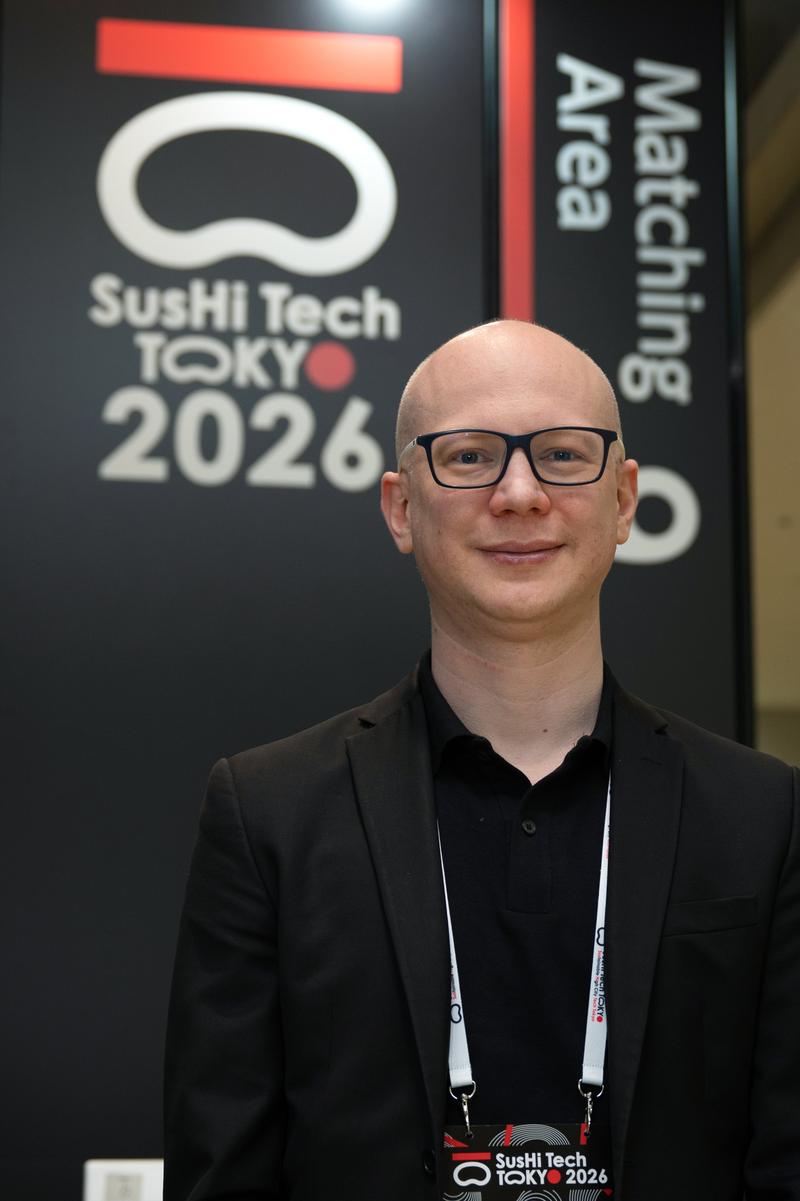
Alexander Schmitz
XELA Robotics
https://xelarobotics.com/
SusHi Tech Tokyo, short for Sustainable High City Tech Tokyo, is a global innovation conference where startups, investors, large corporations, cities, and universities from around the world gather in Tokyo to envision and implement the future of cities, with the shared goal of realizing sustainable cities through cutting-edge technologies.
SusHi Tech Tokyo | Sustainable High City Tech Tokyo
Photos by Akiyoshi Yoko