







Turning Untapped Talent into a New Force for Business


This audio is generated by AI, so pronunciation and expressions may not be fully accurate. The narration is only in English.
A Business Case for Inclusion
For Ono Takanari, CEO of Valt Japan Co., Ltd., the question of work began in the pharmaceutical industry. Before founding the company in 2014, Ono worked at a pharmaceutical company, where he believed medicine could improve people's lives by stabilizing symptoms and supporting health. Then, at a patient advocacy group meeting, he heard something that changed his perspective.
Around 30 people with mental health and developmental conditions were sharing their experiences. Many said medication had helped them manage their symptoms. Yet one problem remained common to all of them: they still could not find stable employment. "That was a shock to me," Ono says. "I had thought that if symptoms improved and health became stable, quality of life would naturally improve. But it was not that simple."
That experience led Ono to create Valt Japan, with the vision of creating "an age of outstanding success for people who face barriers to employment," broadly meaning people who want to work but face obstacles due to disabilities, illnesses, health conditions, or other circumstances. Today, the company operates Next Hero, a business process outsourcing (BPO) platform that connects corporate work with employment support offices and workers across Japan. It also runs Next Hero DIC, or Digital Innovation Center, a network of directly operated digital work support centers.
Ono sees the issue as economic as well as social. Japan may face a labor shortage of about 11 million workers by 2040, according to Recruit Works Institute. Meanwhile, Ono says there are an estimated 15 million people in Japan who face barriers to employment. His question is how to build systems that allow more of them to participate in the labor market while creating value for companies.
Connecting Divided Markets
Valt Japan's Next Hero BPO business was built around a gap Ono saw between companies facing labor shortages, operational bottlenecks, and digital workforce demands, and people who want to work but often lack access to suitable business opportunities. "Until now, there were many offices and many companies, but they were not connected well," Ono says. "That space was completely blank."
Through Next Hero, Valt Japan receives work from companies, then redistributes it based on data about the capabilities and characteristics of partner offices and workers. Its focus is not on finding "easy" work, but on taking real business tasks and designing ways for people to contribute to them.
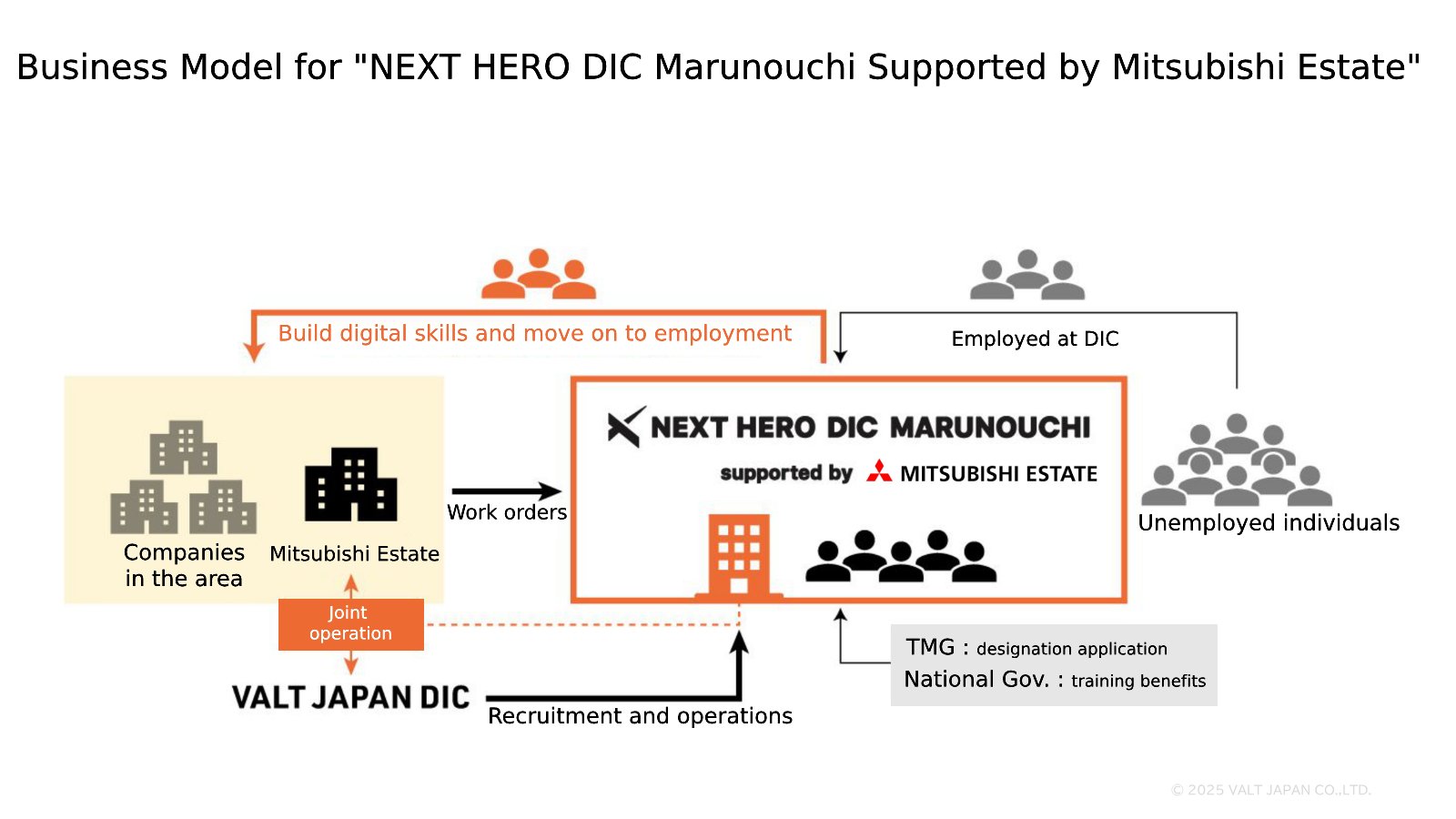
That idea has taken a more direct form at Next Hero DIC Marunouchi, opened in partnership with Mitsubishi Estate Co., Ltd.. Valt Japan describes DIC as a work support model that incorporates business, digital technology, and practical work experience. The company has also announced plans to develop 20 DIC centers nationwide over five years.
At DIC, people traditionally excluded from the labor market, including those with disabilities, chronic illnesses, or other barriers to employment, work on digital tasks in an environment designed to be closer to a mainstream company workplace. Conventional training often happens without a delivery obligation to a client. At DIC, however, workers handle actual assignments for companies. Valt Japan first visualizes each person's abilities and characteristics through work samples and other data points, then uses real work to understand what tasks and environments allow them to perform well.
For partner companies, this also changes the hiring process. Instead of relying only on documents, interviews, and short internships, companies can see how someone works on actual tasks before employment. Workers build skills through practice, and both sides can judge whether the match has real potential.
Ono emphasizes that this approach is not about numbers or compliance. "DIC does not exist to achieve a statutory employment rate," he says. "It exists so that people with disabilities or chronic illnesses can become a force for companies."

Digital Work, Real Value
Many tasks at DIC are connected to digital transformation and AI. As generative AI changes business processes, Ono sees both disruption and opportunity. Some jobs may disappear, but new forms of work are also emerging.
DIC workers may use AI to create and update sales lists, improve business operations, or streamline processes that previously required larger teams. They may also work with training data used to improve AI systems. "We contribute both by using AI and by helping create the data that allows AI to evolve," Ono says.
This is important because AI is often discussed as a substitute for labor. Valt Japan's model frames it differently. Digital tools can make work more accessible, break tasks into clearer processes, and help people contribute to complex business needs in ways that might not have been possible before.
From Social Value to Economic Value
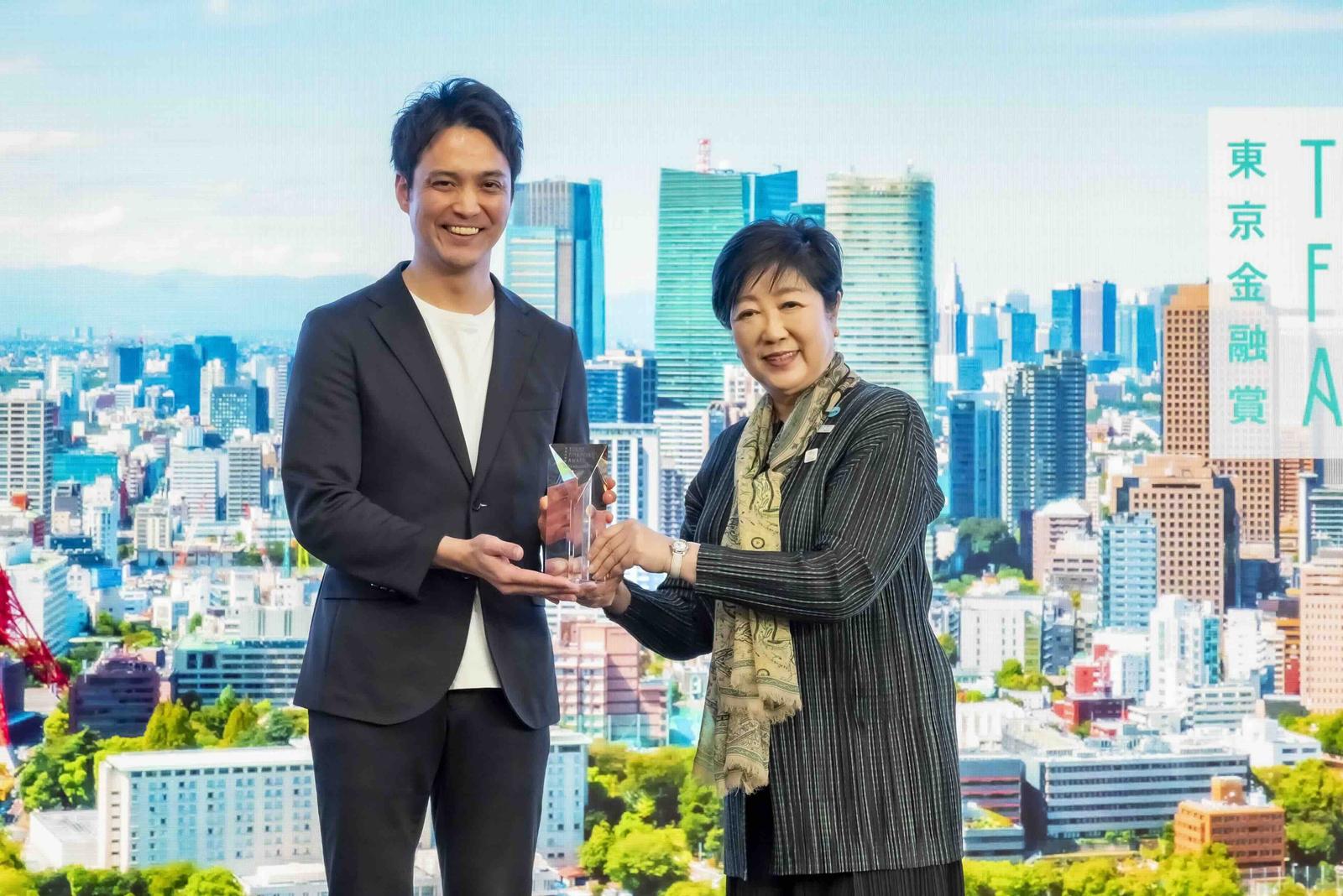
In 2025, Valt Japan received the Tokyo Financial Award 2024 in the Sustainability Category. Established by the Tokyo Metropolitan Government (TMG), the award supports Tokyo's goal of becoming an advanced, sustainable financial city and a place where globally active startups are created.
For Ono, the award affirmed something he has believed since founding the company: serious social issues need not only empathy, but also people, capital, and work. He says employment support often attracts goodwill, but not enough of the resources needed to change structures. "Deep social issues are far from people, money, and work," Ono says. "The power of capital is what brings them closer."
Ono believes DIC Marunouchi was one reason the company's work was recognized. Tokyo's economy is large enough to rival that of an entire country, and TMG's Bureau of General Affairs Statistics Division describes the city's gross metropolitan product as over 125 trillion yen in fiscal 2023. Marunouchi, meanwhile, is one of Japan's best-known business districts. For Ono, opening DIC there means placing people who face barriers to employment within one of the economy's central arenas.
From Labels to Capability
Tokyo brings together companies, capital, workers, and social challenges at a scale few cities can match. Ono sees that concentration as the reason Valt Japan needs to be here. If the company aims to connect the labor market with people who have been excluded from it, Tokyo offers both the problem and the opportunity in dense form.
He also sees potential beyond Japan. In many countries, he says, vocational training exists, but the next step remains underdeveloped. People may acquire skills without a clear route into companies, income, or long-term work. DIC starts with the end goal of sustainable participation in the workforce. From there, it works backward, focusing not on labels but on capability: what a person can do, what environment supports their performance, and where their skills can create value.
That shift is at the center of Ono's vision. In a city where global finance, major corporations, and social innovation intersect, he believes Tokyo can help show how inclusion can move from policy language into economic practice. "People are the most important investment," he says. "And I believe the greatest market with untapped potential is the 15 million people who face barriers to employment."
Ono Takanari
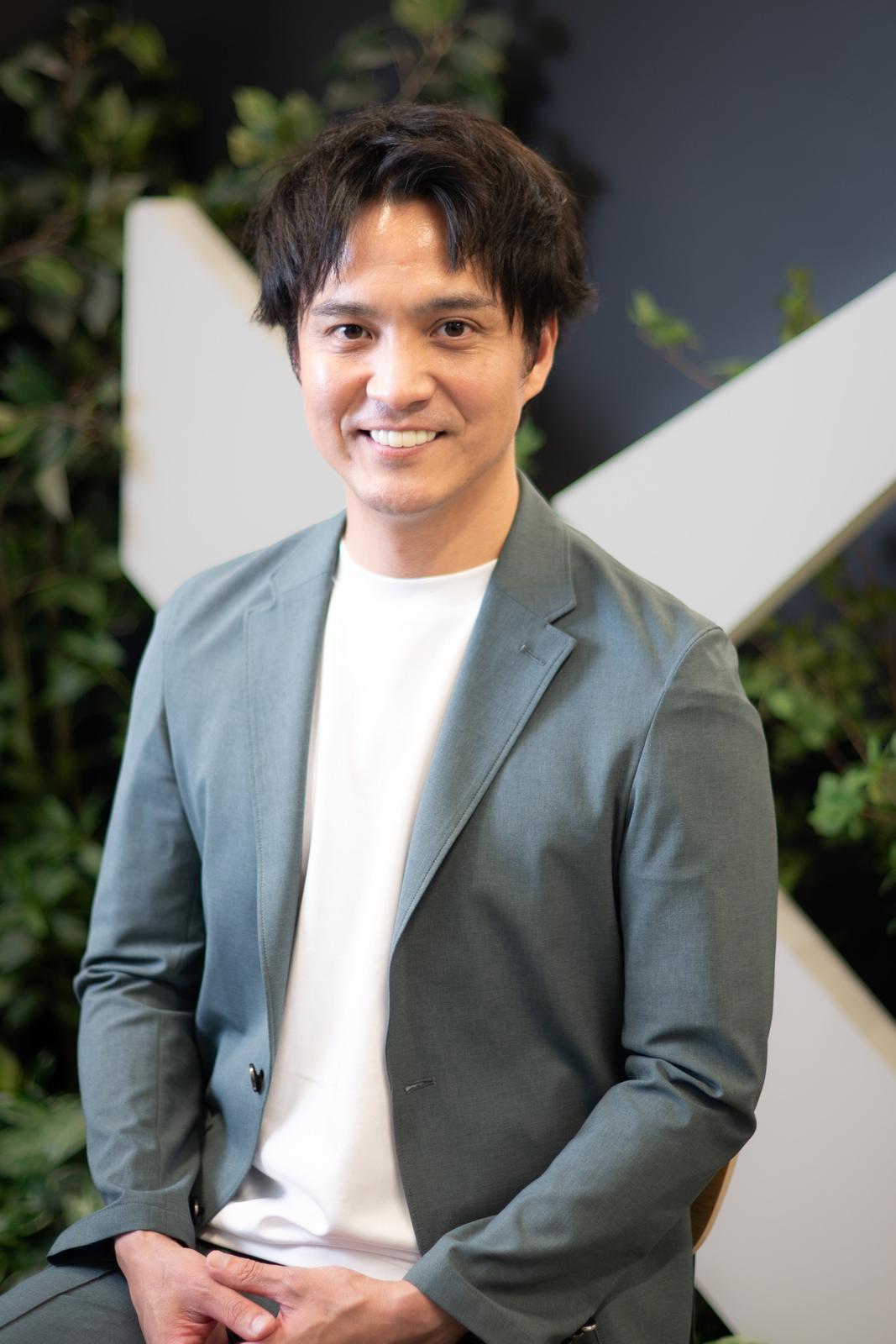
Born in Oita Prefecture in 1988. After encountering employment challenges faced by people with disabilities, chronic illnesses, or health conditions while working at Shionogi & Co., Ltd., Ono founded Valt Japan Co., Ltd. in 2014. The company operates Next Hero, a DX platform for people who face barriers to employment, and DIC, directly operated digital work support centers. Ono aims to create a society where people with disabilities can succeed in the business market with economic rationality.
Photos by Akiyoshi Yoko