







Sightseeing-Style Urban Farm in Tokyo Promotes Delicious, Healthful Blueberries


This audio is generated by AI, so pronunciation and expressions may not be fully accurate. The narration is only in English.
Leaving the Business World to Pursue Farming
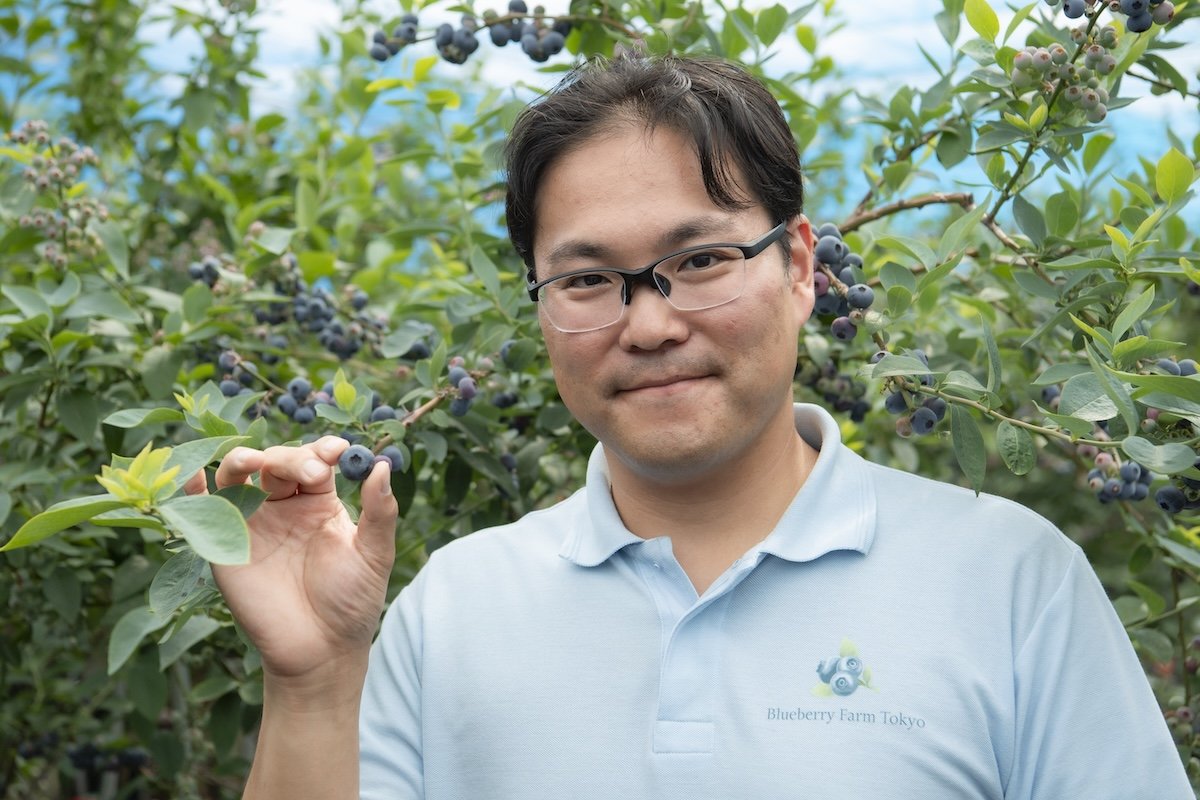
Yano was working as a company employee when his grandfather suffered a stroke and was no longer able to manage the family farm, which had been in operation in Tokyo's Higashi-Koiwa since the Edo period (1603-1868). With his parents deciding not to take on the family agricultural mantle, Yano realized that the continuation of the farm—located on the family plot just adjacent to their home—would be up to him alone. He decided to take on the challenge, explaining that he wanted to help maintain the local farming tradition in his area.
While his grandparents had specialized in growing komatsuna, Yano also decided to take the farm in a completely new direction: blueberries. Explaining that he was also interested in operating a sightseeing-style farm, Yano says he thought blueberries would be the most accessible to families, since the shrubs' low height would allow children and elderly persons to reach them easily. He also realized that blueberries' growing season additionally coincided nicely with kids' summer vacations, since they ripen between June and August.
Another motivation for Yano to launch his farm was to bring blueberries to the eastern part of Tokyo, since most cultivation of the fruit in the metropolis thus far had remained clustered in western areas. "There was a problem, however," he says. "I had never been involved with the family farm, so I had absolutely no experience whatsoever with farming blueberries—or anything else, actually."
Establishing a Community-Oriented Urban Farm
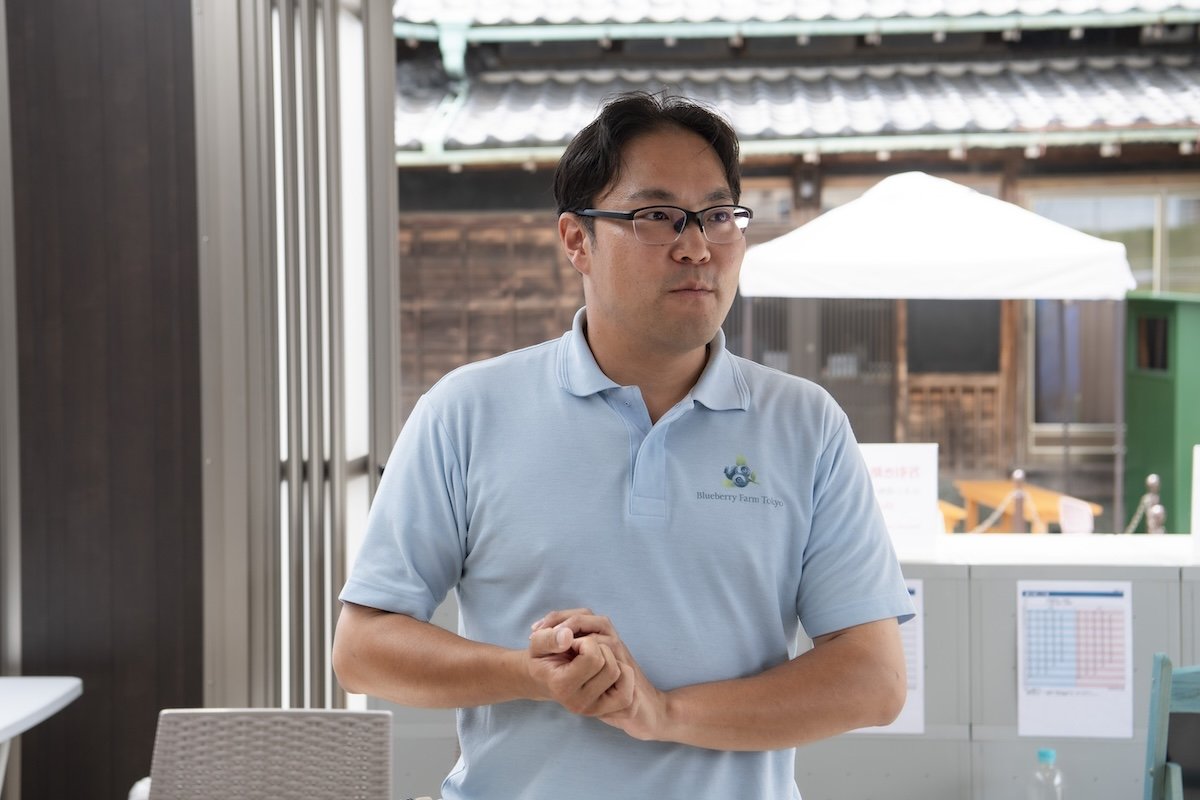
Setting out to find a mentor, Yano says that he knocked on several doors. He eventually landed upon a former blueberry grower in Ibaraki Prefecture—located northeast of Tokyo—who had lost his farm following the March 2011 Great East Japan Earthquake, and was willing to teach Yano his trade.
He began learning the ins and outs of blueberry cultivation under his mentor, who traveled out to Higashi-Koiwa to offer instruction. Besides studying fundamentals such as soil and water, Yano also found that it was necessary to acclimate the fruit to the specific growing conditions of his area.
"Some blueberry varieties are quite sensitive to the river winds that blow over from the adjacent Edogawa River, which ends up bending the shrubs," he says. "Also, some types of blueberries do not thrive well amid things like excessive rain or rising heat levels."
Learning through a process of trial and error, Yano found along the way that he had to give up growing five kinds of blueberry shrubs that did not thrive. Today, however, he has a total of 35 blueberry types—one of the largest numbers among Tokyo's blueberry farms—plus 4 more that are presently still in the research stage.
He also cultivates his blueberries in pots, which he notes is a rare approach since the majority of blueberry farmers grow their fruit directly in the ground. Under the advice of his master, he additionally installed thin hoses in order to directly shuttle water and nutrients such as nitrogen and phosphoric acid into each individual pot. This setup streamlined his watering and fertilizing workload significantly—an essential concern as a one-man farming operation.
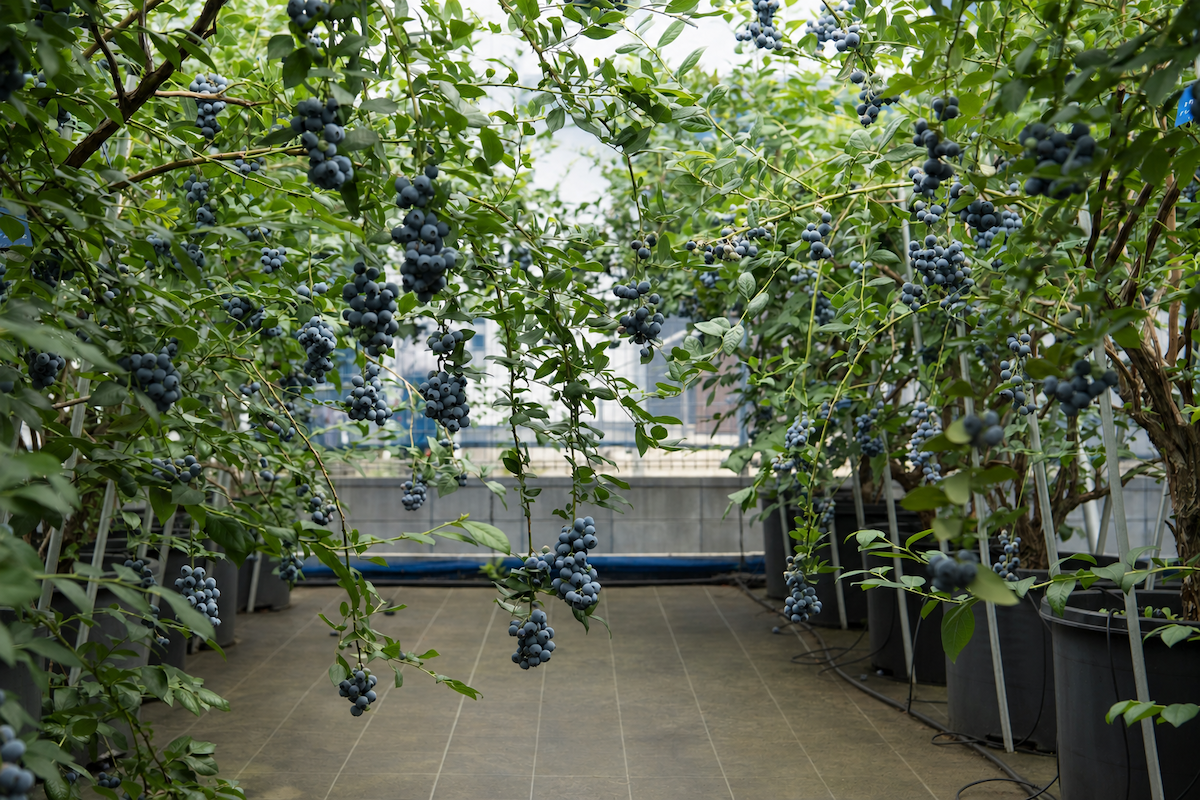
With a total of around 1,000 blueberry pots on his farm, however, Yano found that he required a few more hands on deck for certain tasks.
"Filling the pots with soil felt like endless work," he recalls, chuckling. "But people in the community really came through to help me out."
Teaching Visitors About the Small but Mighty Blueberry
Traveling to Higashi-Koiwa to visit Yano's farm provides a good chance to explore neighborhoods with an altogether different feel than well-touristed areas, such as Shibuya and Shinjuku. Near Koiwa Station, local residents stroll leisurely along shotengai (shopping streets) or gather at small eateries to chat, for example, giving the area an atmosphere more akin to rural areas outside of Tokyo.
After reaching Yano's farm, visitors are first welcomed to sit and watch a screening of an instructional film, and to listen to a presentation where Yano explains basic blueberry-related facts.
"I realized after starting the farm that blueberries are quite unfamiliar to many people, since visitors were asking me questions like whether they were supposed to peel the fruit before eating it," he says, smiling.
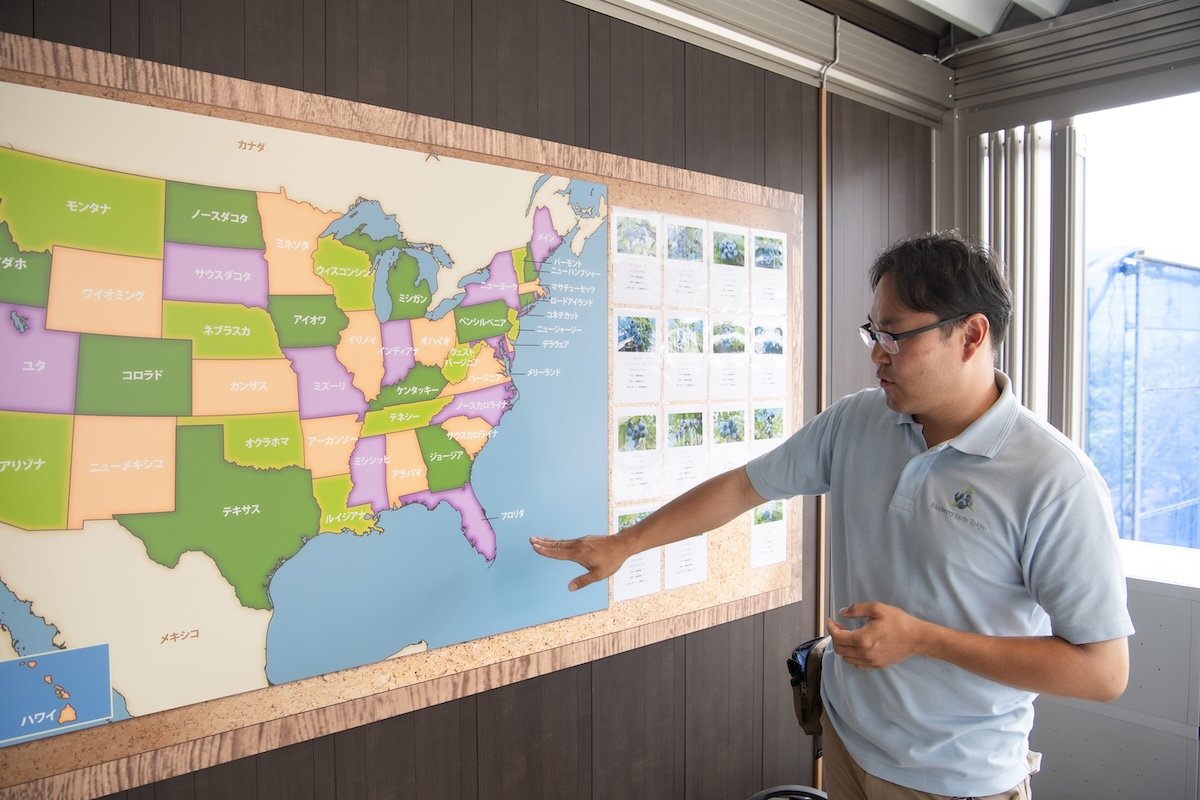
Yano next shows visitors a large panel-style exhibition on the wall, which features the regions where his blueberries come from. This includes places such as Australia and New Zealand, as well as the United States. In the latter, the states of Georgia and North Carolina are significant enough blueberry-producing regions to have their own separate picking sections on his farm.
"When Europeans first began settling in what is now the USA, blueberries were among the crops that indigenous people taught them how to farm," Yano explains to his guests regarding the history of blueberry cultivation.
He also details the journey of blueberries to reach Japan, noting that a warm-climate type was brought over from the USA to the Tokyo University of Agriculture and Technology during the 1960s.
"Among those shrubs was a homebell variety that is still alive on the campus today," he says.
Blueberries: A True Superfood
Pondering their newfound blueberry-related knowledge, visitors are then invited into a large tented area where they are given a cup that they can fill with as many blueberries as it will hold.
Just outside the entrance, a map indicates which regions' blueberries may be found in which zones. Next to this, another signboard lists blueberry variety quality rankings in order as determined by Ota Kenichi, a three-starred Michelin chef-sommelier within Yano's network.
"I was so happy that he agreed to support my farm," Yano beams.
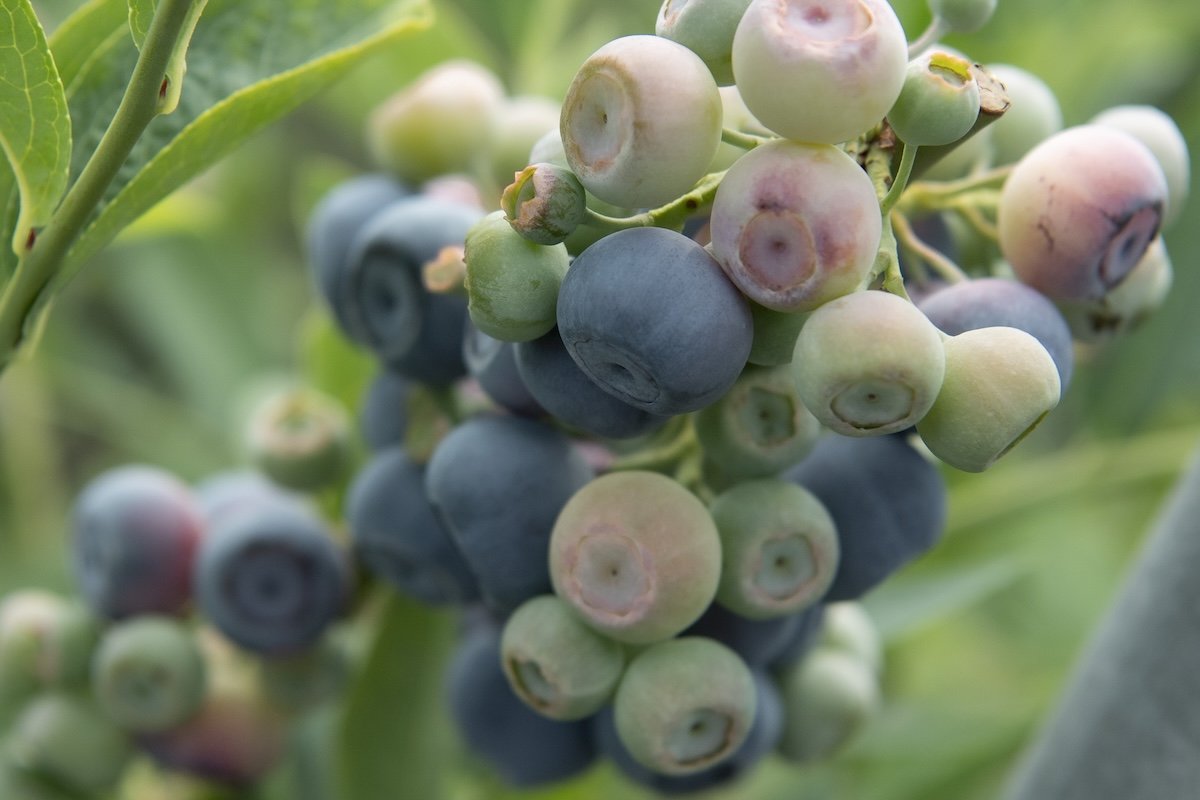
Visitors may use this information to decide which blueberries to target, or they may simply wander the rows freely while admiring the plump globes of fruit appearing in tones of pale green, dusty pink, and deep indigo blue, depending upon their level of ripeness.
Some types—such as Nui from New Zealand, which means "large" in the indigenous Maori language—are significantly bigger than those normally found in supermarkets, where Yano explains that most blueberries are tiny in size in order to avoid being crushed during transport.
"It's a real luxury to be able to eat ripe blueberries, since they lose flavor shortly after being removed from their shrub," he notes. "When they're freshly picked, they just taste so luscious and sweet."
With its convenient location, accessible from Tokyo Station in just 35 minutes, Yano says that he has seen success in attracting visitors. Noting that Tokyo has the highest blueberry production level nationwide, he says he believes that blueberries may be particularly popular in the capital since its residents tend to be particularly health-conscious.
"Blueberries can be helpful for numerous health-related elements," he says. "They truly are a real superfood."
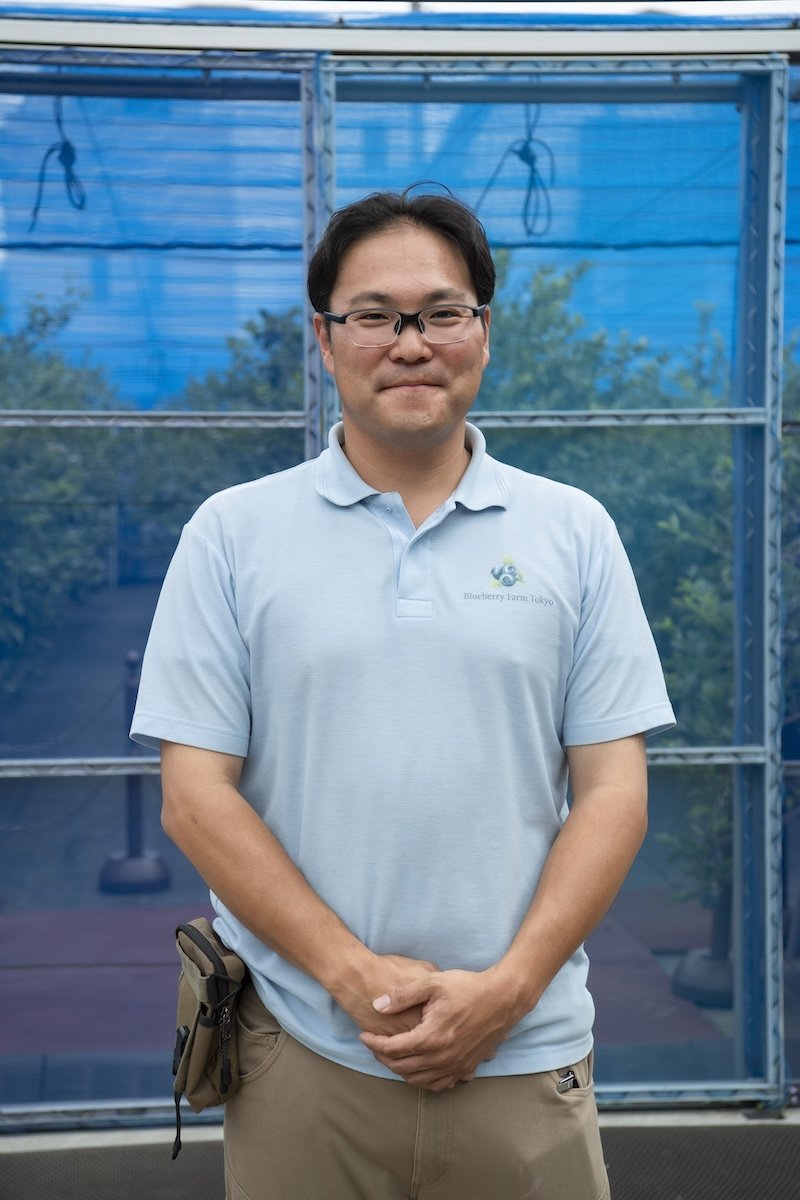
Yano Takayuki
Photos by Inoue Katsuya