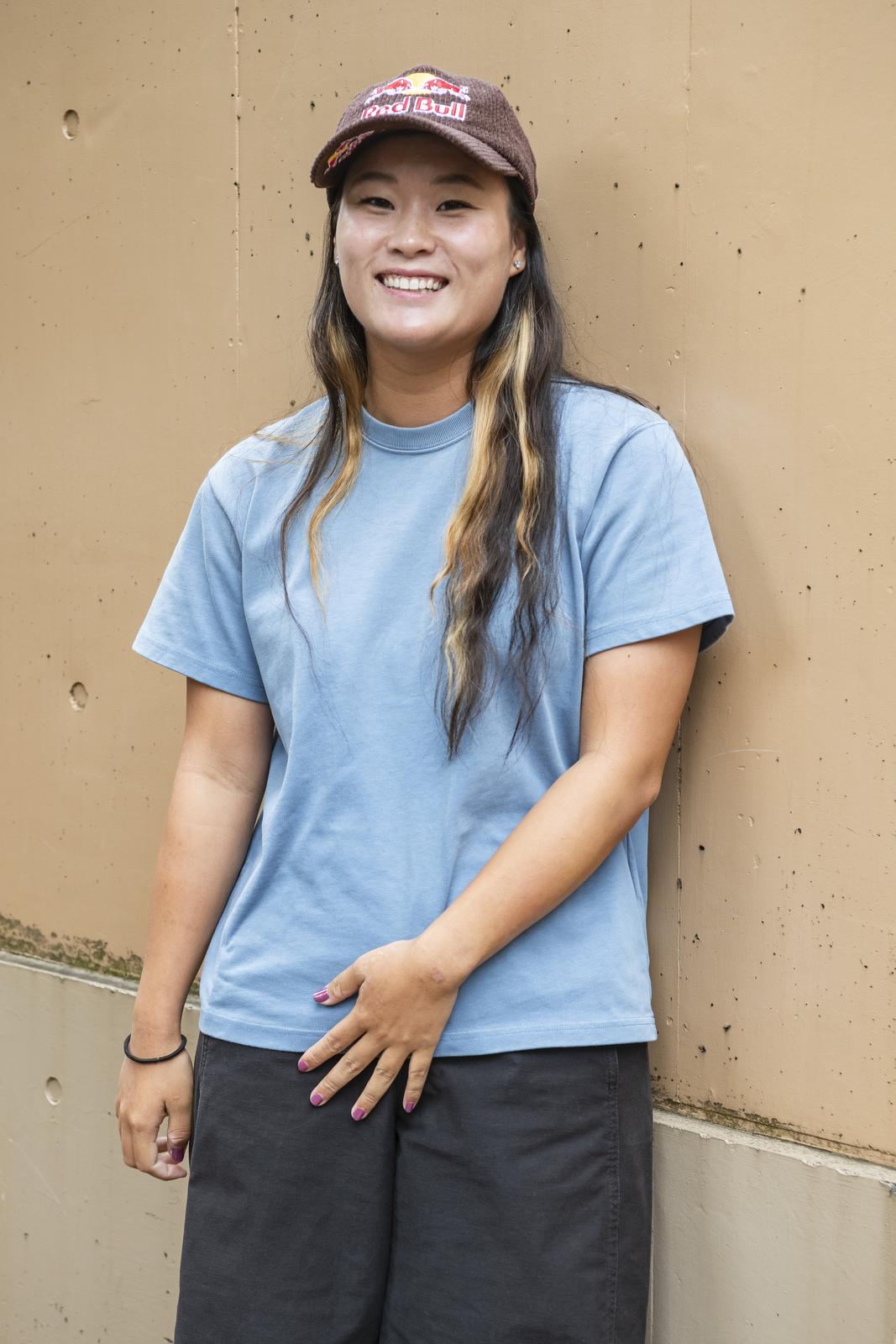







Five Years After the Tokyo 2020: Gold Medalist Yosozumi Sakura Links Skateboarding to the Next Generation


This audio is generated by AI, so pronunciation and expressions may not be fully accurate. The narration is only in English.
A Promise Made in a Family Meeting
In the summer of 6th grade in elementary school, Yosozumi started skateboarding out of the pure motive of wanting to play with her 13-year-older brother, who was skating for fun. Living in their hometown of Wakayama Prefecture in western Japan at the time, the practice environment was lacking, but she was completely engrossed and continued the sport. This marked the moment that she found something she loved out of her own volition for the first time.
"It was really hard at first—I had to hold someone's hand or grab something to ride. But after a week, I was able to ride it hands free. That moment felt so good. I also took other lessons, but with skateboarding, it was the first time that I became so absorbed and actively wanted to do something."
However, her parents were fiercely opposed to their daughter becoming so devoted to skateboarding. It did not have a very good image, with the prevalent mood of "not being a sport for girls" and also carrying the risk of injury. At any rate, her parents wanted to make her quit. As a pretense, they purposely demanded that she follow a strict practice regime in hopes that she would give up.
"My parents deliberately gave me a really tough practice regime, saying, 'You can't be good unless you complete this every day.' They apparently hoped I would throw up my hands in discouragement and quit, but it had the opposite effect," she laughs. "My progress from doing the same thing every day was obvious, even to me. I ended up enjoying the challenge to achieve new things."
Then, at a family meeting in the winter of sixth grade before starting junior high school, she made a promise.
"My parents said, 'We can't support you if you're not serious.' Skateboarding is not a sport that I can do on my own; it requires cooperation from the family. So I said, 'I will aim to become number one in Japan, so please help me.'"
After this family meeting, Yosozumi's life changed completely. After school, her mother drove her long distance to parks outside the prefecture such as in Mie and Hyogo night after night, even on weekdays. Yosozumi would do her homework and study for cram school, then skate with intensity until the park closed, coming home in the middle of the night. Her mother would then do housework, while Yosozumi would practice in front of the house from 6:30 a.m. the next morning. The schedule was brutal.
"My mother really sacrificed for me, doing all that in addition to work and house chores. My father also worked hard to pay for the travel costs. That's why I would never say something like 'I want to go home' out of discouragement during practice. My family was fighting as a team."
Typical teenage memories of school festivals and field trips were sacrificed for skateboarding, and this dedication to her goals culminated when she won the All-Japan Championships just four years after seriously taking up the sport, rising to become number one in Japan in both name and substance.
Rediscovering the Fun of Skateboarding with a Hiatus
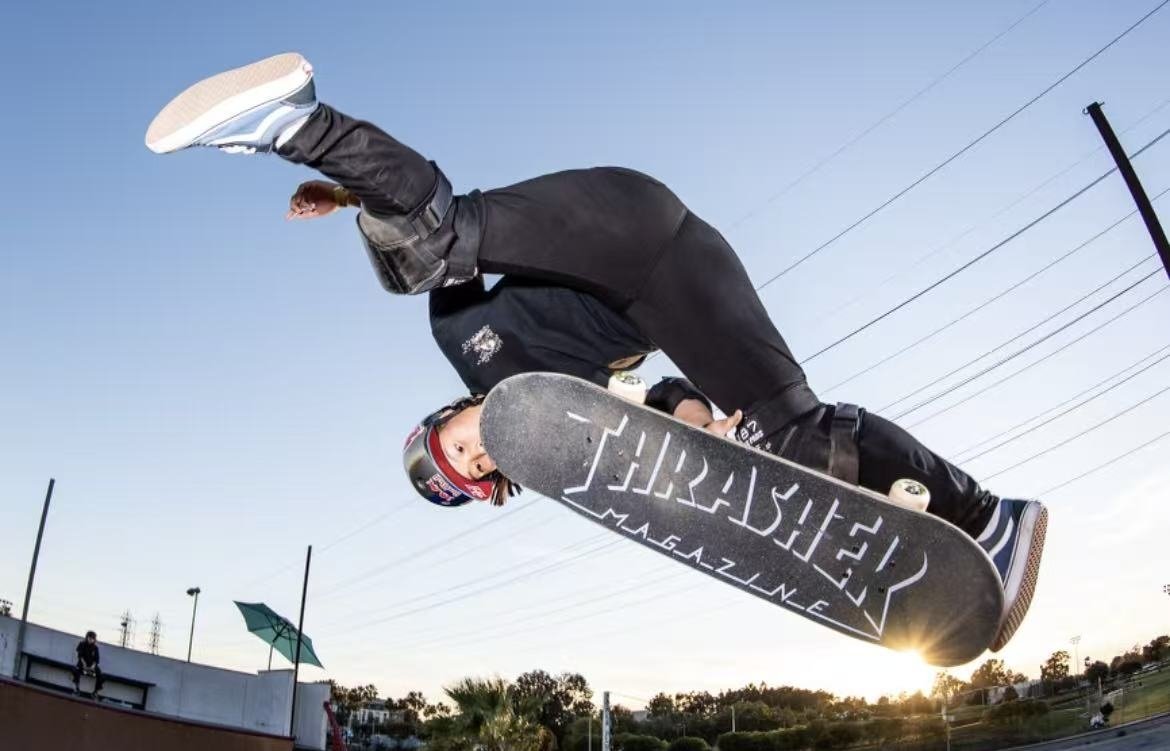
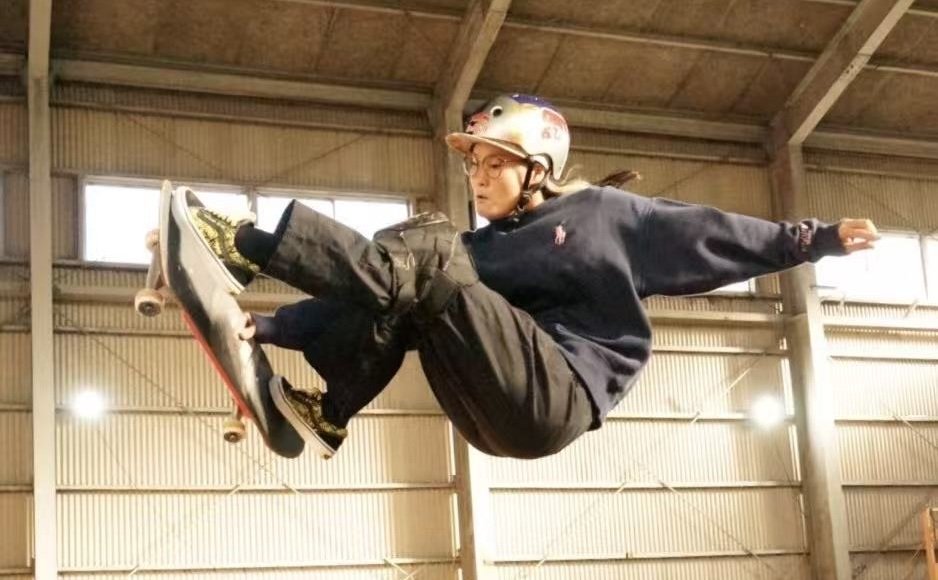
The Olympic and Paralympic Games Tokyo 2020 were held in 2021. During the 1-year postponement triggered by the COVID-19 pandemic, Yosozumi diligently brushed up the 540, a powerful aerial trick of 1-and-a-half spins, at a private park near her home, going on to impressively become the first gold medalist for women's park skateboarding.
"I was deeply astonished that I really won it. After becoming a gold medalist, people started approaching me in public and I gradually sensed the powerful influence of the Olympics afterward."
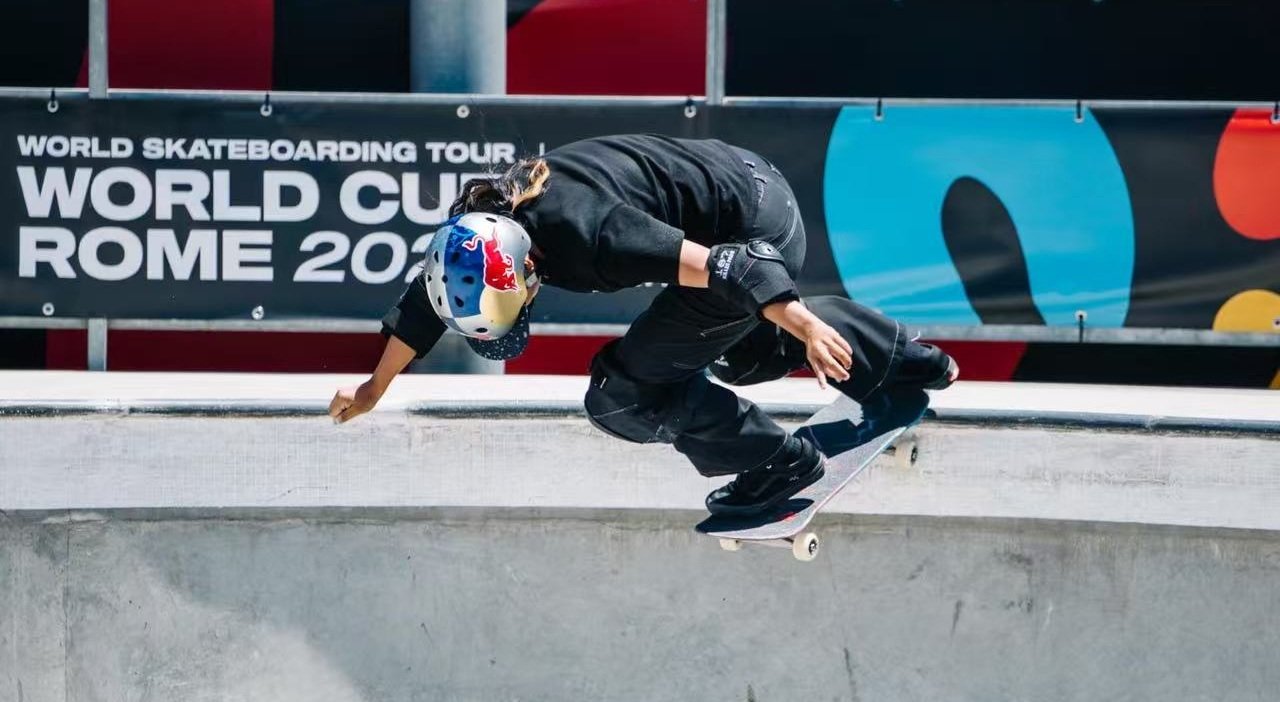
However, a new battle and the pressure of being a medalist arrived after the joy. She experienced the physical changes that are characteristic of women athletes as they enter their 20s and a major injury in the middle of the Paris 2024 Olympic Games qualification process—a posterior cruciate ligament tear in her right knee. She contended for the preliminaries despite all this, but was eliminated before she could perform the new trick she had prepared.
"I was really depressed for a while, questioning the meaning of having worked so hard in the last three years. It became too much and I gave away the board I used in Paris, completely distancing myself from skateboarding for about two months."
In her time away from skating, she got her first taste of a "normal 20s lifestyle" with her family taking her to travel and going to karaoke for the first time in her life. As her mind gradually relaxed, the owner of the park that she regularly used asked her to come to an event. Still feeling unsure as to whether or not she would skate, she arrived at the event to find the pure eyes of children awaiting her.
"Even though I had been eliminated, the children surrounded me and said, 'Sakura, let's skate together!' I realized in that moment that results were not everything. It's simply fun to skate with everyone. I was able to experience again how I felt when I first fell in love with skateboarding."
She is now moving forward while maintaining a healthy balance of sports and a private life, training intensively for four hours daily but also going to karaoke with her family or out for meals with friends.
Skateboarding in Your Own Style
Since the Tokyo 2020 Games, the number of skate parks and schools has increased in Japan, especially in Tokyo. Female skaters and families chasing their dreams are becoming an everyday sight.
Despite a shorter history of skateboarding compared to other countries, why have so many medalists come from Japan? Yosozumi analyzes the reason as being rooted in the diligence of the Japanese.
"Skaters overseas really value the culture and tend to prioritize their own enjoyment and mood. That is a fantastic thing, but when aiming to win at the level of the Olympic Games, I think that Japanese people exert their strength in being able to set a regime and follow it diligently. On the other hand, overseas skaters overwhelmingly shine with the enthralling maneuvers that electrify spectators at events and other. It's not an issue of good or bad—they are both appealing in their own way."
At the age of 24, Yosozumi is already a veteran in the competition scene today, being almost one of the oldest. She has built a relationship of mutual respect with her juniors, applauding them when they skate well. Precisely because of this friendly rivalry, she hopes that the young next-generation skaters who will carry on the future skateboarding world will create their own legends.
"I want them to be free of the presumption that they must do a certain trick to win. I hope they will develop original tricks that no one can replicate and showcase those to the world. Skateboarding is a hard sport to keep winning in, so instead of single-mindedly aiming to win competitions, taking a step back and having the perspective of 'I'll create my own legend' should enable them to enjoy skateboarding much more."
Anticipation Toward Urban Sports in Tokyo
The construction of skate parks is capturing attention as a part of efforts to popularize urban sports and with local governments striving to attract the young population to move and become permanent residents. Amid this, Tokyo continues to drive Japan's skateboard culture with the success of Horigome Yuto from Koto City in eastern Tokyo and more. Parks in Tachikawa City in western Tokyo and other cities have favorable environments with world-class Olympians practicing alongside children on an everyday basis. Yosozumi says she also enjoys skateboarding in inclusive spaces like these.
"I become friendly with the children skating in the park, and if I see a technique I can't do, I'll ask 'How do you do that?' I learn a lot from kids of the next generation."
As a skater, Yosozumi also expressed her earnest hopes for Tokyo and the future of Japan's street culture.
"I would love to see an increase of spaces like zones or areas in the city where skateboarding is officially permitted, not just parks. Because we follow rules as professionals, many athletes harbor the desire to skate in the city in their everyday lives. I hope that Tokyo will create official spots like these and become more vibrant with culture."
After experiencing a major setback, the first skateboarding queen has gained a much more resilient spirit; while sustaining her own style, she will continue to shine a bright light on the future of the skateboarding world in Japan.
Yosozumi Sakura