







A Taste of Tokyo Tradition: A Century of Oden
For over a century, Otako has served generations of Tokyo diners oden—a hotpot dish of daikon radish, tofu, fish cakes, and other ingredients simmered in a deeply savory broth. At its main store in Nihonbashi near Tokyo Station, the restaurant's distinctive, richly seasoned version offers a taste of a Tokyo tradition all its own.


This audio is generated by AI, so pronunciation and expressions may not be fully accurate. The narration is only in English.
A Century in Tokyo
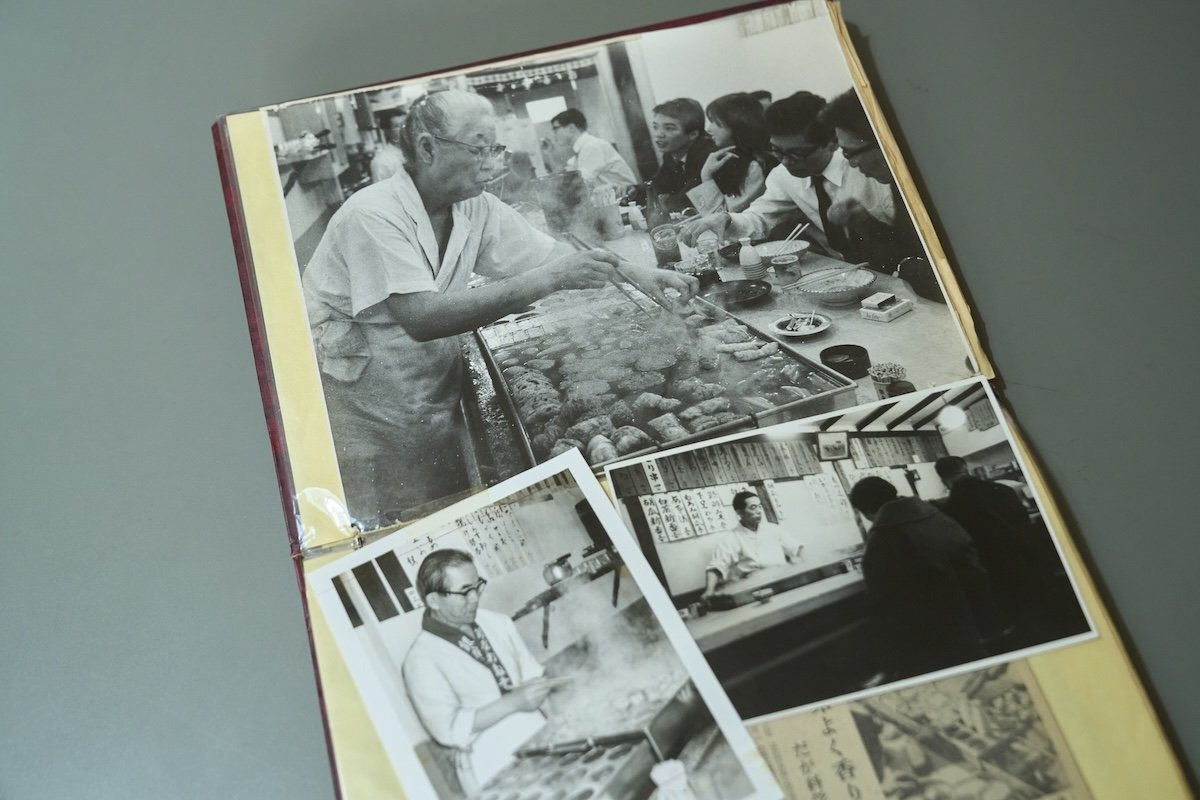
Otako traces its beginnings to 1923. Archival family accounts identify the founder as Ota Ko, from whose name "Otako" was derived. The store opened in Ginza in 1925, later becoming a fixture in the central Tokyo district. In 2002, the main store moved to its current home in Nihonbashi.
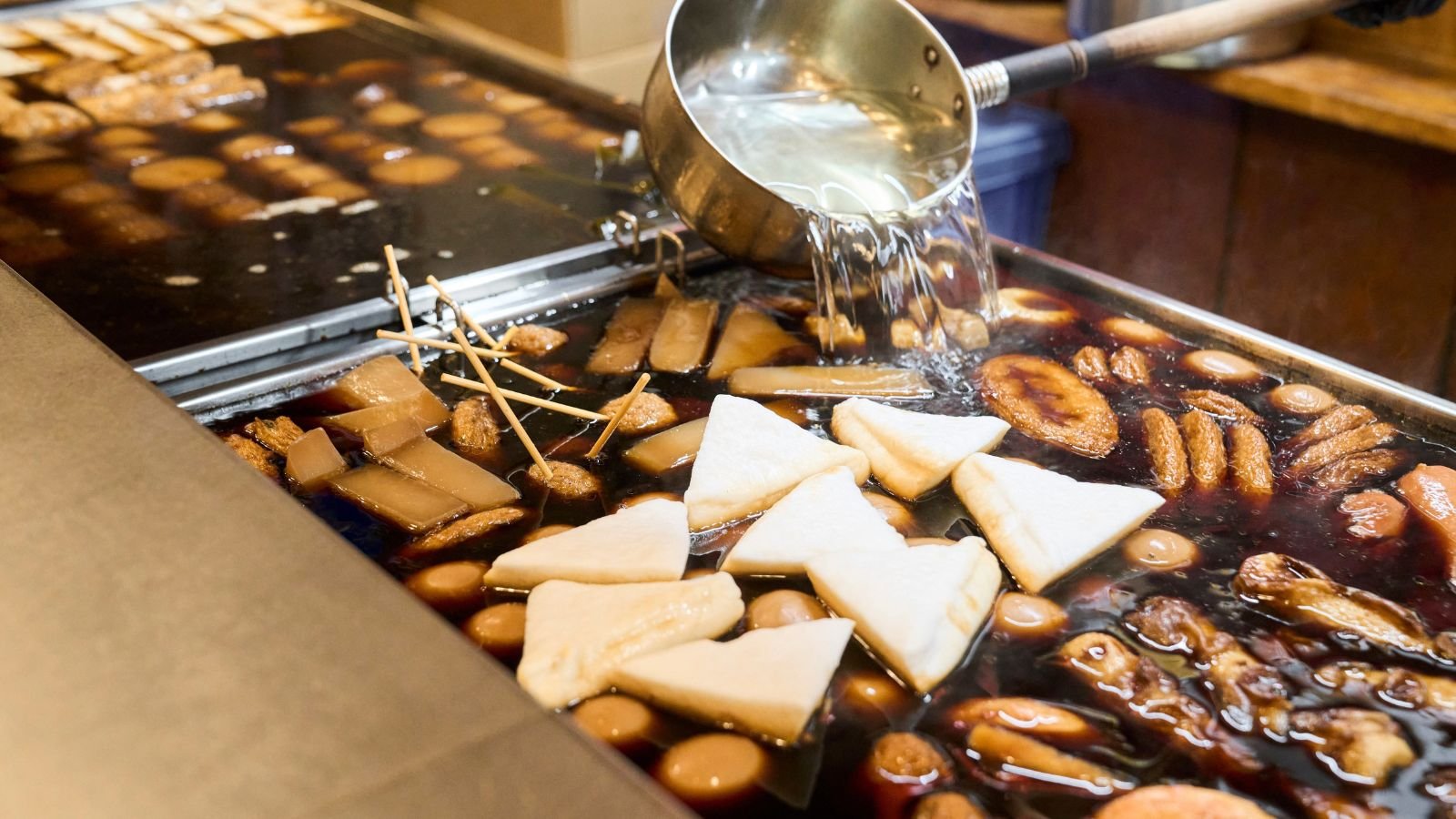
Those same accounts describe Ko using square oden pots positioned so that customers could see the ingredients and choose what they wanted. Nearly a century later, the pot remains at the center of the experience: a changing assortment of vegetables, tofu, eggs, seafood, and fish cakes, all taking on the flavor of the umami-rich broth.
Getting to Know Oden
For those encountering it for the first time, oden is a Japanese comfort food built around ingredients gently simmered in seasoned dashi, the savory broth that forms the base of many Japanese dishes. Its origins, however, look quite different. Oden generally traces its roots to tofu dengaku, skewered tofu grilled with miso paste. During the Edo period (1603-1868), when present-day Tokyo was known as Edo, dengaku became an inexpensive and popular food among ordinary townspeople. From the Meiji era (1868-1912) onward, oden developed into a broth-rich simmered dish with a wider variety of ingredients, closer to the form familiar today.
As the dish spread, regional styles emerged. In eastern Japan, oden traditionally came to be associated with bonito-based dashi broth seasoned with koikuchi, or dark soy sauce, giving it a deeper color and more assertive flavor. Western Japan developed a lighter-colored broth culture with a greater emphasis on kombu seaweed. The difference reflects broader regional food traditions: dark soy sauce became more common around Edo from the 18th century, when major production centers developed in the region and bolder seasoning became characteristic of many foods in the growing city.
Yet Otako is distinctive even within Tokyo. Its broth is immediately striking in both color and flavor, something that surprised Yamazaki Hiroaki, who was the store manager at that time, when he first joined the restaurant. He had been more familiar with clearer oden broths elsewhere in Tokyo. When I came here and saw this deeply colored broth for the first time, I was a little surprised," he says.
Soy sauce contributes to that intensity, but Yamazaki says the ingredients themselves are also essential to the final taste. "When you put a large amount of ingredients into the dashi, they give off flavor," he explains. "That is how the taste of our broth develops."
The result is full-bodied and savory, with one broth bringing together ingredients that vary widely in taste and texture.
A Pot Full of Possibilities
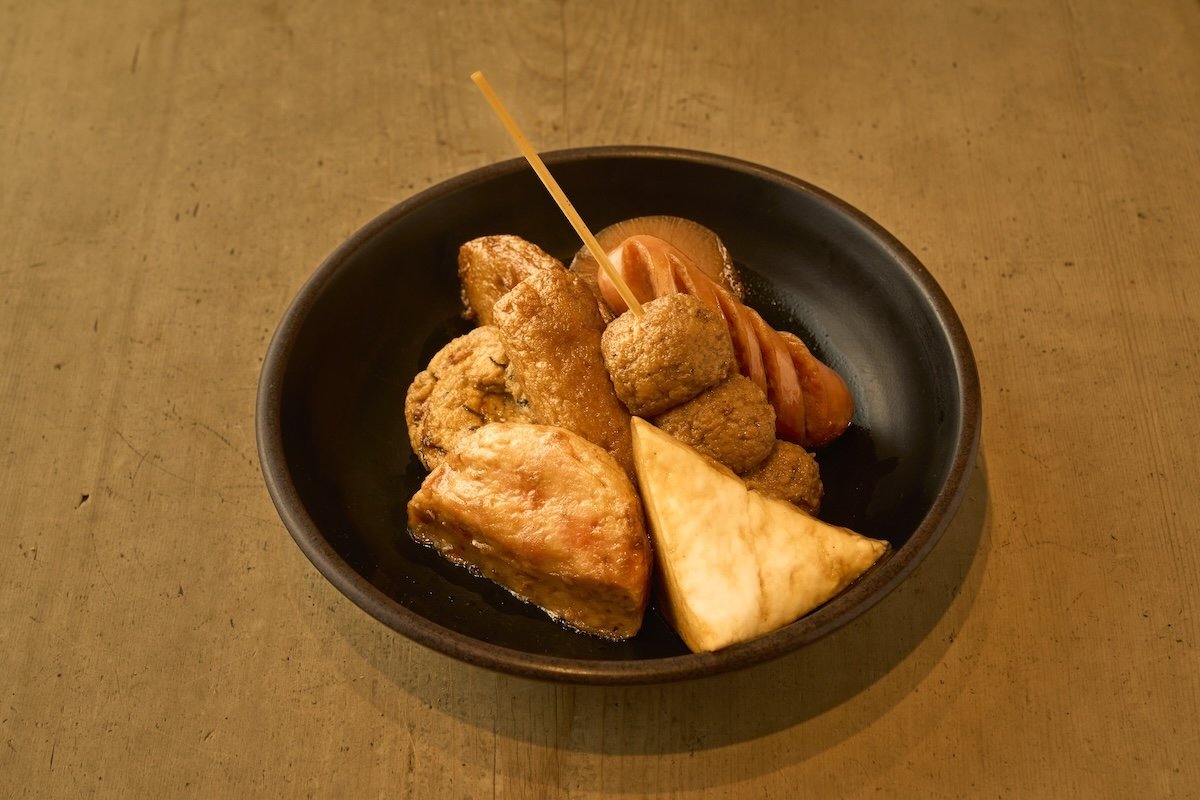
The range of ingredients is part of what makes oden approachable: diners can build a selection around familiar tastes while trying something new. Alongside daikon and boiled eggs are several varieties of nerimono, foods made primarily from seasoned fish paste. Hanpen is soft, pale, and airy, while satsuma-age is fried and has a firmer texture. The basic idea may be more familiar to international visitors than it first appears: they belong to the same broad family of fish-paste foods as surimi products, such as imitation crab.
For newcomers, there is no need to understand every ingredient before ordering. Choosing a few different textures is part of the experience.
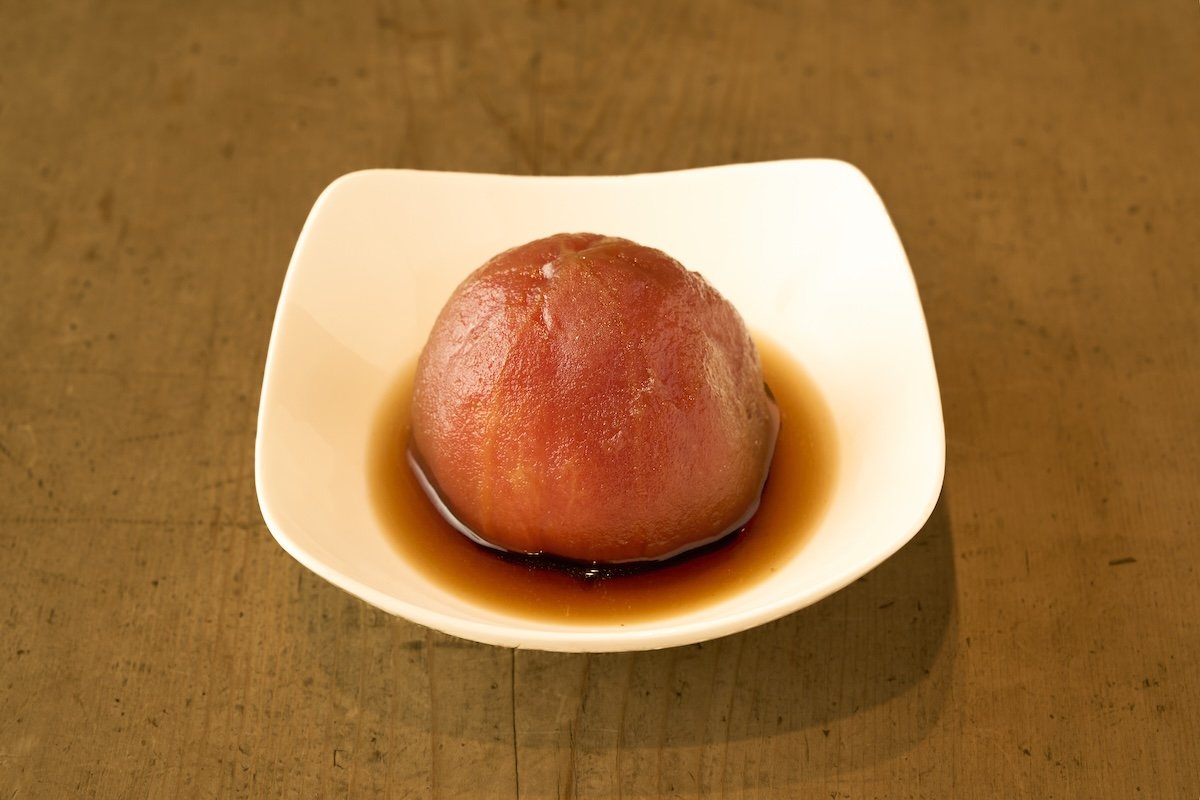
There are less expected choices too. Octopus and tsubugai whelk share the menu with sausage and even a whole tomato. The latter initially made Yamazaki skeptical. "At first I thought, really, tomato?" he says. "But when I tried it, it was unexpectedly good. "Otako's menu keeps making room for the new. It reflects a familiar Tokyo pattern: long-established traditions continuing to evolve alongside changing tastes.
From Staff Meal to Signature Dish
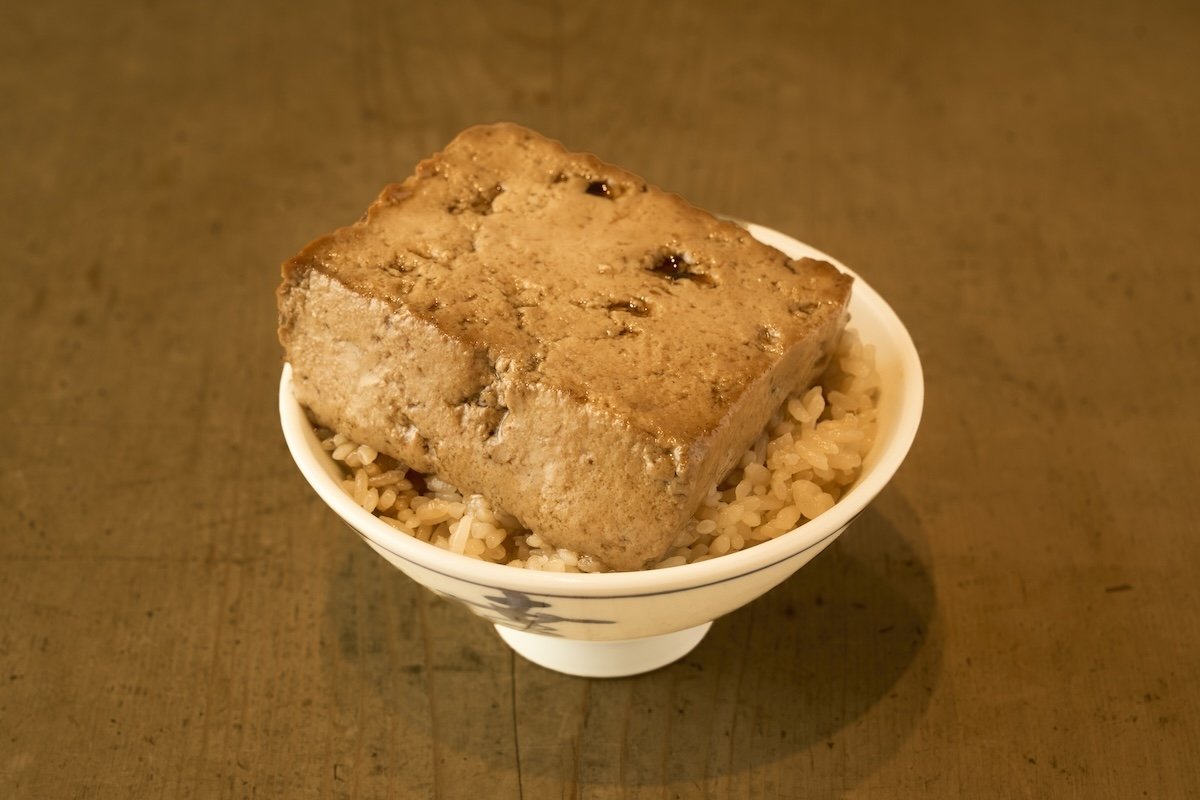
One dish, however, has become especially closely associated with Otako: toumeshi, a generous block of tofu from the oden pot served over chameshi rice.
According to the story passed down within the restaurant, toumeshi began as a staff meal. Customers noticed what the employees were eating and wanted to try it themselves, and the combination eventually found its way onto the menu.
The tofu used for the dish is specially prepared for the restaurant. Before lunch service it can spend around an hour in the oden broth, enough for the outside to take on its seasoning while the center retains the tofu's soft, mild character.
That contrast is what makes the uncomplicated pairing work: deeply flavored broth on the surface, delicate tofu within, and rice underneath to catch the juices. Today, toumeshi is one of the pillars of Otako's lunch menu and an obvious introduction for anyone unsure where to begin.
Oden and a Drink
For Yamazaki, the appeal of oden is inseparable from the season in which it is traditionally enjoyed. "When it gets cold, you want something warm and a drink," he says.
That might begin with beer before moving on to sake or whatever the diner prefers. Rather than thinking of oden purely as a complete meal, Yamazaki sees it naturally as something to enjoy piece by piece with a drink, with toumeshi providing a satisfying finish.
There is even a drinking custom associated with some oden shops called dashiwari, in which hot oden broth is added to sake. Otako's version, however, is unusually intense. Yamazaki laughs that its broth is simply too strongly seasoned for the practice.
It is another reminder that, despite Otako's long Tokyo history, its oden should not be taken as a template for every pot in the city. Its distinctive broth is very much its own. In a city this large, even a dish as familiar as oden takes many forms. Each shop has its own interpretation, reflecting the diversity of Tokyo's food culture.
When the Pot Gets Busy
The atmosphere changes with the seasons. Summer is relatively calm, but business begins to build from around November, with the coldest months bringing the largest crowds.
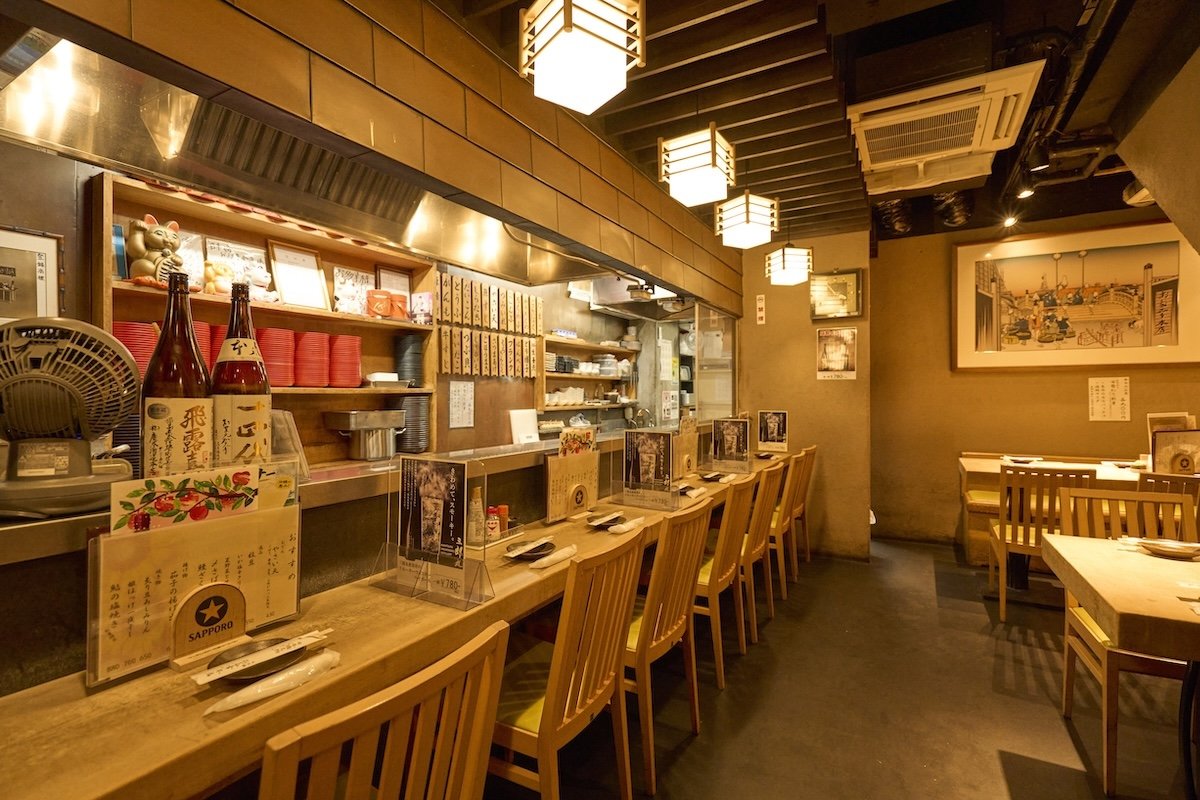
The Nihonbashi store extends over several floors. The first-floor counter puts diners close to the oden pot, while larger parties are accommodated upstairs. Ordering is now handled through a QR-code system with multiple language settings, allowing overseas visitors to browse the menu on their own phones.
When the doors open in winter, though, there may be little time for conversation. Yamazaki describes the first hour of service as an almost continuous cycle of filling orders as customers arrive.
Preparation makes that pace possible. Ingredients such as daikon have already undergone much of their cooking beforehand and can return to the broth as needed. As one batch disappears, another follows.
Choose What Looks Good
Despite overseeing a restaurant with over a century of history behind it, Yamazaki does not prescribe a correct way to experience oden. Asked what he would recommend to a first-time visitor, his answer is straightforward. "The best thing is to choose what you like and enjoy it," he says.
A diner might begin with the tender daikon, add airy hanpen, experiment with tomato or seafood, and finish with toumeshi. Someone else can choose an entirely different combination from the same pot.
Perhaps that freedom is part of oden's lasting appeal. At Otako, generations of diners have gathered around a dish that is at once communal and individual: one simmering pot, and countless ways to make a meal from it.
Otako
https://a439400.gorp.jp/*Japanese language site
Photos by Fujishima Ryo