







Making Sustainable Packaging Future Standards



This audio is generated by AI, so pronunciation and expressions may not be fully accurate. The narration is only in English.
Beyond Disposable Packaging: DNP's Sustainable Packaging Initiative
Packaging is part of everyday life, from the food and drinks we consume to the household goods we use. But most packaging has a short life, ending up as waste once its contents have been used up.
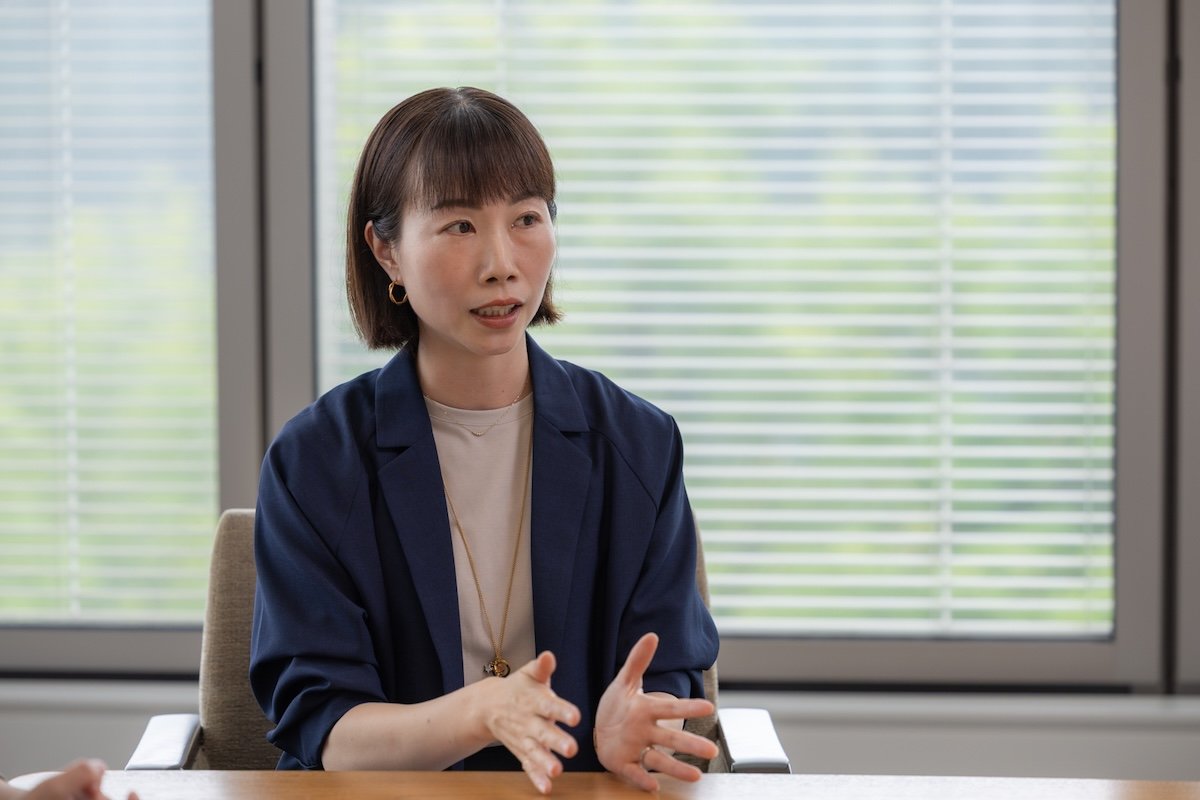
"As a manufacturer, we wanted to take responsibility by providing packaging with a lower environmental impact," Mogi says, explaining the thinking behind the initiative.
Long before reducing or moving away from plastic became a widespread priority, DNP was already developing packaging with a lower environmental impact. In 1997, the company introduced life cycle assessment (LCA), a method for evaluating environmental impact across a product's entire life cycle, and began developing packaging with a lower environmental impact in earnest. A prime example is DNP's sustainable packaging, launched as a brand in 2018. Based on the 3Rs—reduce, reuse, and recycle—plus renewable, or the use of renewable resources, it aims to create value for society in three areas: reducing CO2 emissions, promoting resource circulation, and conserving the natural environment.
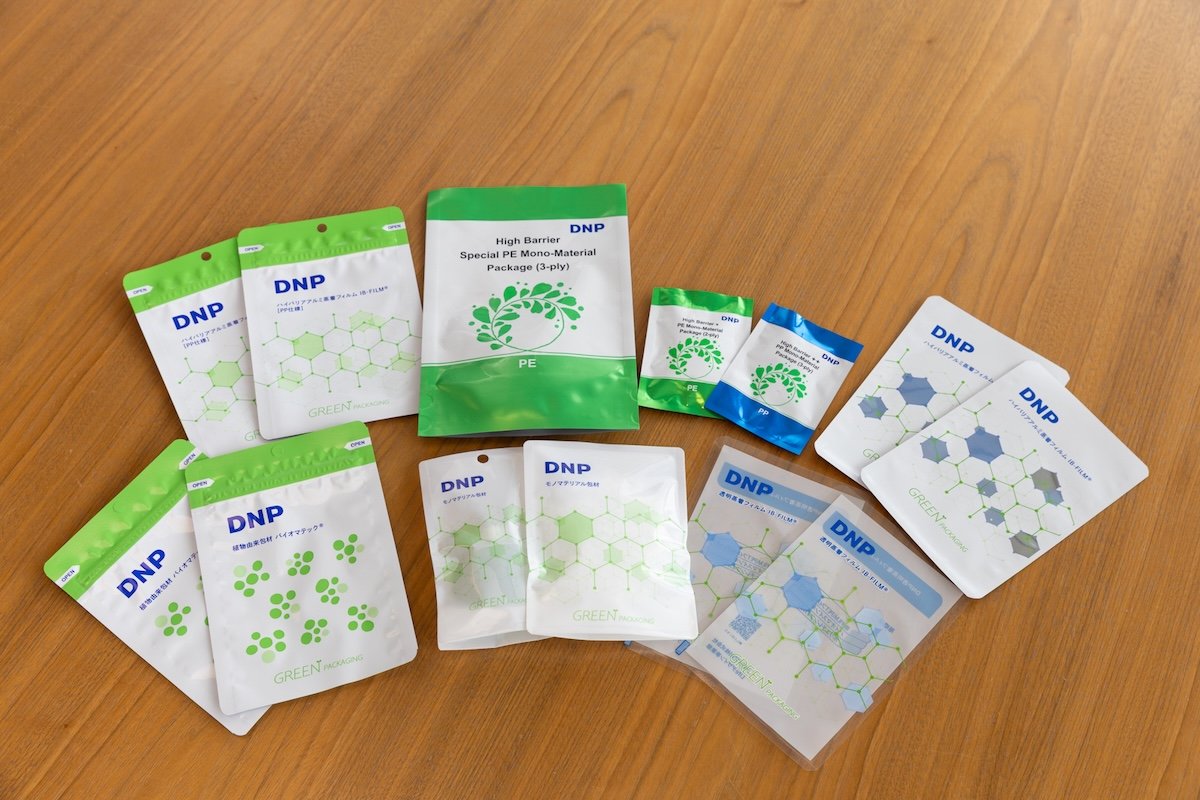
Packaging needs a range of properties to protect its contents, including the ability to preserve them over time, as well as heat resistance and strength. However, combining different materials to achieve these properties can make the packaging difficult to recycle. DNP's mono-material packaging overcomes this challenge by delivering the necessary functionality using a single material. It is designed for a wide range of applications, such as foods requiring long-term storage, dried products, and cosmetics and healthcare products.
"By combining our expertise in converting and vapor deposition technologies, we were able to develop mono-material packaging that meets the required performance standards," Iwafuchi says.
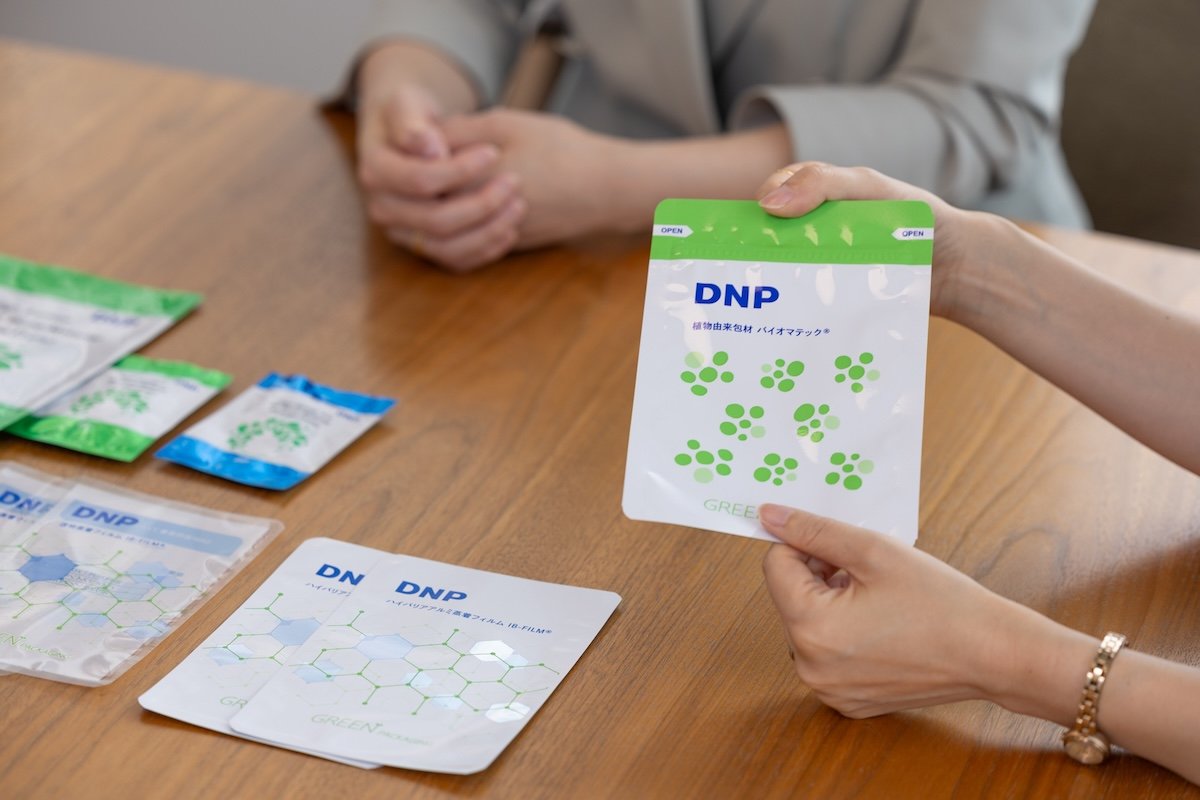
Another flagship product is DNP's plant-based packaging material, which replaces some petroleum-derived raw materials with plant-based materials derived from sugarcane. Both products are widely used in everyday items, including packaging for snacks and detergents, and their use is also expanding into pharmaceutical packaging.
Finding Opportunity in Stricter Regulations
Environmental regulations for packaging are becoming more stringent around the world. One example is the EU's Packaging and Packaging Waste Regulation (PPWR), which began to apply in phases in 2026. Iwafuchi says DNP views these changes as opportunities to create new value. By staying ahead of developments in Japan and overseas, the company plans to work with customers to identify potential challenges and risks and explore ways to address them.

Tighter regulations also reflect growing scrutiny of environmental claims that lack a clear basis. What does it really mean to be environmentally conscious? Mogi says DNP wants to go beyond simply expressing its intentions and stance as a company and substantiate its claims with clear standards and evidence.
Discussions around the EU's proposed Green Claims Directive have prompted related legislative developments, with growing moves to regulate environmental claims that are not backed by objective data. In Japan, the Ministry of the Environment revised its Guidelines for Environmental Representations in March 2026 for the first time in 13 years. The revised guidelines set out more specific criteria for preventing greenwashing in self-declared environmental representations, including taking the entire life cycle into account and avoiding vague language or claims.
Putting Numbers to Invisible CO2
Alongside developing and providing DNP's sustainable packaging, DNP is also working to make the CO2 emissions associated with its packaging more transparent by quantifying them. The company calculates emissions across the entire life cycle, from sourcing raw materials through packaging production and transportation to disposal.
"As a manufacturer, we believe it's our responsibility to reduce CO2 emissions, quantify them, and propose packaging that can lower those emissions, while also helping brand owners reduce their Scope 3* emissions," Iwafuchi explains.
In 2026, DNP expanded the initiative by joining other companies and organizations involved in plastic packaging in a Ministry of the Environment model project on carbon footprints (CFP) for products and services. In March, the participants developed and published CFP calculation rules and accompanying guidance for plastic packaging. This work is helping develop a common approach to CFP calculation and build a framework that can be used throughout the supply chain.
*Scope 1 refers to direct emissions from the combustion of fuels used by a company. Scope 2 refers to indirect emissions associated with the use of purchased electricity, heat, and other energy. Scope 3 refers to indirect emissions generated across the entire supply chain.
Sustainability Meets Business: Tokyo Financial Award 2020
In 2020, DNP's sustainable packaging won the SDGs Subcategory in the ESG Investment Category of the Tokyo Financial Award 2020, organized by the Tokyo Metropolitan Government (TMG). The award was established as part of the "Global Financial City: Tokyo" Vision, formulated by the TMG in 2017, to recognize companies working to promote ESG investment. The ESG Investment Category has since been renamed the Sustainability Category.
"It meant a great deal to us to have our commitment to balancing environmental considerations with business needs recognized from an objective, medium- to long-term perspective. The award gave us greater confidence in our determination to continue addressing social challenges through the power of packaging," Mogi recalls.
A Future Where Sustainable Packaging Is the Standard
As environmental and recycling regulations and public attitudes have evolved, DNP has consistently sought to balance its business activities with the global environment, while promoting environmentally conscious initiatives throughout the supply chain. We asked Iwafuchi and Mogi what an ideal future looks like for DNP.
"By combining Japan's strength in meticulous, high-quality manufacturing with global environmental standards, we hope to bring happiness and inspiration to every life around the world, in keeping with the vision of Life Design Operations," Iwafuchi says.
"Our ideal is a world where consumers do not have to make a conscious choice because every package they pick up is already designed for resource circulation and decarbonization. We want to provide the infrastructure that supports this 'invisible environmental value' without compromising on either functionality or cost. That is the 'future standard' we are working toward," Mogi says.
Guided by the vision of "Creating future standards," DNP is drawing on a manufacturing philosophy cultivated over 150 years to steadily reshape what is considered standard around the world through something as familiar as packaging.
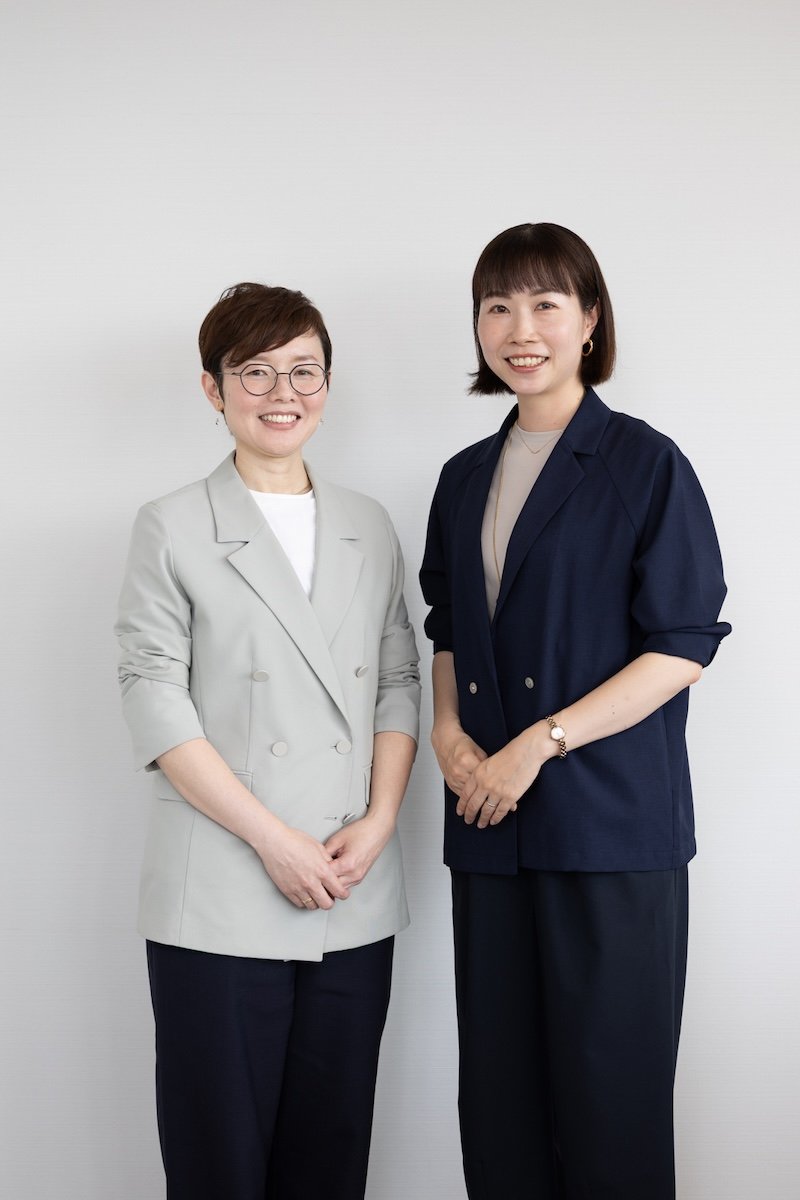
Iwafuchi Mika (left) and Mogi Saori (right)
Life Design Operations, Dai Nippon Printing Co., Ltd.
DNP develops and manufactures packaging products that are an essential part of everyday life, including folding cartons, flexible packaging, and plastic bottles. With the goal of contributing to a sustainable society and well-being, the company continues to expand its range of environmentally conscious and high-performance products while growing its business inside and outside Japan.