






Three Generations Keeping the Craft of Edo Armor Alive
Listen to This Article in Governor Koike's AI Voice
This audio was generated using AI.


This audio is generated by AI, so pronunciation and expressions may not be fully accurate. The narration is only in English.
Mastering the Craft Hands-On, Without Drawings
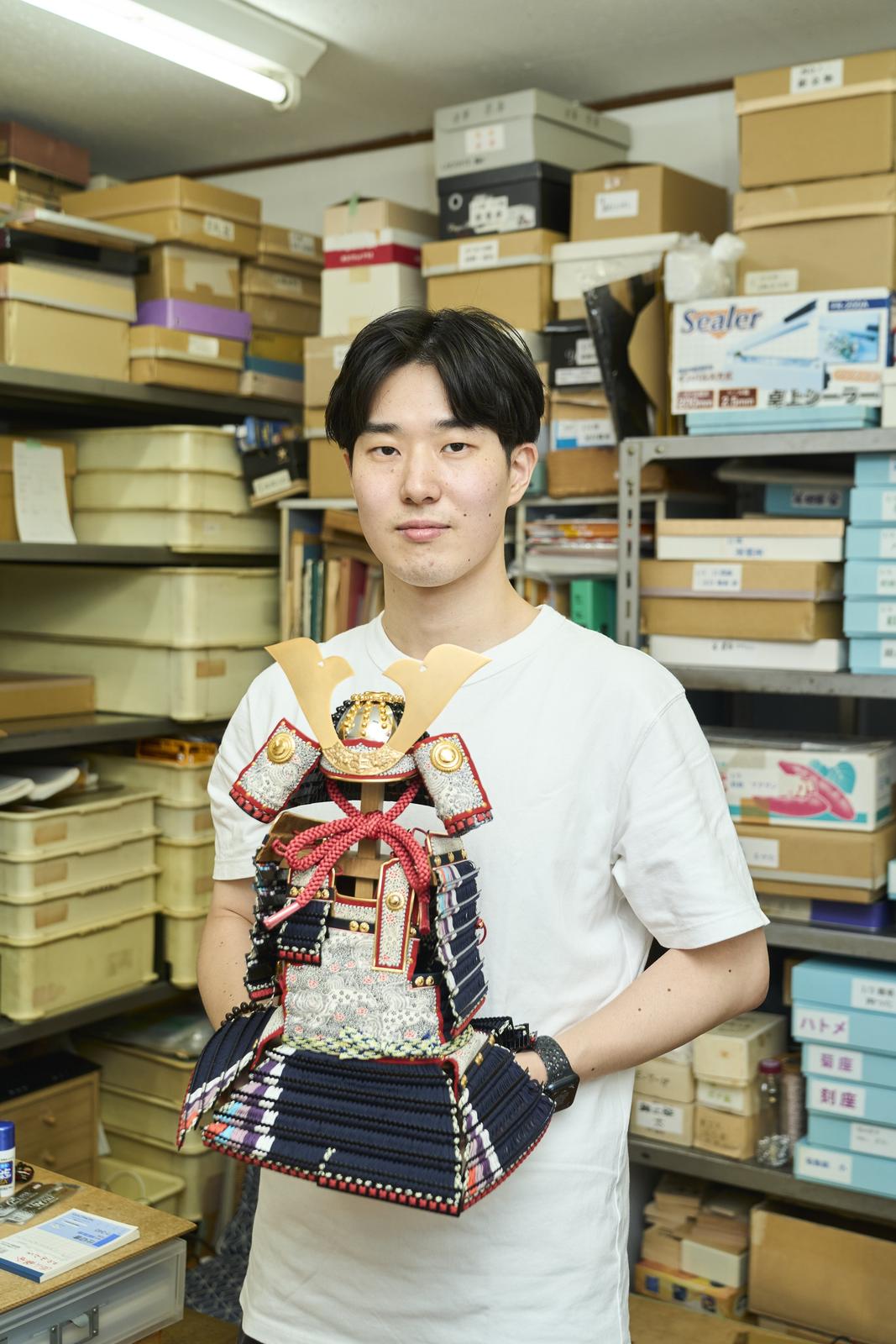
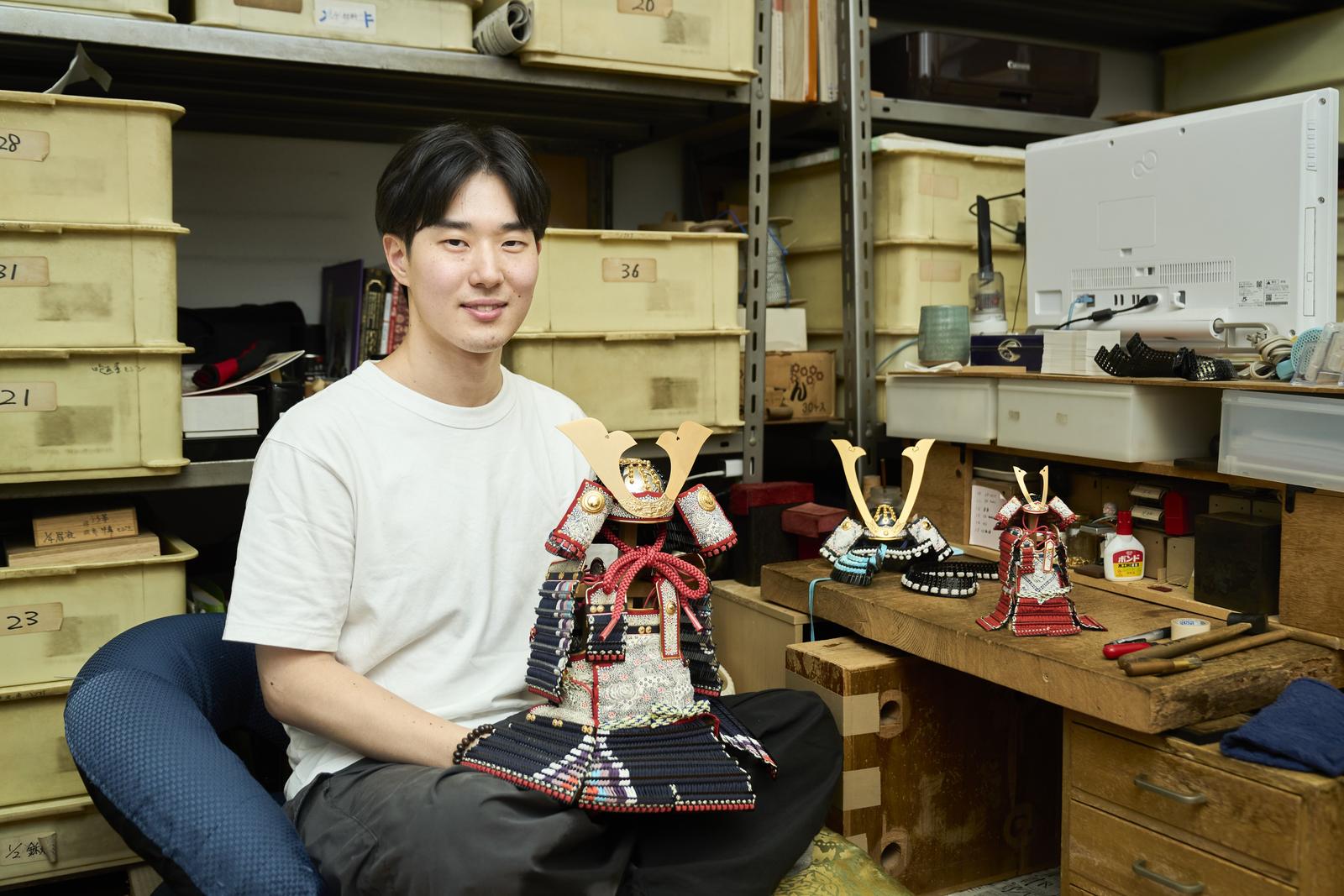
Boys' Day dolls, displayed on Tango no Sekku, a traditional festival celebrated on Children's Day (May 5) to celebrate the birth of a boy and pray for his healthy growth and protection from misfortune, are miniature versions of the armor and helmets worn in earlier times. From the Edo period (1603-1868) onward, the custom spread among ordinary people with the idea that the dolls would protect their children, and it has been passed down to the present day. Drawing on techniques inherited from his grandfather and father, Takumi recreates the armor and helmets of the past as Boys' Day dolls using modern materials and technology, as well as techniques he has developed himself.
Kato Tomomi, Takumi's grandfather, is the son of first-generation craftsman Kato Icchu, who was acclaimed as one of the finest in his field for his achievements in reproducing and restoring armor and military equipment designated as National Treasures and other cultural properties. Tomomi was also the first armor maker to be certified as a Traditional Craftsperson.
"The craftsmen who originally made armor for military commanders didn't leave behind drawings or plans, so by the time of my great-grandfather, the first-generation craftsman Kato Icchu, the techniques were no longer being passed down. As a result, he repeatedly visited residences where actual armor was on display, as well as shrines and temples across Japan, spending days at a time from morning to night making painstakingly detailed drawings of the pieces. He also consulted historical documents to verify period details, sourced materials that were as close as possible to those used in the past, and taught himself the techniques needed to assemble and recreate the armor down to the smallest detail. Back then, it seems he could even handle armor that is now designated as a National Treasure, so I imagine he was also able to learn about the techniques through the way the armor felt in his hands," Takumi says.
Passed down in Edo, present-day Tokyo, where the warrior class played a central role, Edo armor differs from more ornately decorated armor. Based on meticulous historical research, it recreates o-yoroi (large armor) and is characterized by imposing designs and an emphasis on simplicity and strength. It was designated a Traditional Craft of Tokyo in 1986. Another hallmark of the Edo aesthetic is said to be the intricate detailing lavished precisely on areas hidden from view.
Kato Tomomi, who was trained from an early age by the first-generation craftsman Kato Icchu in the techniques needed to recreate these distinctive features, followed in his footsteps, traveling throughout Japan to study and handle actual armor and hone his craft. He later struck out on his own and established the workshop Armor Craftsman Tomomi Kato.
Adapting the Craft to Modern Needs
Having grown up watching his grandfather and father at work from an early age, Takumi decided in junior high school that he would become the third-generation successor to the family business. He went on to enroll in the Art Craft Department at Tokyo Metropolitan Kogei High School, the same school his father attended. Founded in 1907, the school has spent more than a century training generations of talent in the fields of craft and design in Tokyo. There, Takumi studied metalworking techniques and, immediately after graduating, began training at the family workshop.
Takumi explains, "My grandfather's an old-school craftsman who believes you should learn by watching, while my father teaches me if I ask. Of course, both of them are strict as masters of the craft, but they are also family. I've always tried to keep myself in check, though, knowing that I can't let myself take advantage of that. The thing is, they never got angry when I made mistakes. If anything, that made me feel all the more guilty and pushed me to feel I had to improve as quickly as possible. In the end, the only way to hone my skills was through making mistakes over and over and learning from each one."
The stage that requires the greatest care is the final assembly process, known as matome, in which all the components are brought together.
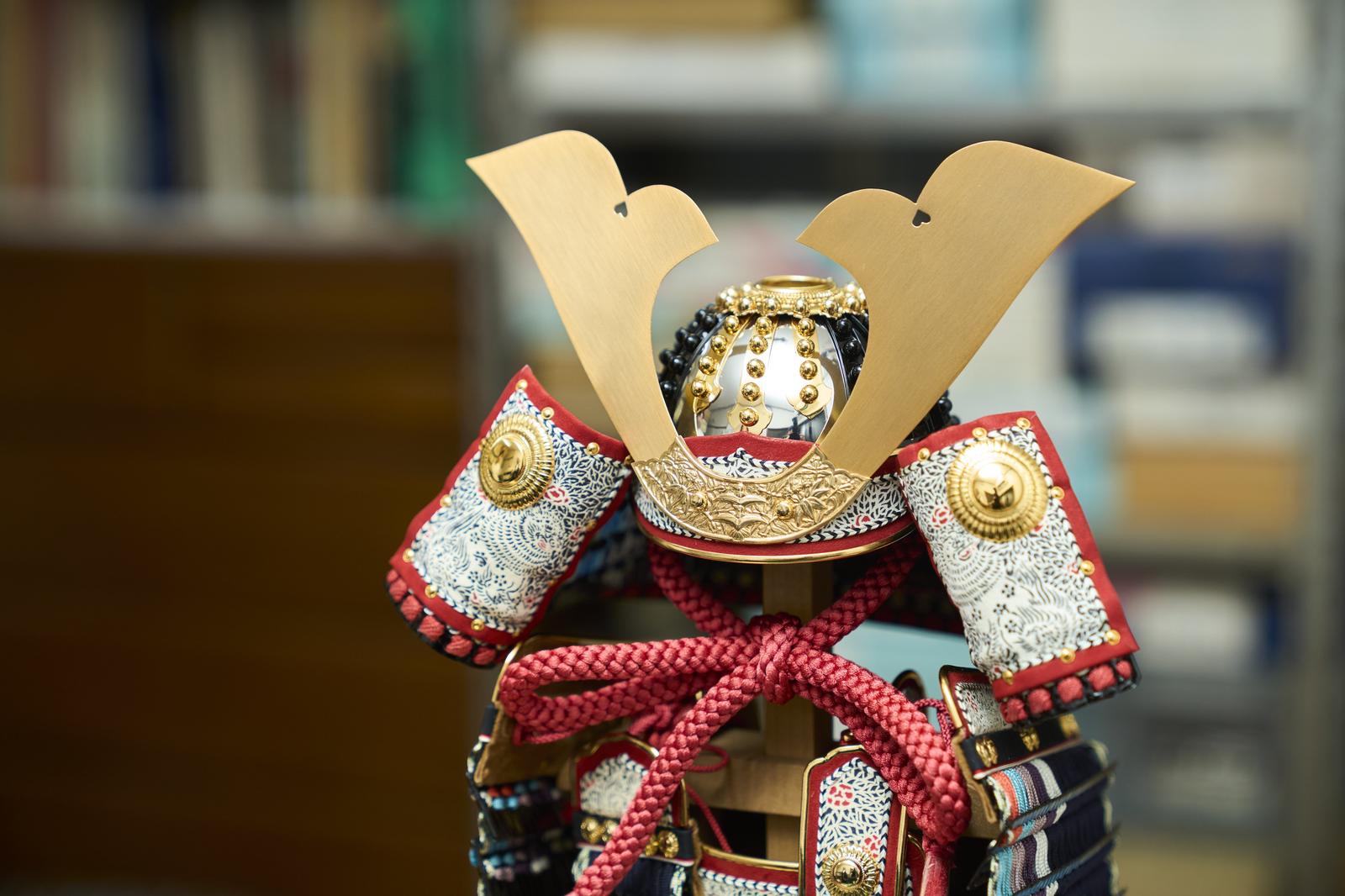
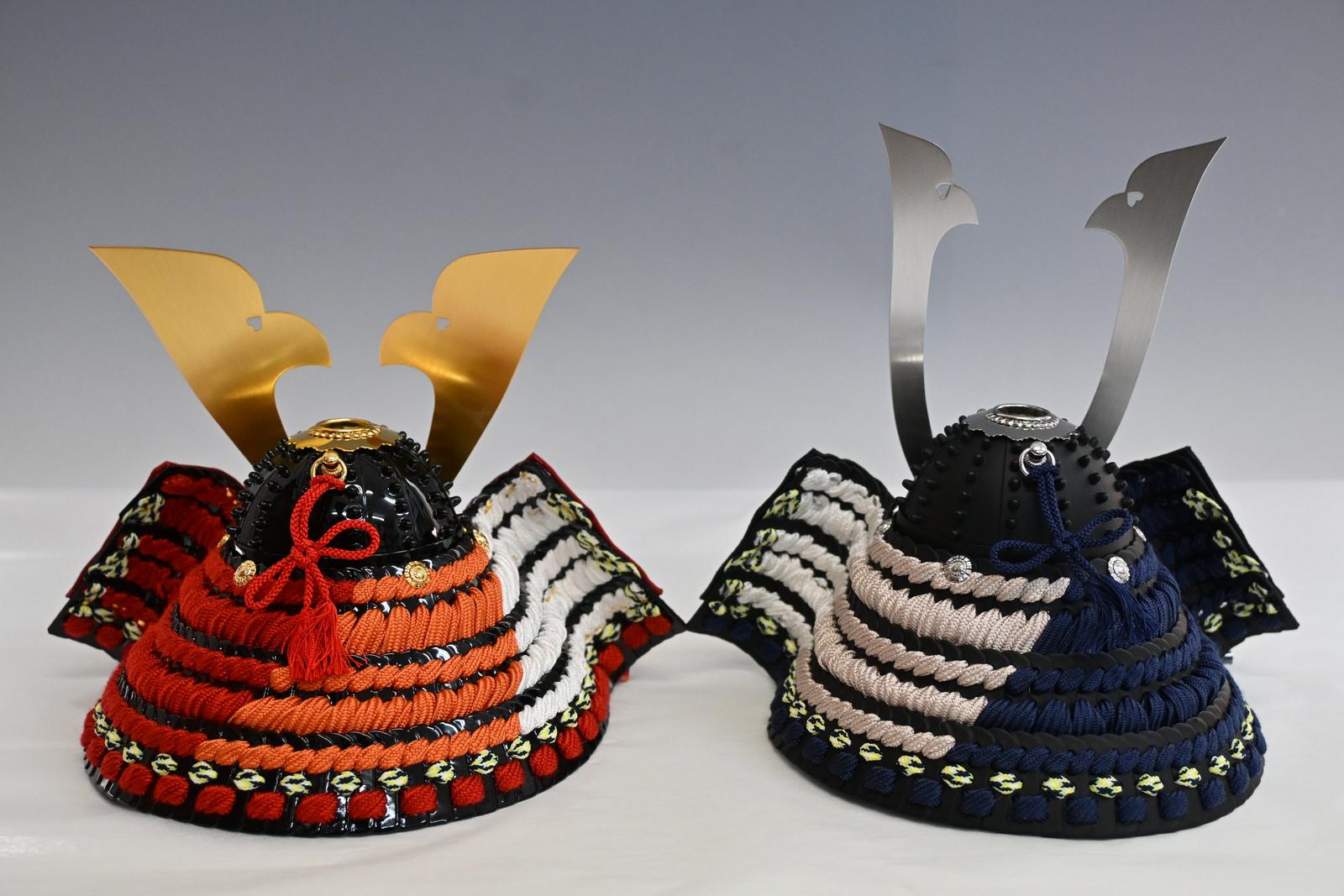
Takumi notes, "For example, the pair of hornlike ornaments attached to the front of a helmet are called kuwagata. If I make a mistake while crafting a component like that, I can always make it again. But if something goes wrong during the final assembly, there's no fixing it. Even the slightest imbalance from side to side or front to back can ruin the beauty of the piece. That's why I take the greatest care with this stage and focus on it completely."
In addition to preserving tradition, Takumi is keenly aware of the need to adapt to contemporary lifestyles and changing aesthetic sensibilities, while bringing something new to the craft through innovations of his own. As part of this effort, he has been presenting new works under the name Kato Akisane since 2024.
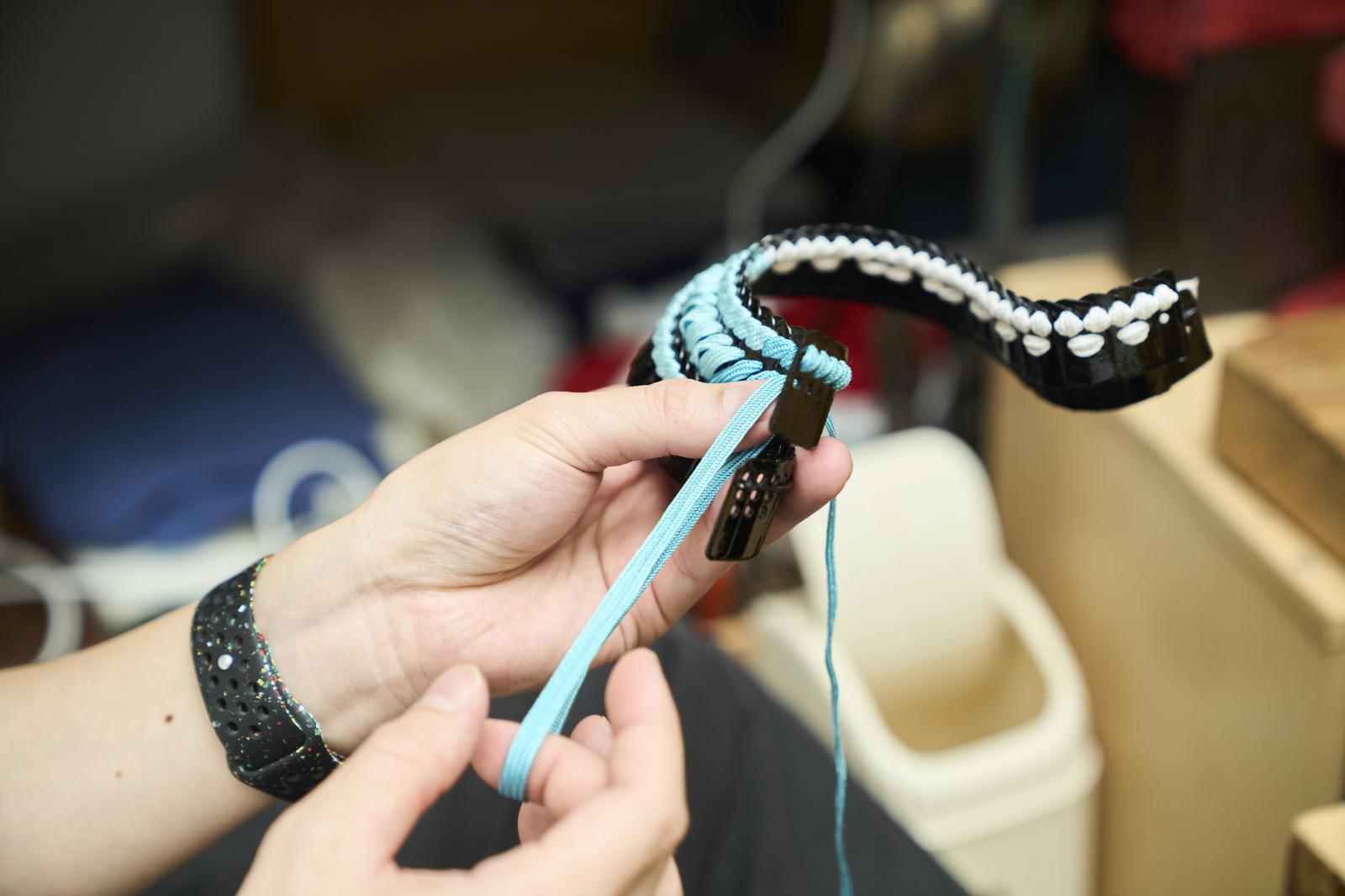
Takumi elaborates, "I started with 'color' as the central theme and the concept of creating something different from the styles of my grandfather and father, something that had never been done under the name Armor Craftsman Tomomi Kato. For example, the part of a helmet that protects the neck is called the shikoro. The multicolored cords used to lace the shikoro are known as odoshiito. The way these cords are laced determines the visual design. Normally, they are arranged symmetrically, but in the works I create as Akisane, I deliberately arrange them asymmetrically so that the design looks different depending on the angle from which it is viewed."
Bringing Edo Craftsmanship to an International Audience
As the third-generation successor, Takumi is also looking beyond Japan as he works to bring something new to the craft. He launched a website and online store, and shares information in both Japanese and English on Instagram. In 2019, Louis Vuitton approached the workshop about a collaboration involving Japanese culture, and armor created by the first-generation Kato Tomomi was exhibited as part of the project. The work was highly acclaimed and, in 2025, was exhibited by invitation at another exhibition held as part of Louis Vuitton's 170th anniversary celebrations.
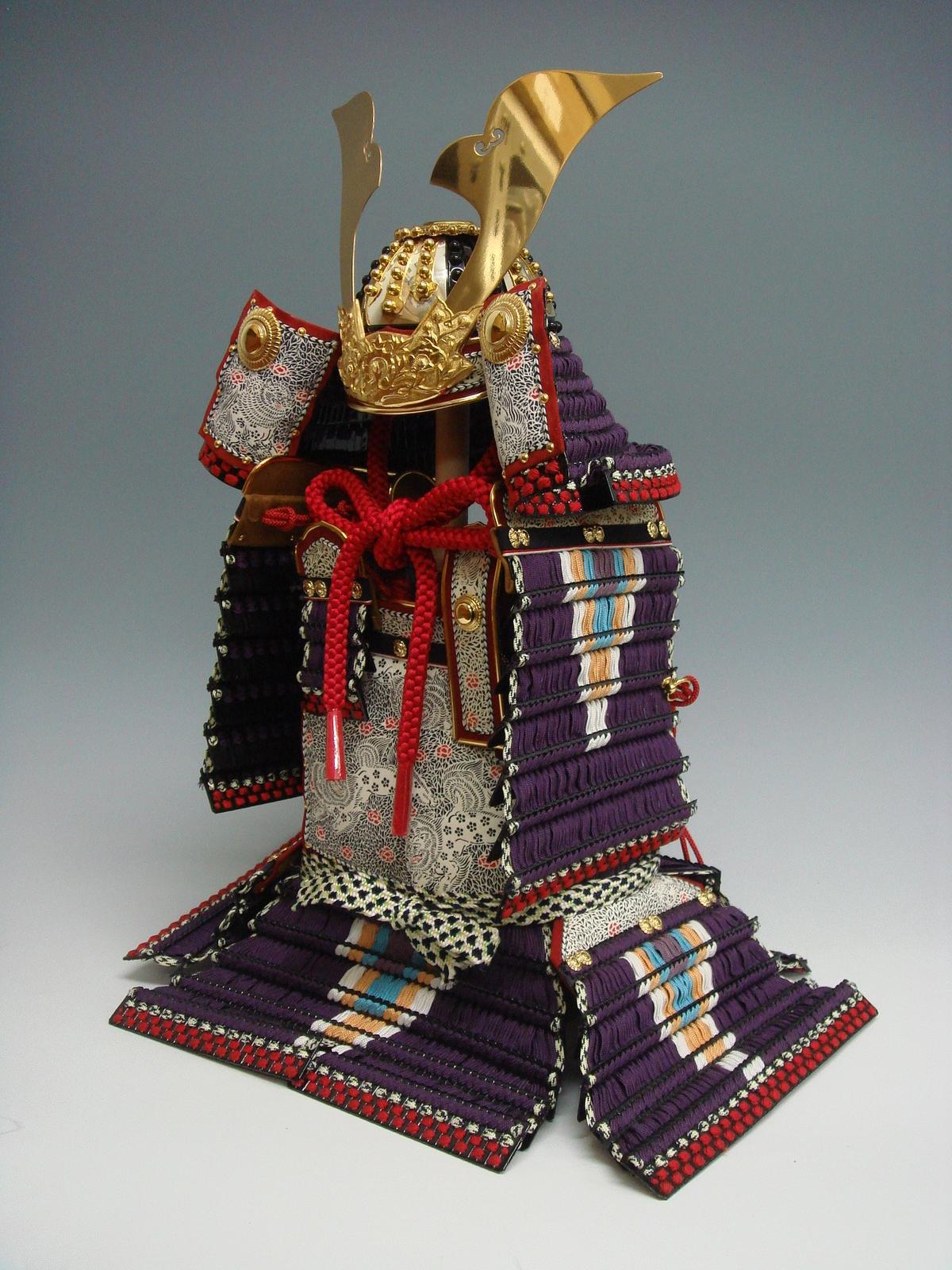
The workshop was also approached by the men's skincare brand BULK HOMME to supervise the creation of a full-scale suit of armor for display as part of the company's advertising, and accepted the commission.
Takumi says, "Receiving such high praise overseas is a source of pride for me, not only as an armor craftsman but also as a Japanese person, and it's very encouraging. At the same time, initiatives like these are stimulating because they give rise to ideas that had never occurred to us before."
Takumi has also gained a growing number of overseas followers on social media and regularly receives requests from people who want to visit the workshop or try their hand at armor making themselves.
"We also hold armor-making workshops, and more and more people are coming to Japan specifically to take part," Takumi adds. "Visitors from overseas are extremely interested in the historical background and significance of armor. That's why we want to explore the craft even more deeply, both technically and intellectually, continue honing our skills, and share the appeal of armor more widely with the world."
In ever-changing Tokyo, the craftsmanship of Edo has been handed down from generation to generation. Preserved by three generations of one family, the craft has now reached the wider world, and its third-generation successor is seeking to add a new touch of color. This armor workshop, where tradition and innovation coexist, seems to reflect the very character of Tokyo itself.
Third-Generation Kato Tomomi (Takumi)