







Making Cold Storage More Flexible and Transportable


This audio is generated by AI, so pronunciation and expressions may not be fully accurate. The narration is only in English.
Decentralizing Cold Storage
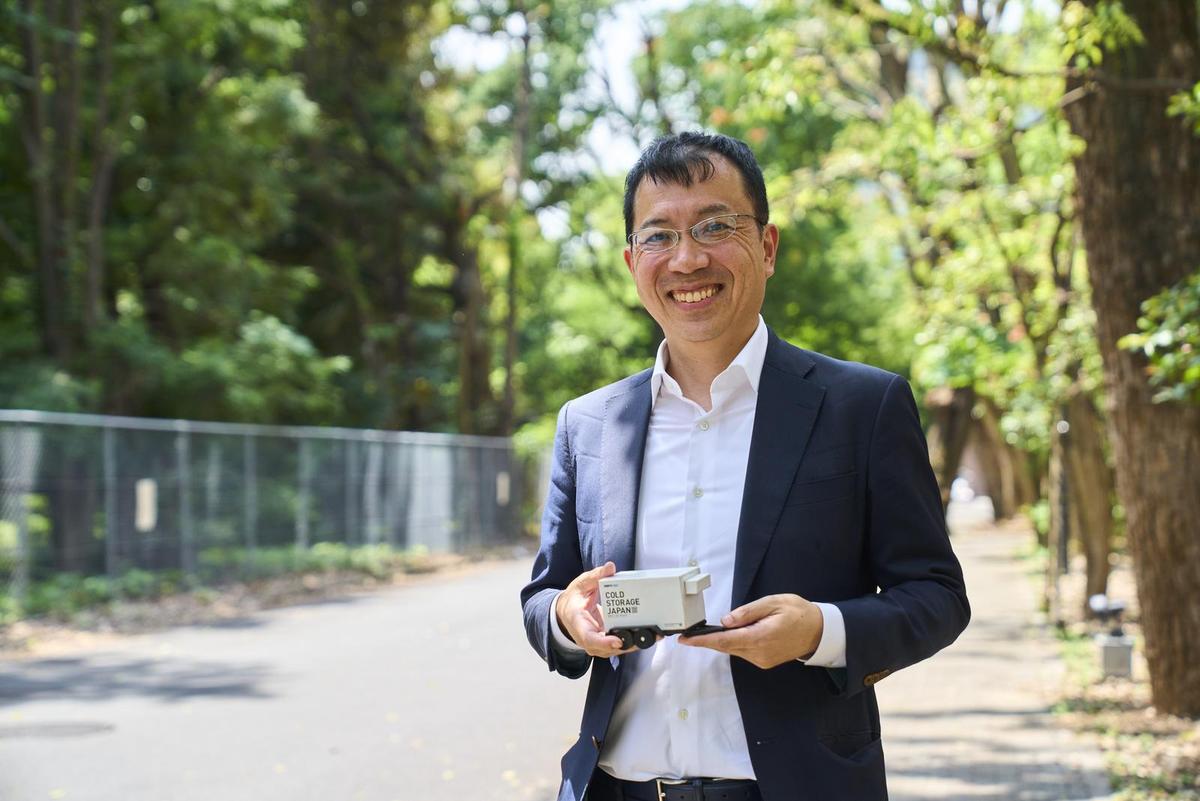
To say that Coldstorage Japan founder and president Goto Daigo has transport and storage in his blood is no exaggeration. Born in the bustling port city of Kobe in western Japan, for 20 years he worked in his family's international logistics business, which dates back to 1878. But these days, he has branched out and is working to take cold storage to an entirely new level.
"At the moment, the cold chain is basically made up of giant warehouses and people's fridges, and not much in between. I want to change that," says Goto. He first thought of the concept of "decentralized logistics" around 2016, and when his company at the time did not show interest in it, decided to pursue the idea and set up his own company in 2018.
Starting with a single cold storage container, he quickly realized that the expense and size of containers would restrict the usability and accessibility. "Until now the cold chain has required large structures and centralized logistics, which makes things quite static. Our Coldgrid concept hinges on making cold storage smaller, so that it can be available right where people are producing food."
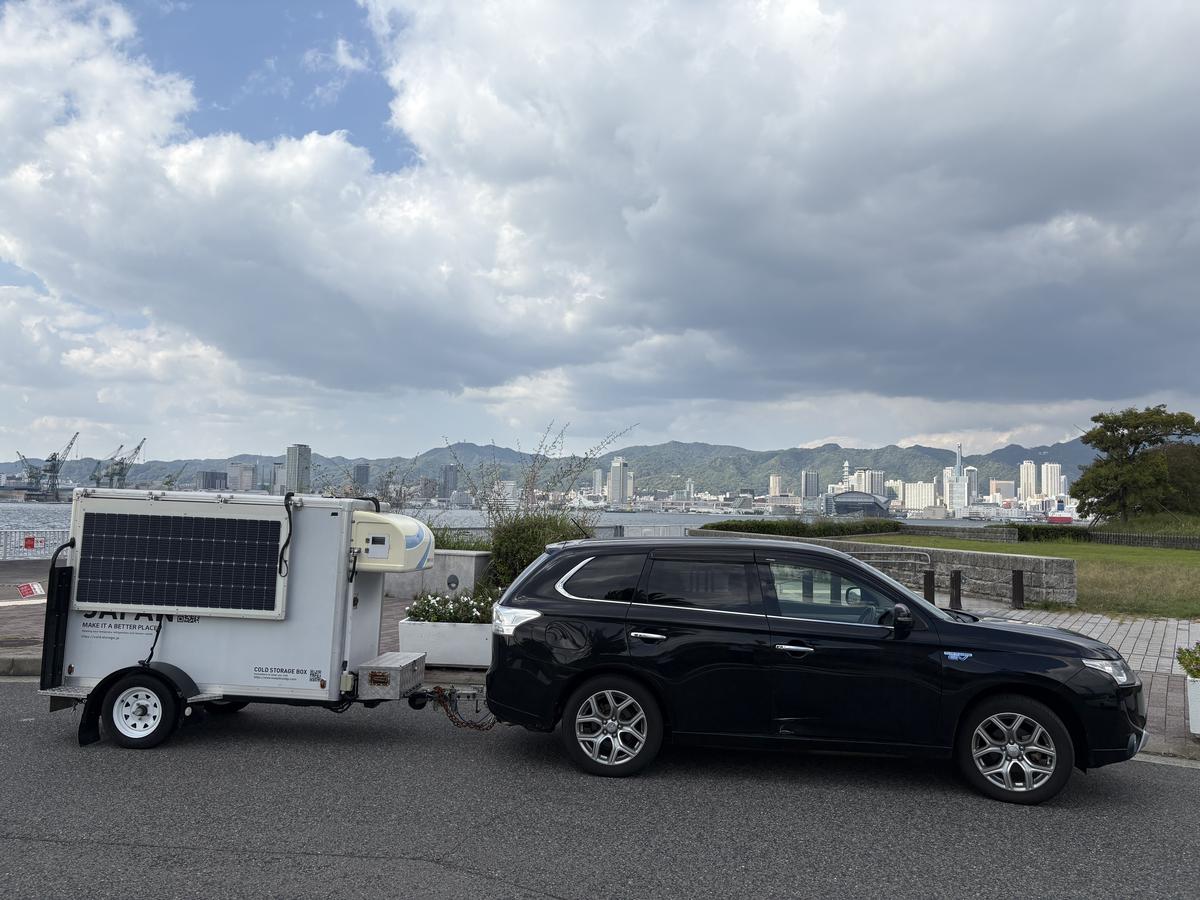
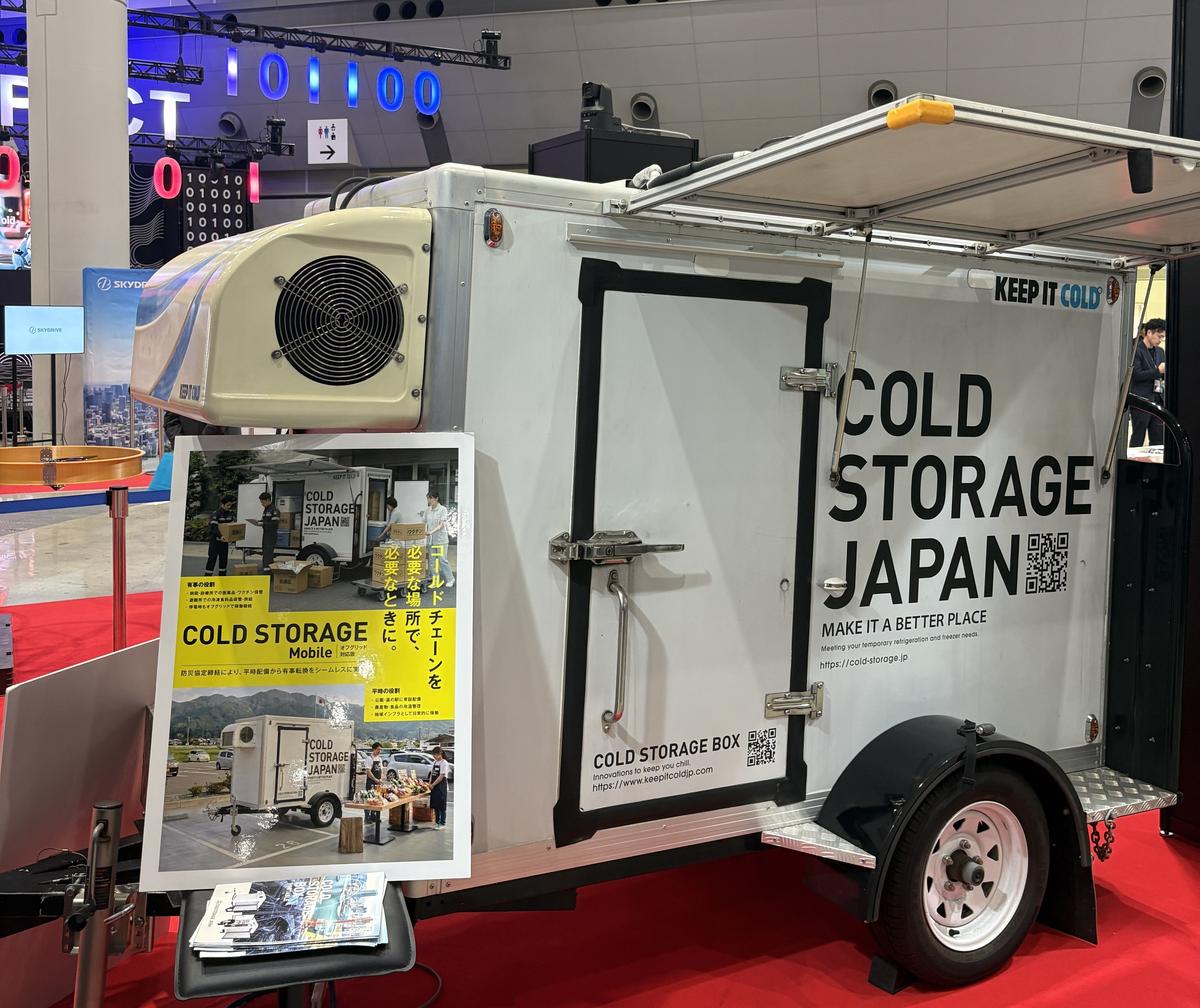
The solution came in 2023, when he connected with a company creating cold storage trailers. Now available in 2.2 meter and 3.7 meter sizes, the smaller model does not require a trailer license to tow it, making the unit easy to move around. Another unique selling point is that the units can be plugged into regular 100V outlets, unlike other cooling storage which requires special 200V power.
Despite their small size, the mobile cold storage trailers stay frosty at -25 degrees Celsius and have even been used by companies that make cars and packaging to test how their products and components act under freezing conditions.
Providing Cold Storage Anywhere, Anytime
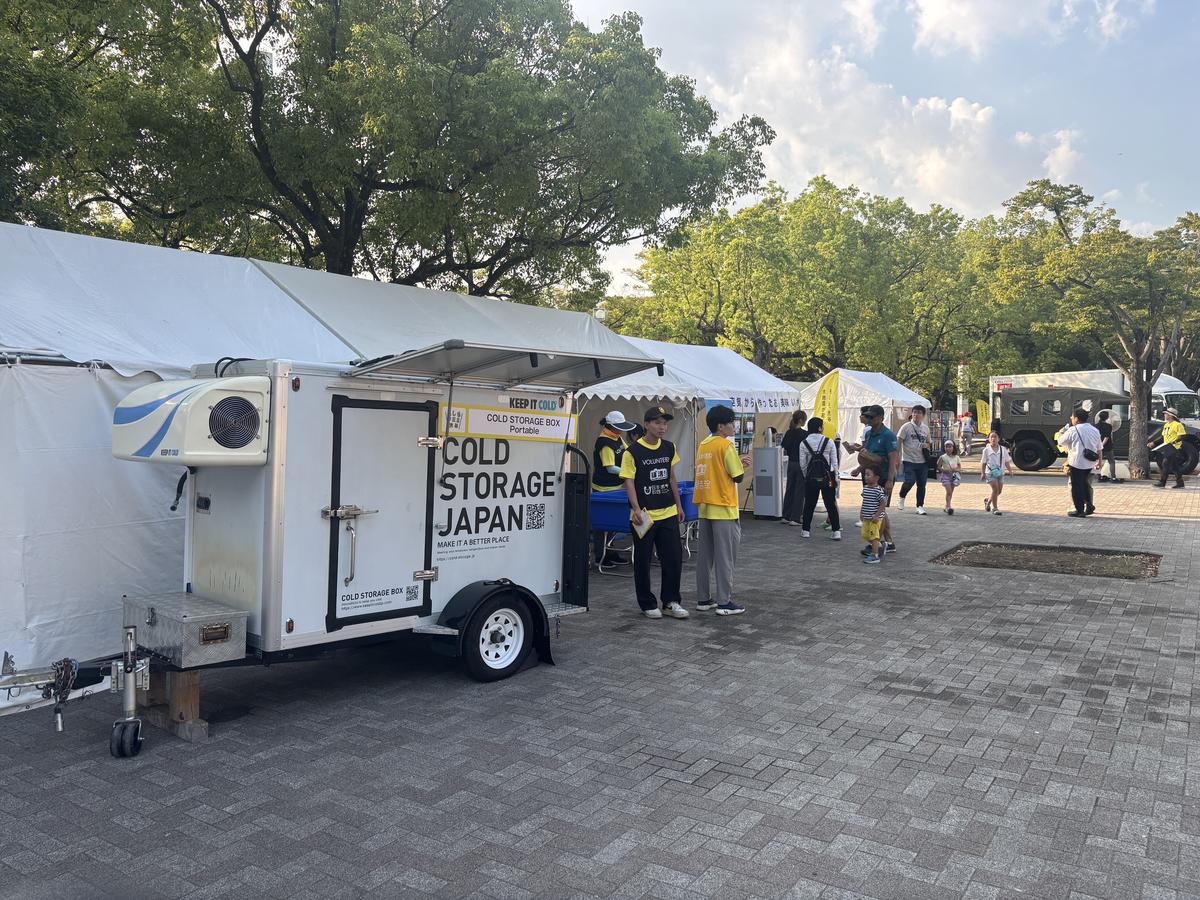
Thanks to their small size and low voltage usage, the company's cold storage trailers are now a common sight at events around Japan's capital, such as the popular Tokyo Christmas Market and Japan Mobility Show, where food vendors use them to keep stock fresh and safe.
But these easily transportable units may also prove to be a lifesaver in both emergency situations, as well as areas with limited infrastructure, like remote islands or settlements deep in the mountains. As they can be controlled remotely, setting up a Coldstorage Japan trailer or box would allow for secure longer-term food storage, reduce the number of required deliveries, and ensure stock availability even in case of issues like road blockage or bad weather.
Both the trailer and box models can be made to work off-grid, thanks to solar panels, and the on-board battery can also be used for purposes other than cooling, such as charging phones and powering electrical devices like microwaves. "One of the things I had in mind was how the units could be used to store frozen meals for people in disaster or emergency situations, which would make it easier to ensure they have access to safe, properly preserved food," notes Goto.
It is no surprise that the company's revolutionary technology has caught the eye of the United Nations Industrial Development Organization (UNIDO), which selected them to take part in the Green Industrial Recovery Programme for Ukraine. Goto says that they are currently preparing four or five units, both off-grid and non, which they plan to send to Ukraine in 2027 to assist in strengthening the country's food processing and logistics infrastructure. This will also act as a real-world test for how their Coldgrid system works in both regular and emergency situations, building on their experience of setting up an off-grid cold storage container in Rwanda in 2020.
Bringing Coldgrid to the World
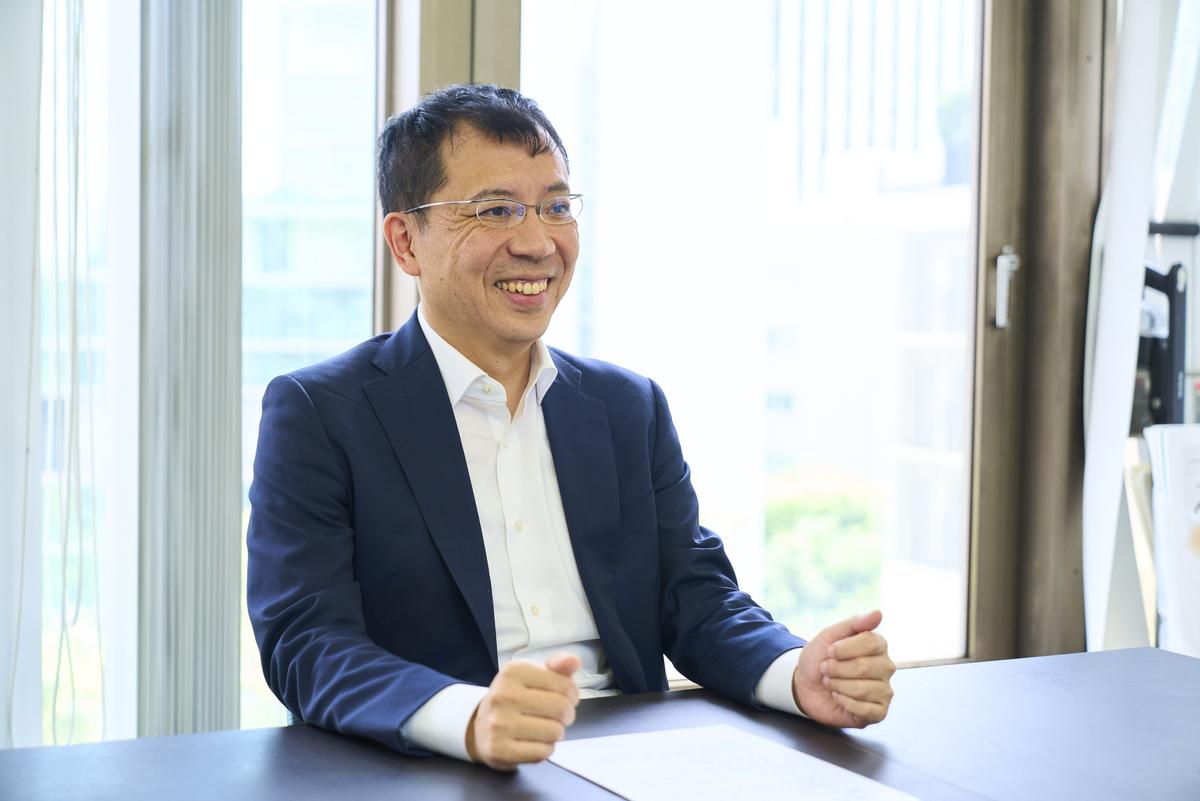
Goto now spends about half his time at the company's Tokyo office, as he finds it to be an important hub for business and chances to connect at innovation conferences like SusHi Tech Tokyo, which he has attended since the event's inception. "There is a clear difference in the type and level of the attendees, with lots of venture possibilities. It was also where I met the company that we now partner with to create our off-grid technology," he explains.
The 2026 edition was particularly memorable for him, as Coldstorage Japan was able to bring one of their trailers inside the venue itself. "Because our concept is so unique, people need to actually see it to understand it, and we were able to show the cold storage trailer in action. The reactions from attendees were amazing!"
Looking forward, this small but mighty company receives inquiries from all across the world every week. "Cold storage is something needed in all countries, and we are working toward starting in areas where we can connect with partners." A company in Indonesia is already renting units to test them out, and Goto says there are plans to move on to Cambodia next.
"My dream is to fundamentally change logistics. Producers will be able to sell directly without having to go through resellers, creating what I call direct logistics," says Goto. "It can be so hard for people like farmers, fishers, or other producers in rural areas to make a living. Our mobile cold storage units allow them to keep food fresh, so they have time to sell to a larger market, which would also help cut food loss."
Whether helping to strengthen the cold chain during normal times or rushing onsite to ensure food and medicine can be stored safely in emergencies, it is clear that mobile cold storage is an idea whose time has come.
Goto Daigo
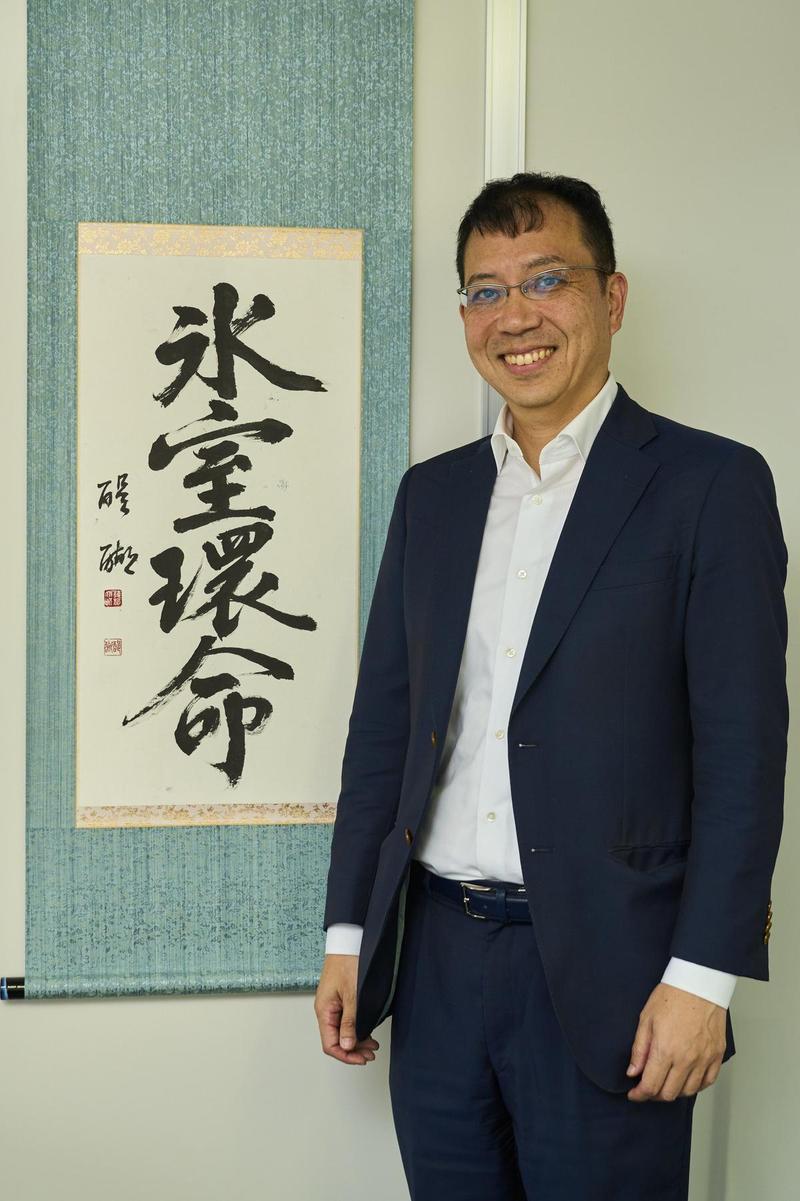
Coldstorage Japan Inc.
https://cold-storage.jp/language/en/
SusHi Tech Tokyo, short for Sustainable High City Tech Tokyo, is a global innovation conference where startups, investors, large corporations, cities, and universities from around the world gather in Tokyo to envision and implement the future of cities, with the shared goal of realizing sustainable cities through cutting-edge technologies.
SusHi Tech Tokyo | Sustainable High City Tech Tokyo
Photos by Fujishima Ryo