






Bringing Brazilian Culture to Tokyo for over 50 Years


This audio is generated by AI, so pronunciation and expressions may not be fully accurate. The narration is only in English.
A Lively Establishment with a Storied History
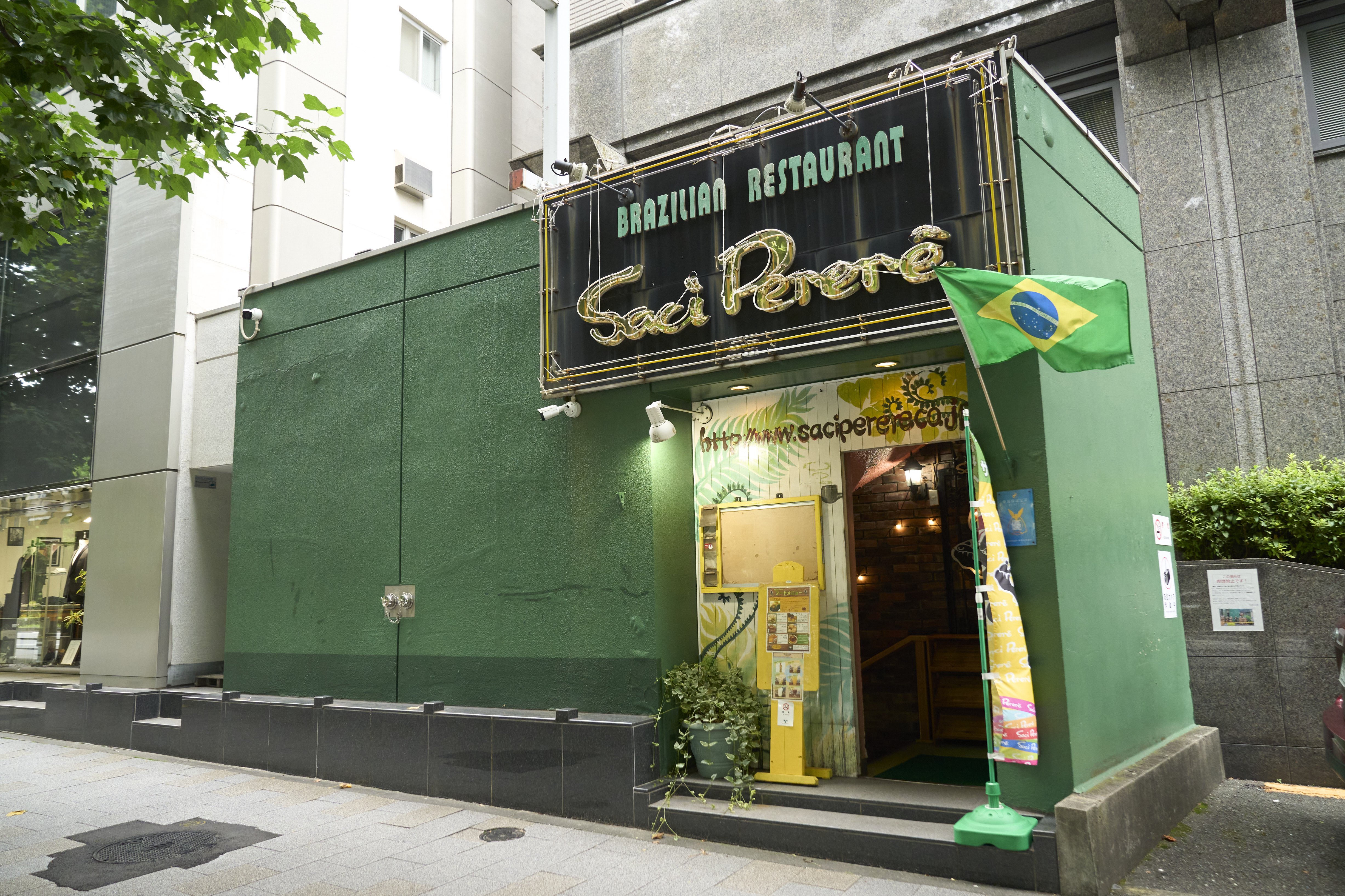
Alongside a leafy road near Yotsuya Station, a building stands out from its neighbors with its forest green facade and a small Brazilian flag perched just outside the entrance.
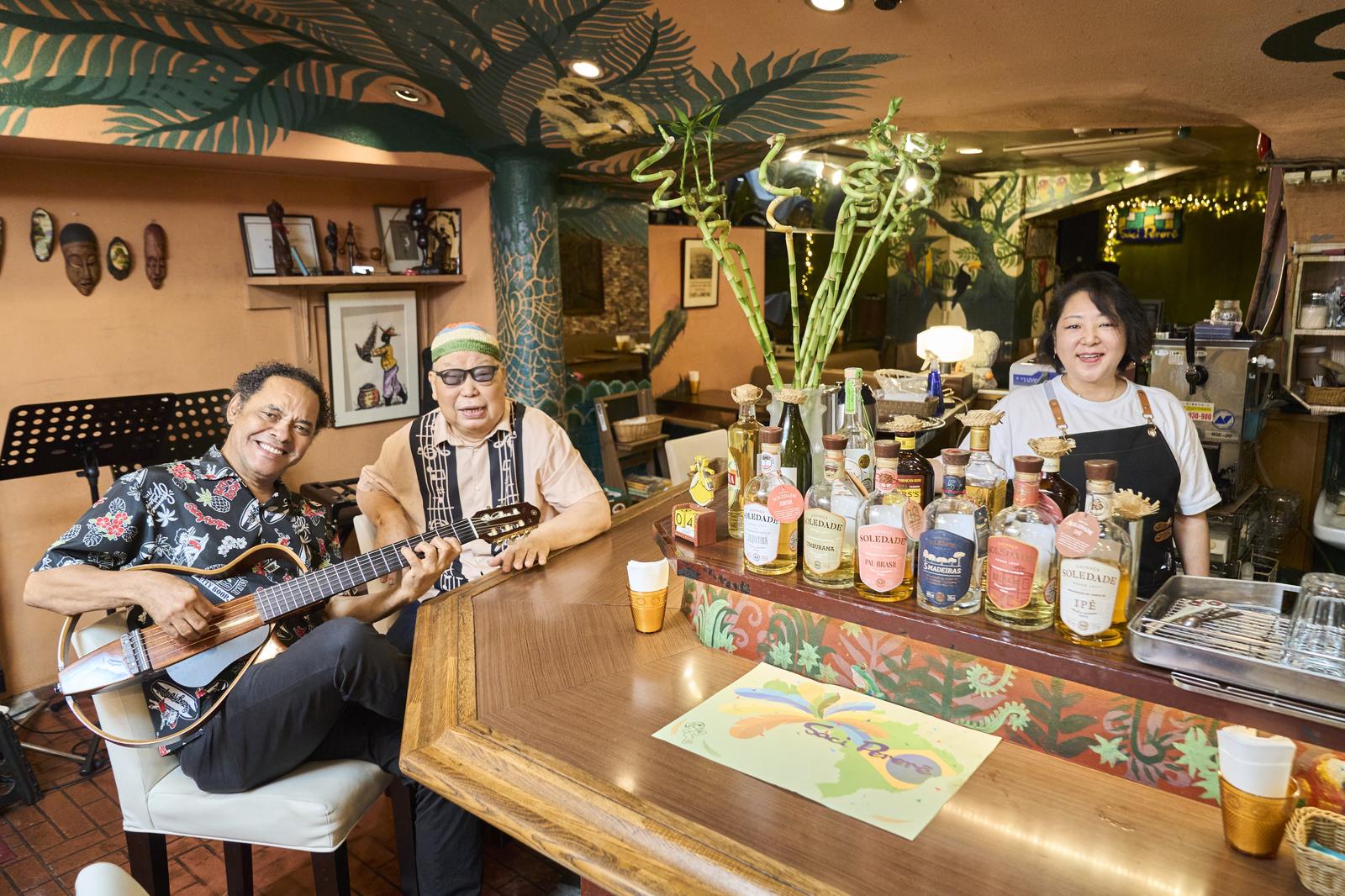
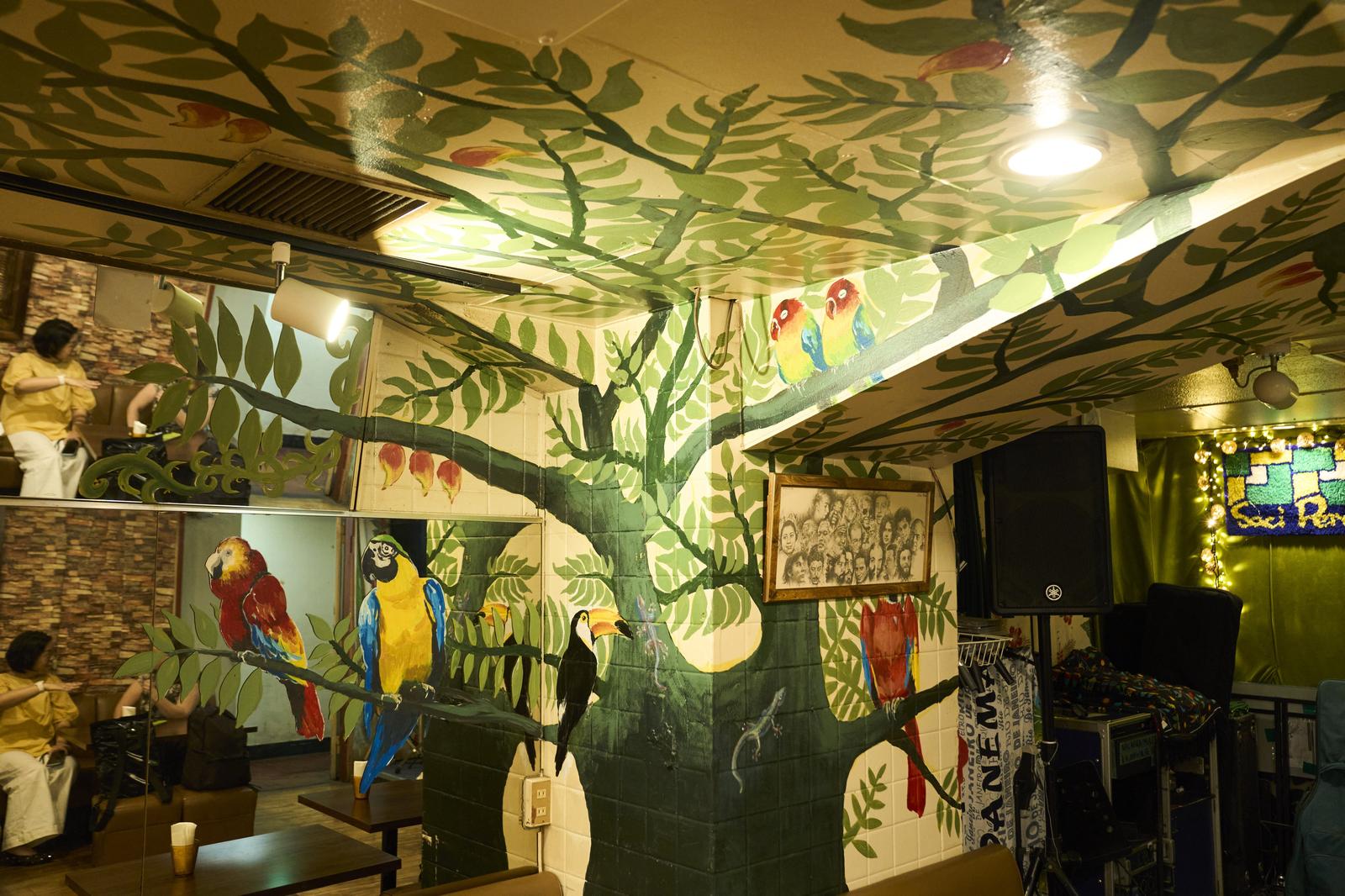
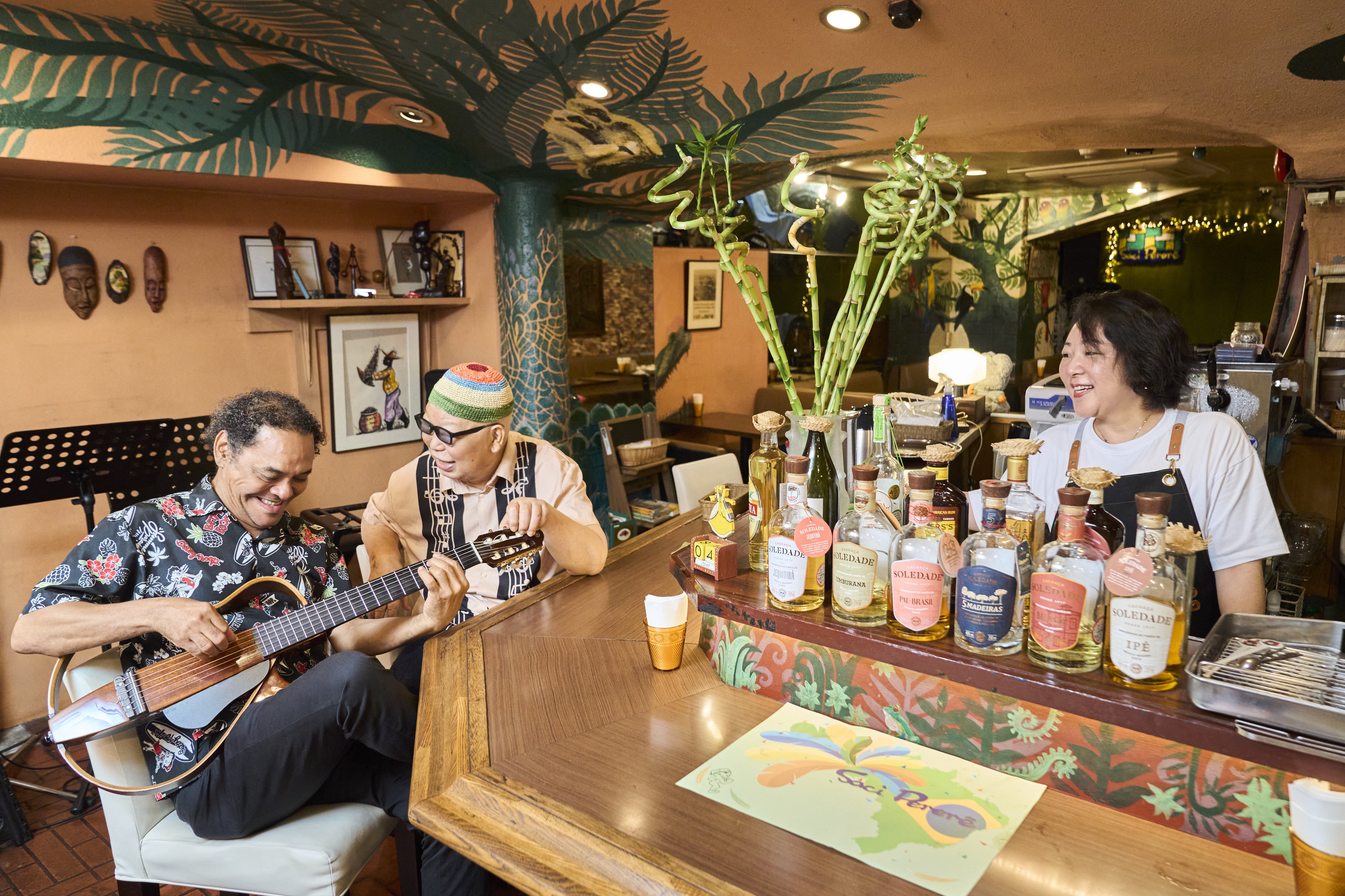
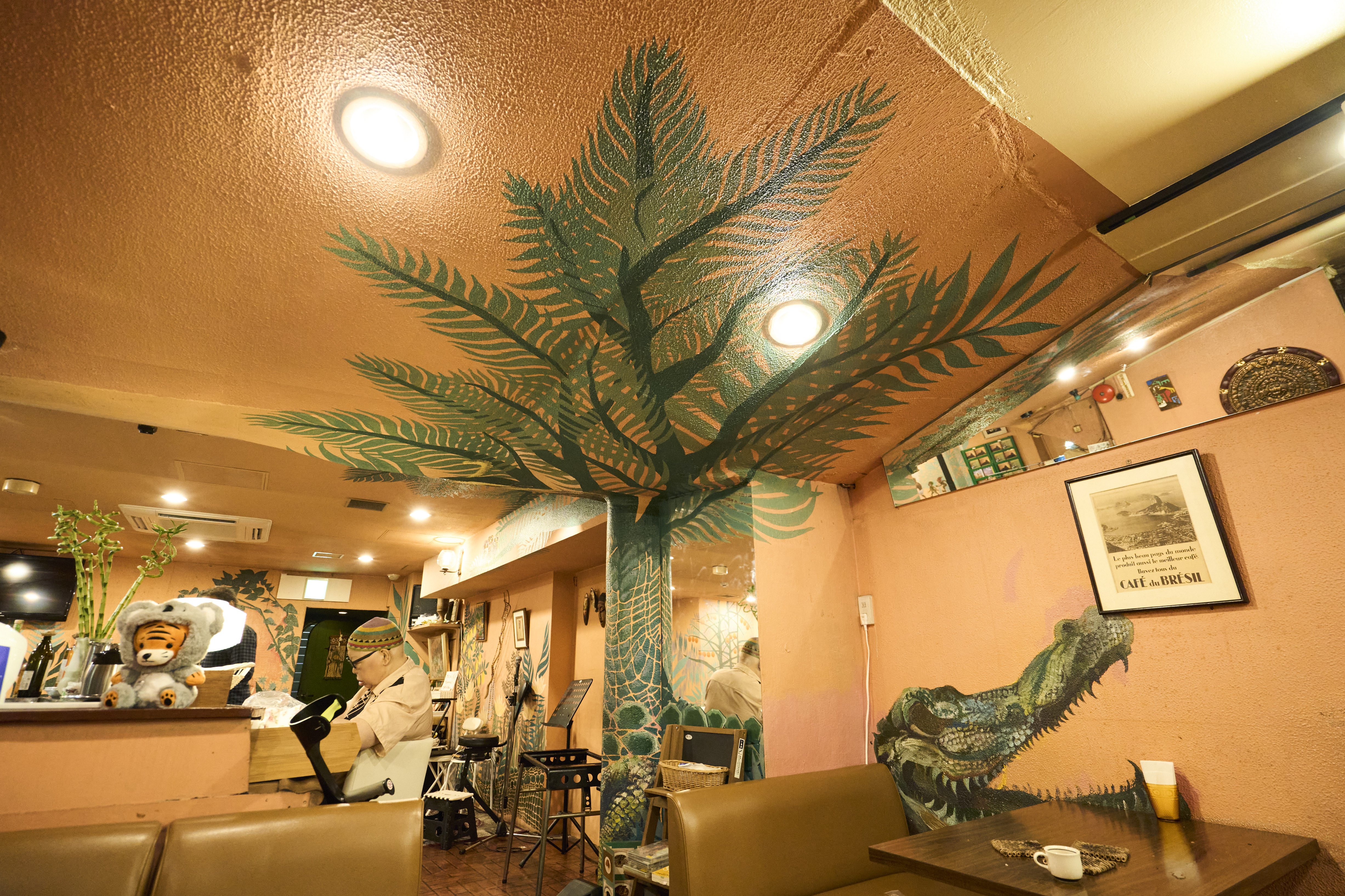
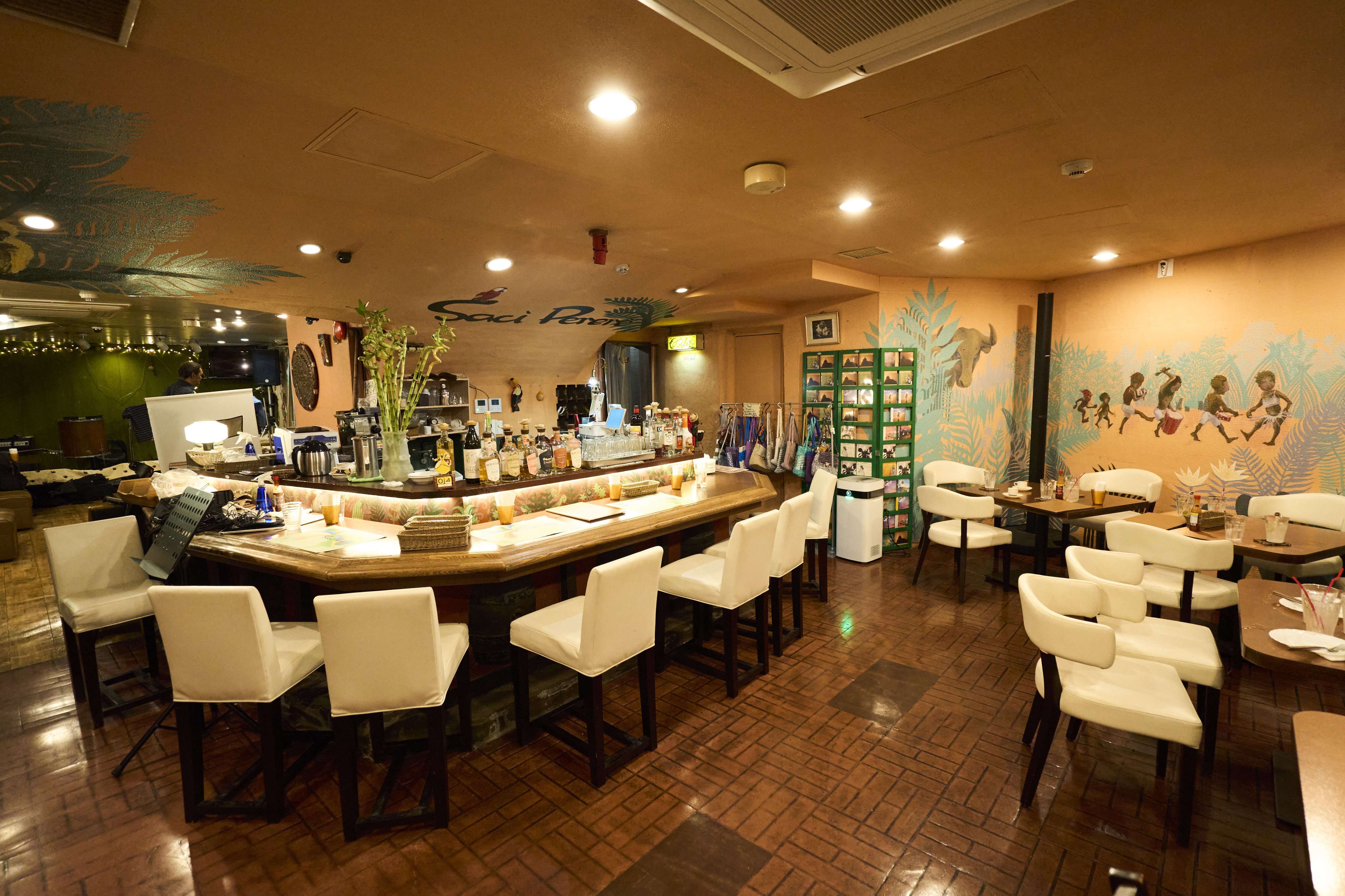
Taking the narrow-looking staircase down to the basement level reveals an enormous room with numerous restaurant tables, a generously-stocked bar counter, a live music stage, and art interspersed throughout the space. Some of the artworks are hanging in frames, while others consist of fantastical tropical foliage and animals which have been painted directly onto the venue's warm peach-toned walls.
This is Saci Pererê, named for a legendary character from the folklore of the Tupi-Guarani peoples indigenous to Brazil.
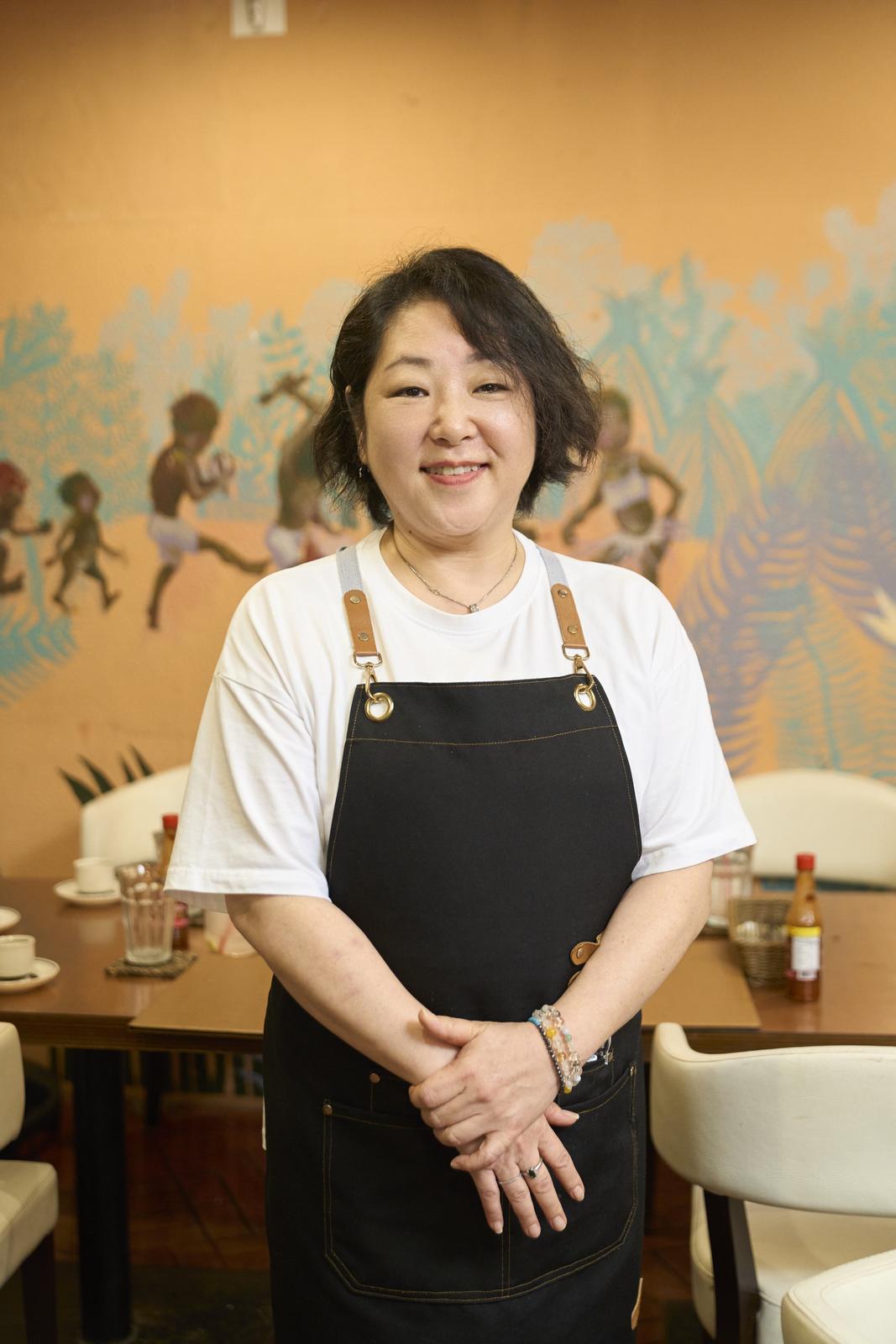
"Saci Pererê is a little kid appearing in children's stories, who lives in the Amazon rainforest and is always getting into trouble," explains Ono, the establishment's second-generation owner.
Noting that it was her mother Kazuko who decided upon the name Saci Pererê, Ono adds that her late father Toshiro, who passed away in 2012, was the heart and soul behind the business.
"My father was a huge fan of Brazilian food, drink, and music," Ono says. "He also loved talking and joking around with people, whether it was in Japanese, Portuguese, or English."
Ono explains that her parents left Japan for Brazil in 1958 to start a hotel business, but that they realized soon thereafter that they had been completely scammed, since no such hotel existed. "Instead, they pivoted to starting a nightclub outside of São Paulo, which they had to build from the ground up by literally slashing through a lot covered in bamboo," Ono recounts. Her parents relocated to São Paulo proper following the club's success, and later had two children: Ono and her older sister Lisa, who went on to become a famous bossa nova singer.
After deciding to return to Japan in 1972, the Onos acquired the basement space in Yotsuya.
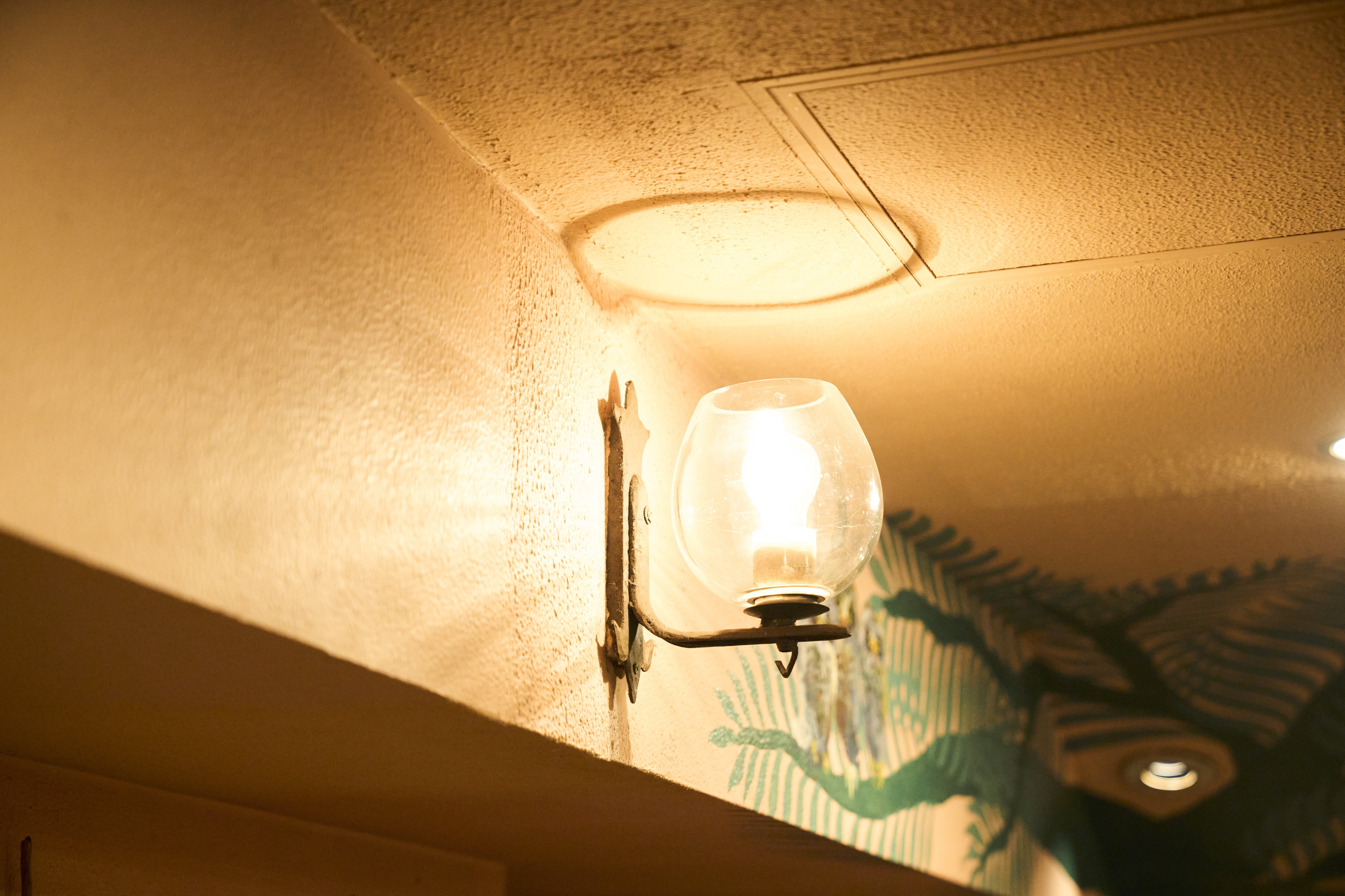
"At first we only had the front area, which my parents ran as a bar before adding on the restaurant's back room later," Ono recalls. "Actually, the counter and one of the light fixtures date all the way back to when Saci Pererê first opened in the early 1970s."
Introducing Brazilian Tastes, Sounds, and Emotions to a Tokyo Clientele
Saci Pererê launched officially in 1974, although the transition from bar to restaurant was not entirely a smooth one.
"French cuisine was really popular then, and the attitude among some chefs at the time toward food from Brazil was, 'we don't want to touch those kinds of low-class dishes.'"
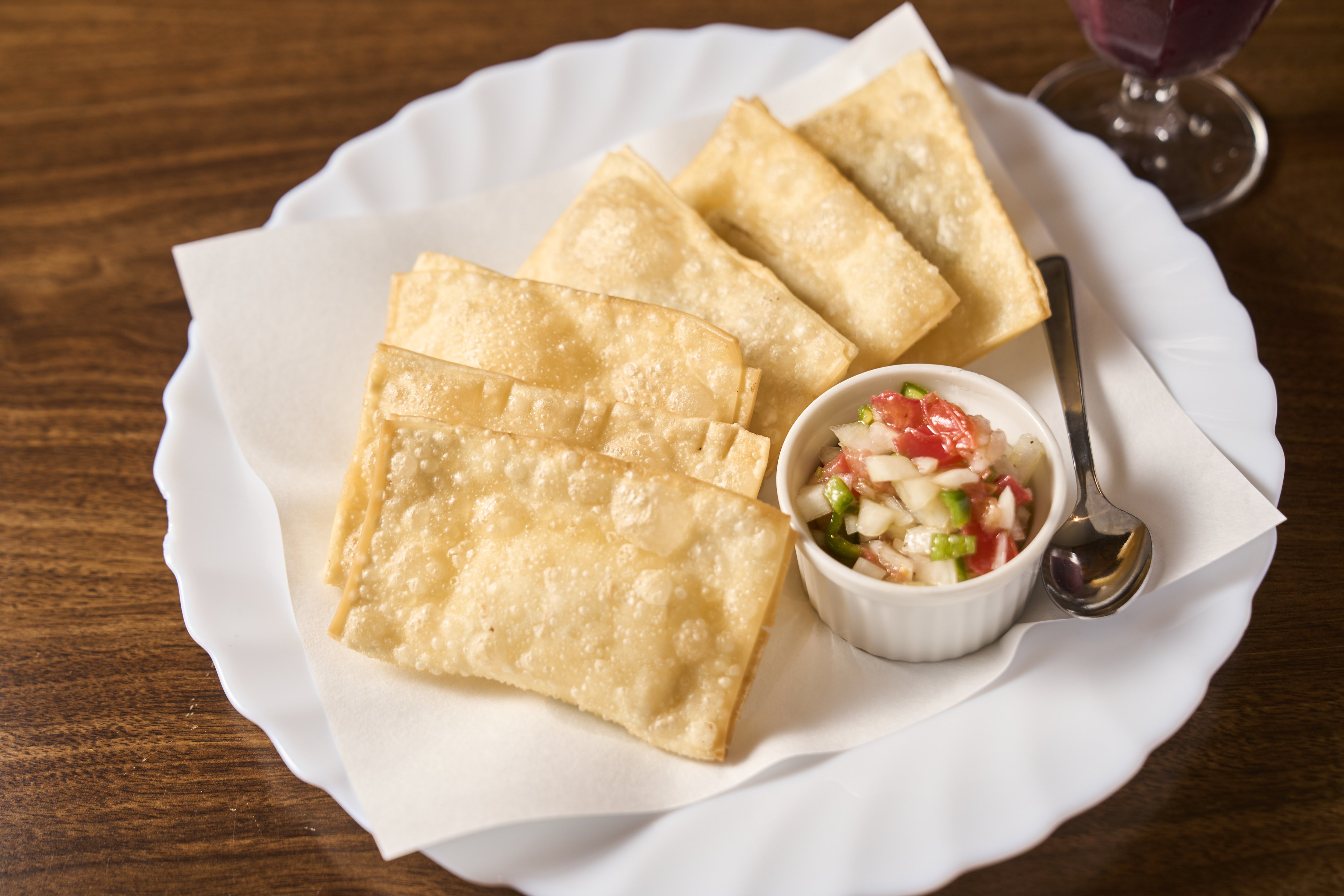
Determined to achieve their dream of a business centered around Brazilian food, drink, and music, the Onos did much of the cooking themselves. This included hand-crafting their own pastéis, for example, which are deep-fried pockets of dough filled with ingredients such as meat and cheese.
Utilizing the longstanding networks cultivated during their years spent living in Brazil, the Onos also brought over musicians to perform at Saci Pererê, who usually arrived with ingredients for the restaurant which were difficult to source in Tokyo.
The venue attracted and delighted a wide range of customers across Tokyo who were interested in learning more about Brazilian cuisine and music, Ono says, including numerous members of the entertainment industry.
"There were a lot of really weird people who showed up here. My father himself was just completely out there; he was basically like an alien," she laughs, adding that he was essentially a visionary who was far ahead of his time.
Ono also notes that the burgeoning clientele began including businesspeople and diplomats who had spent time living in Brazil, and felt nostalgia toward the country—thereby making Saci Pererê a natural destination.
"In Brazil, saudade is a concept that captures this sense of longing for a person or a place," Ono explains. "I was only 5 years old when we returned to Japan, and so I no longer speak Portuguese. But my sister Lisa was 10 at the time, making her old enough to carry this feeling of saudade toward Brazil after we had left."
Ono explains that those emotions were significant in nudging Lisa toward her musical career—and that it was in fact the Saci Pererê stage where she first got her start as a singer, guitarist, and songwriter, while she was still a high school student. Today, Lisa is an internationally-recognized bossa nova artist who has also performed in live shows and on television, as well as on radio programs such as J-WAVE's SAÚDE! SAUDADE.
"Our father was also a great entertainer, as well as a songwriter. Actually, he used to say that Lisa was his rival," Ono recalls, smiling.
Changing with the Times Without Changing the Soul
While Ono's mother is 90 years old and today no longer works at Saci Pererê, her mark has been imprinted on the establishment through touches such as the creation of its menu.
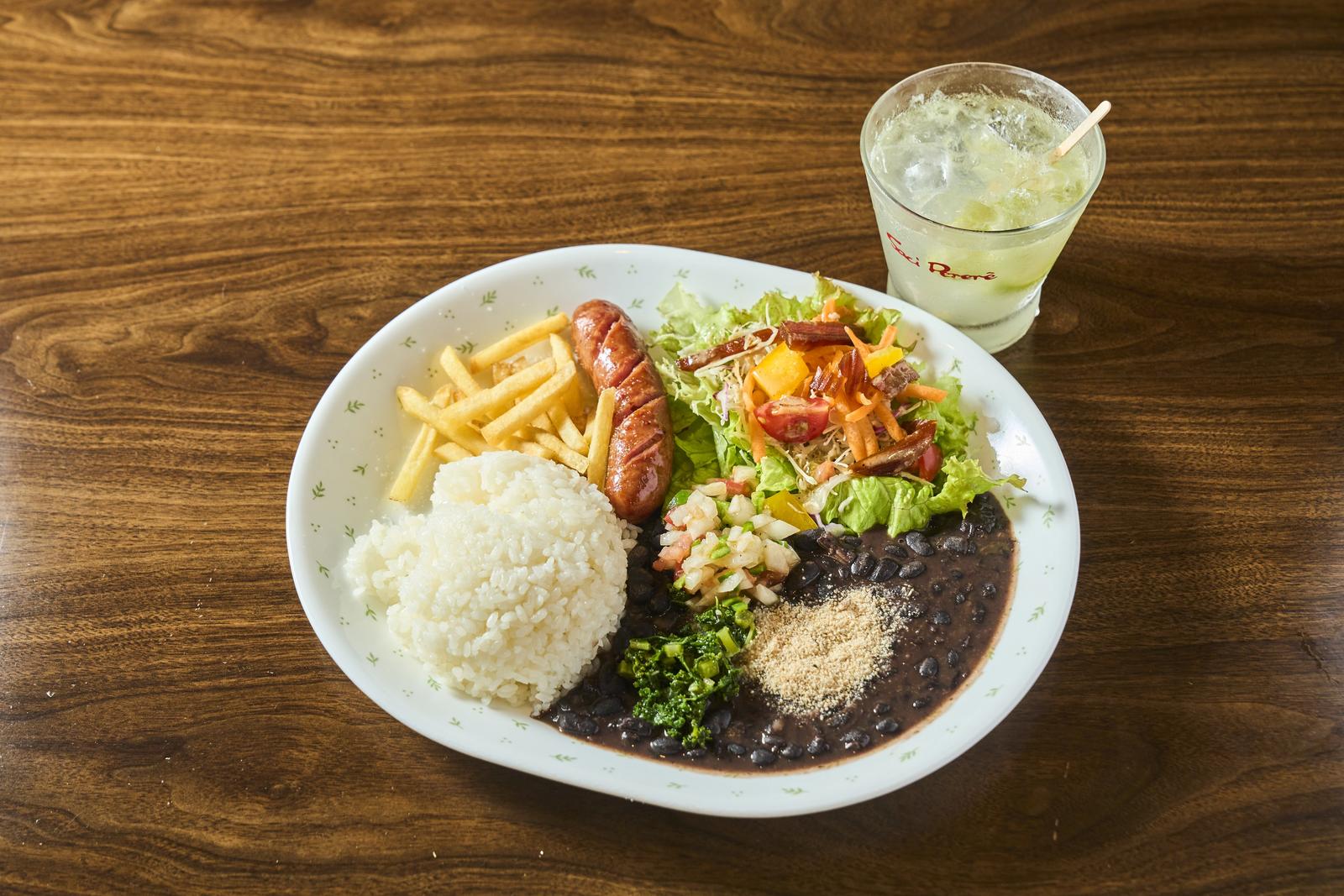
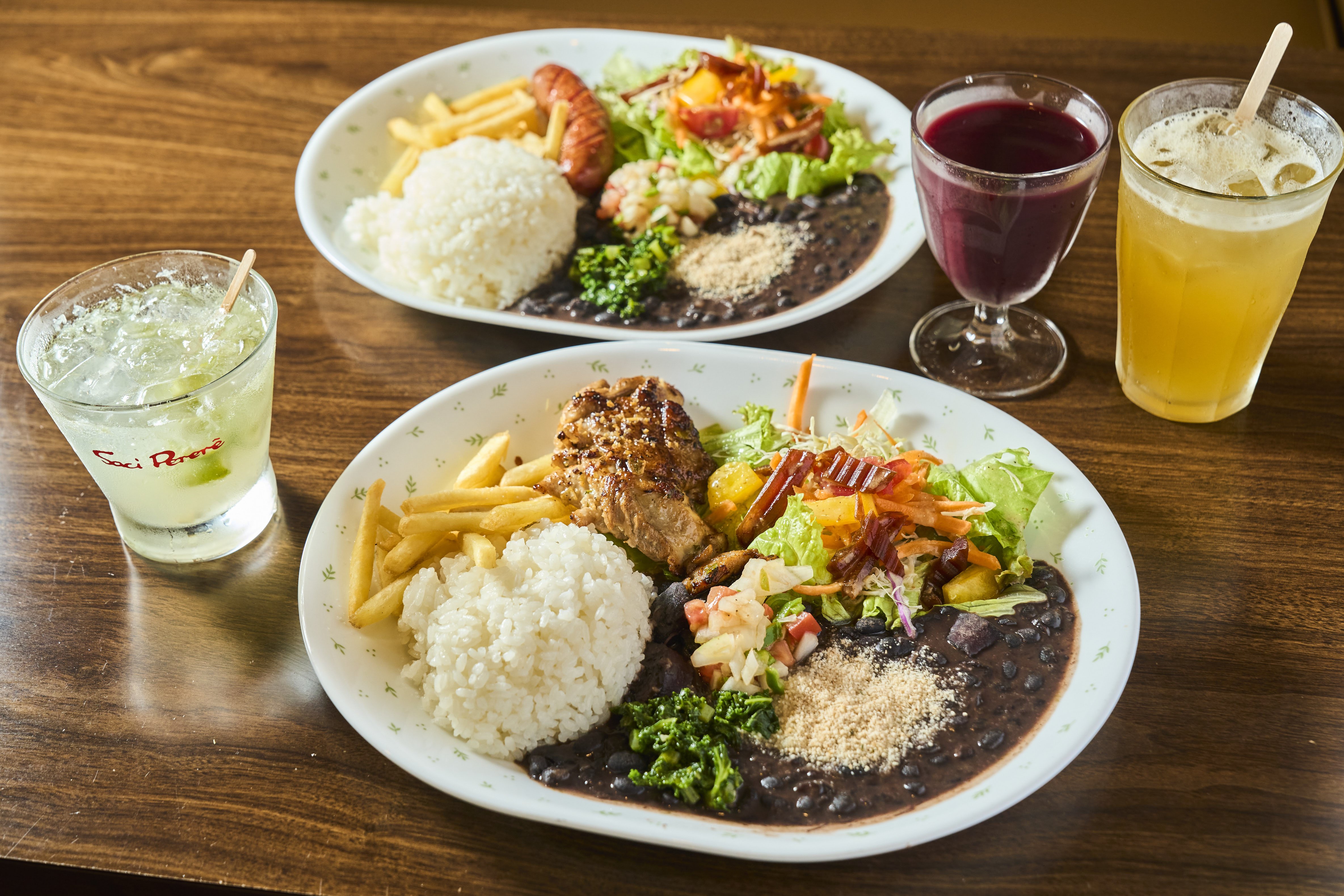
"My mother learned home-style cooking while living in Brazil, where many dishes are done differently depending upon the household, and we incorporated a lot of her recipes into our menu," Ono explains. "For example, there are different variations of feijoada—a dish of black beans and meat served alongside rice—and ours incorporates fruit."
Ono also notes that additional adjustments are made for those who may not be familiar with Brazilian cuisine, such as serving smaller-sized portions to enable customers to sample a greater number of dishes.
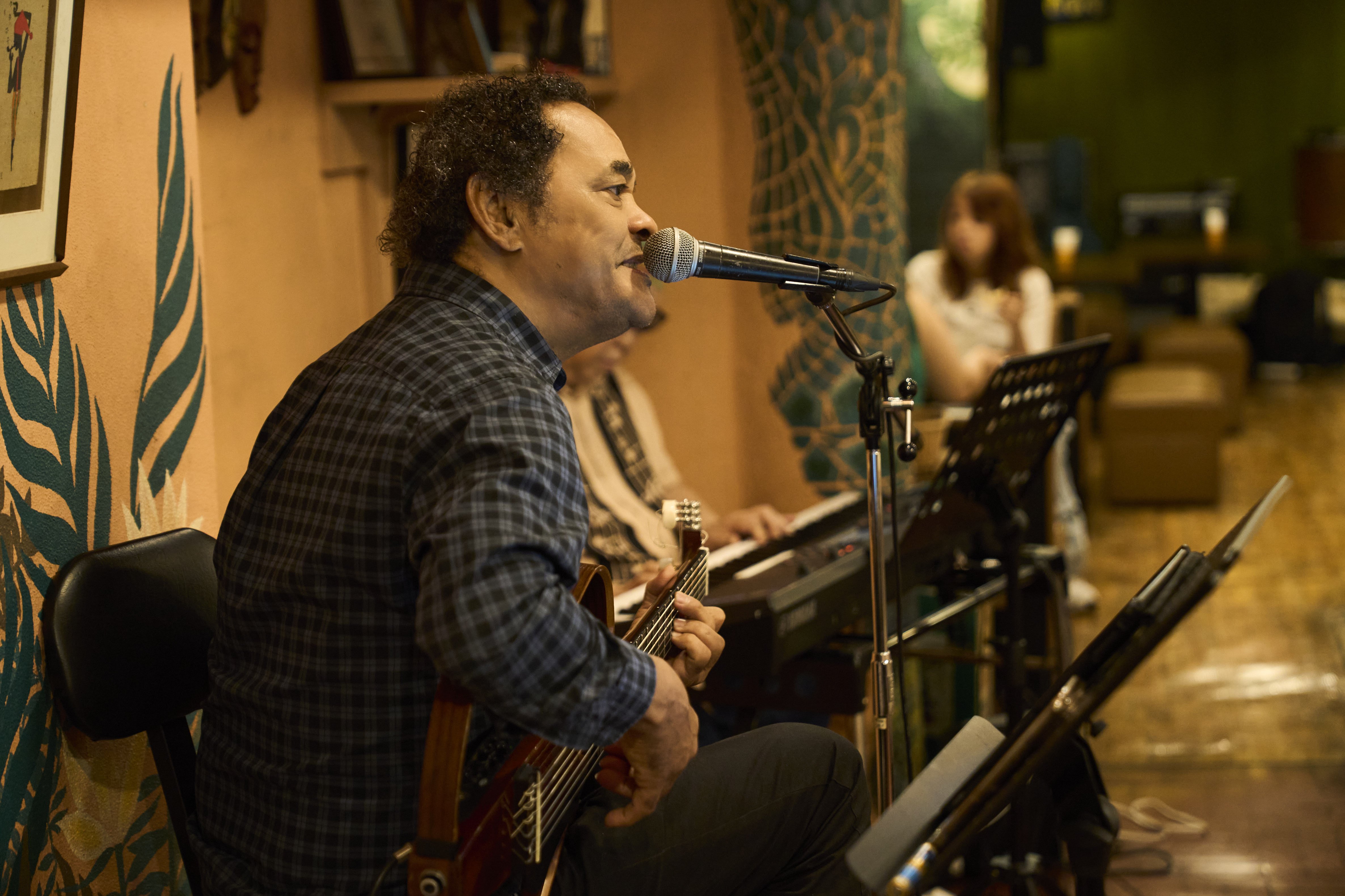
Today, she says, the establishment welcomes a mix of clientele including Brazilians living in Japan, local Tokyo residents, and international tourists. Some travel to the Tokyo metropolis from afar just to see Saci Pererê's live performances, which mainly feature Brazilian and Japanese musicians and dancers in genres such as bossa nova and samba.
The wall paintings, she adds, were done by members of the samba club at a Tokyo art university.
"The students were already familiar with Brazilian culture, so there was very little explaining that we had to do," Ono says. "Our only stipulation was that we wanted the columns to be portrayed as trees."
While Saci Pererê formerly operated by hosting live shows every night of the week, Ono has pivoted to a business model of opening only on weekends for lunch—accompanied by musical performances—while also holding additional weekday evening shows and private events on an irregular basis.
"It was difficult from a financial standpoint to have live shows every single night," she recounts. "But thanks to support from our loyal customer base, we have been able to keep things going."
Ono does admit that since she is the only person in her family who does not speak Portuguese, she sometimes wonders if she is the appropriate person to be running the restaurant.
"Despite these doubts, however, I feel motivated by a strong desire for people in Tokyo to become familiar with Brazilian culture," she says. "I truly feel that this is my life's work."

Ono Rie