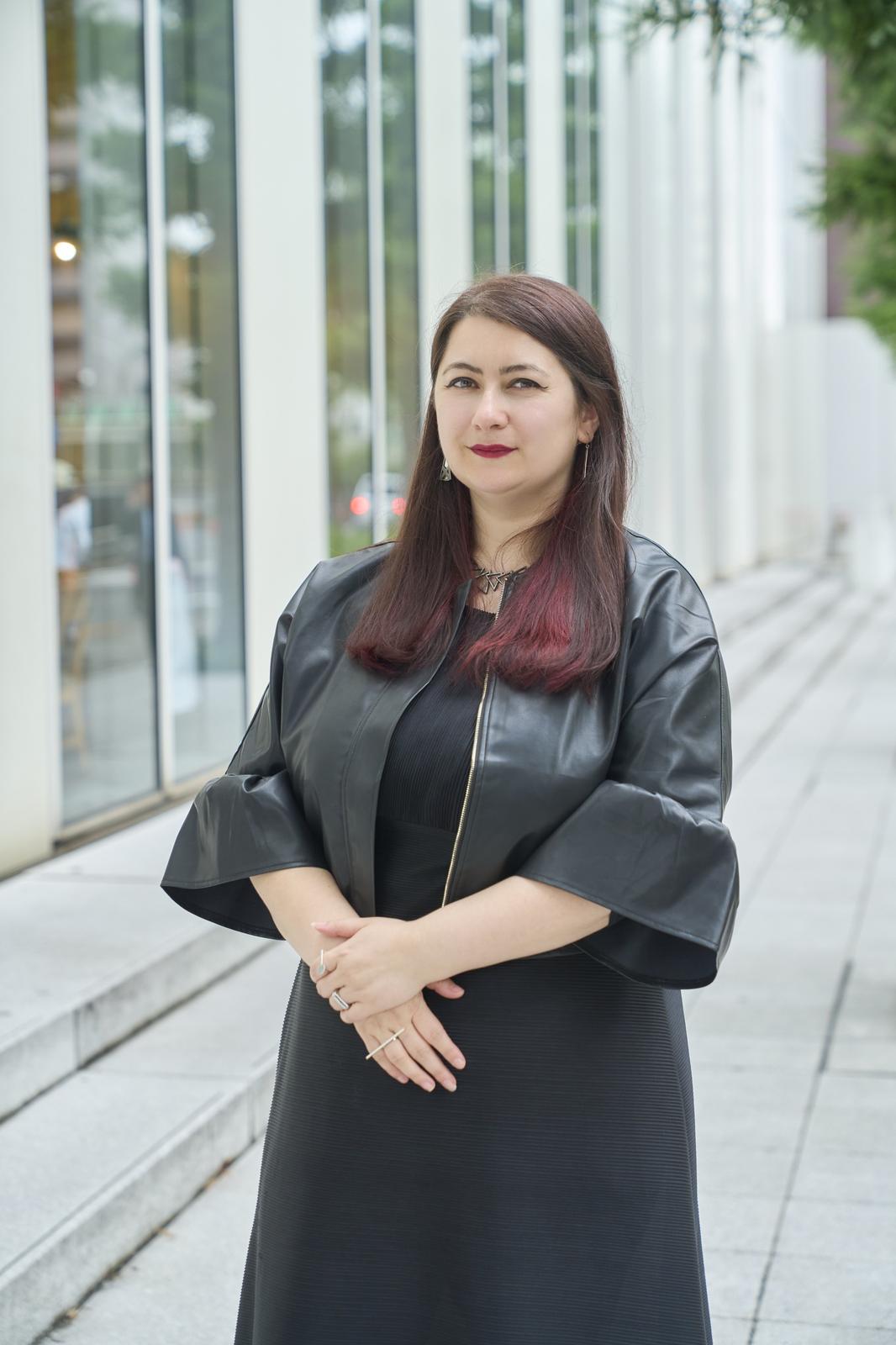







A Writer and Poet Finds Inspiration Throughout the Tokyo Metropolis


This audio is generated by AI, so pronunciation and expressions may not be fully accurate. The narration is only in English.
A Lifelong Love of Words
Born in the city of Skopje, formerly part of Yugoslavia and the present-day capital city of North Macedonia, Petkoska began following the writer's path at an extremely young age.
Her first book, Stars and Sparks of a Dream, was published when she was just 10 years old, featuring a compilation of Macedonian-language poems she had begun writing at the age of just 5. Petkoska credits poet Svetlana Hristova Jocić, one of Macedonia's most celebrated literary figures, for mentoring and encouraging her to publish the book, along with support from her mother, Vera.
Her parents provided guidance for their young daughter's voracious love of learning, recounts Petkoska, who says that she "begged to go to school" from a young age—eventually being permitted to start around a year earlier than most children. "I was also the biggest reader at my local library," she adds, laughing.
Petkoska learned English through television shows, also writing a prizewinning English-language essay at the age of 10. She later studied at Ss. Cyril and Methodius University in Skopje, where she went on to earn a master's degree in English literature and literary translation. After working for around six years at the same university as a graduate teaching assistant in translation studies, Petkoska arrived in Japan in 2016 on a MEXT (Ministry of Education, Culture, Sports, Science and Technology) scholarship. Assigned to Tokyo University of Foreign Studies, she began researching visual poetry and translation—later expanding her focus to encompass soft power and cultural diplomacy.
The multifaceted nature of Petkoska's studies seems to be a natural extension of her life history.
"Coming from such an extremely small country, it's not really possible to be insular, since you grow up sort of always being aware of what is happening in other places and how things might be done differently elsewhere," she observes. "This international filter made me open to different viewpoints and influences, and helped me to approach things with a really wide lens."
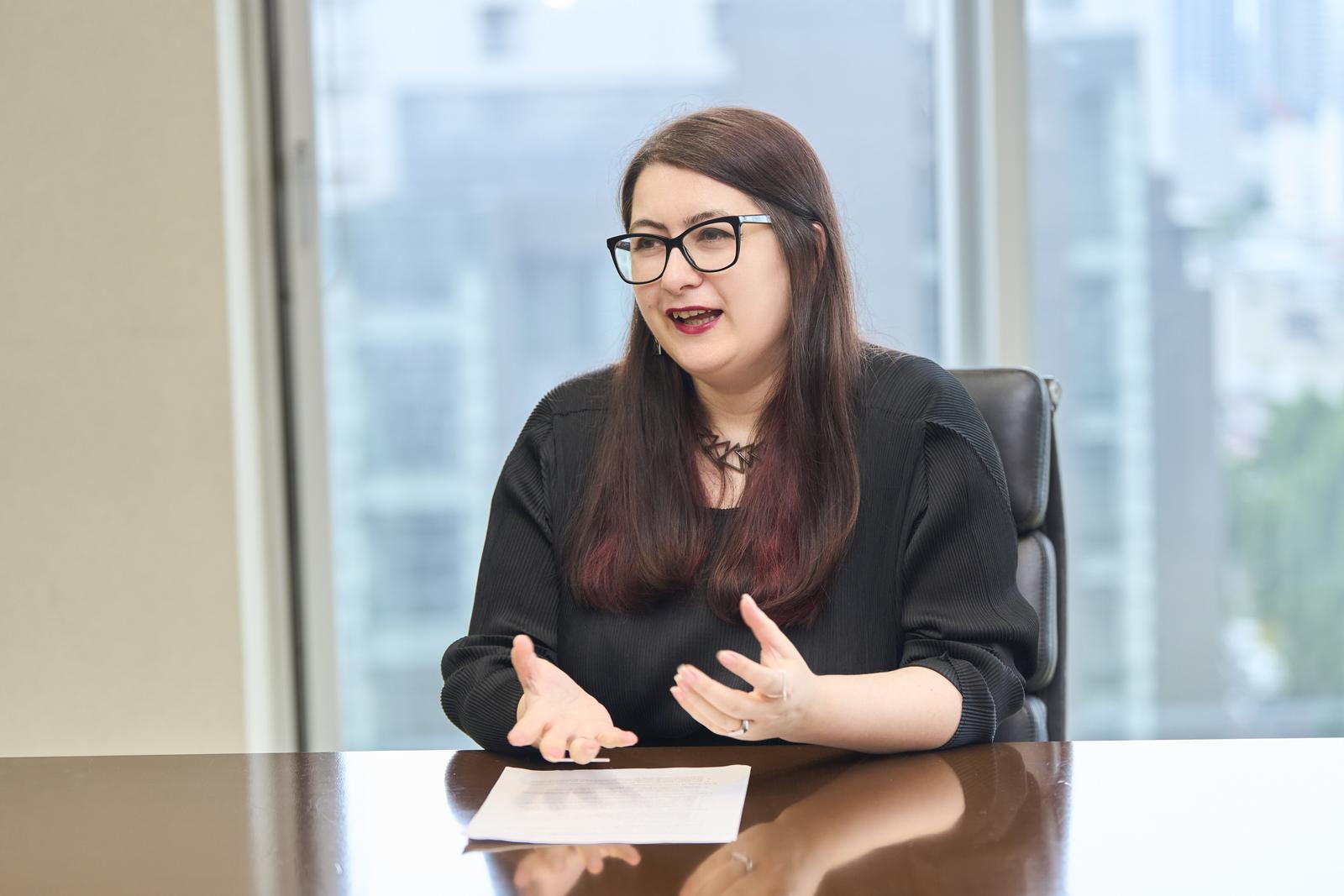
Tokyo: A Wordsmith's Perfect Canvas
Petkoska put this expansive outlook into action while writing for numerous publications, including Tokyo Weekender magazine, where she also worked as a commissioning editor. Her articles covered everything from art exhibitions to travelogues to finding the best coffee in the metropolis and beyond—with one feature being particularly close to her heart.
"One of my assignments was to spend a month with The Strangers, the famous rockabilly dance group that performs every Sunday afternoon in Yoyogi Park, which included interviews and hanging out with them in an izakaya pub," she recalls. "After the article was published, they gifted me a handmade handkerchief with my name on it to thank me for truly understanding them and getting their story right. That felt really great."
Petkoska joined The Japan Times in 2024 as a features editor and staff writer. Her culture-focused articles for the newspaper have delved into everything from butoh dance and international comedians to architecture.
Explaining that she has long been particularly fascinated with the latter field, Petkoska says that her career has led her to interview and publish features on some of Japan's architectural greats, including Kuma Kengo and Fujimoto Sou.
"I have also loved doing architecture-spotting for structures such as the buildings of Tange Kenzo," she notes. "In fact, it was Tange who designed Skopje's urban plan, and so most Macedonians have a very close feeling of familiarity toward Japan."
Helping to Spearhead an International Poetry Scene in Tokyo
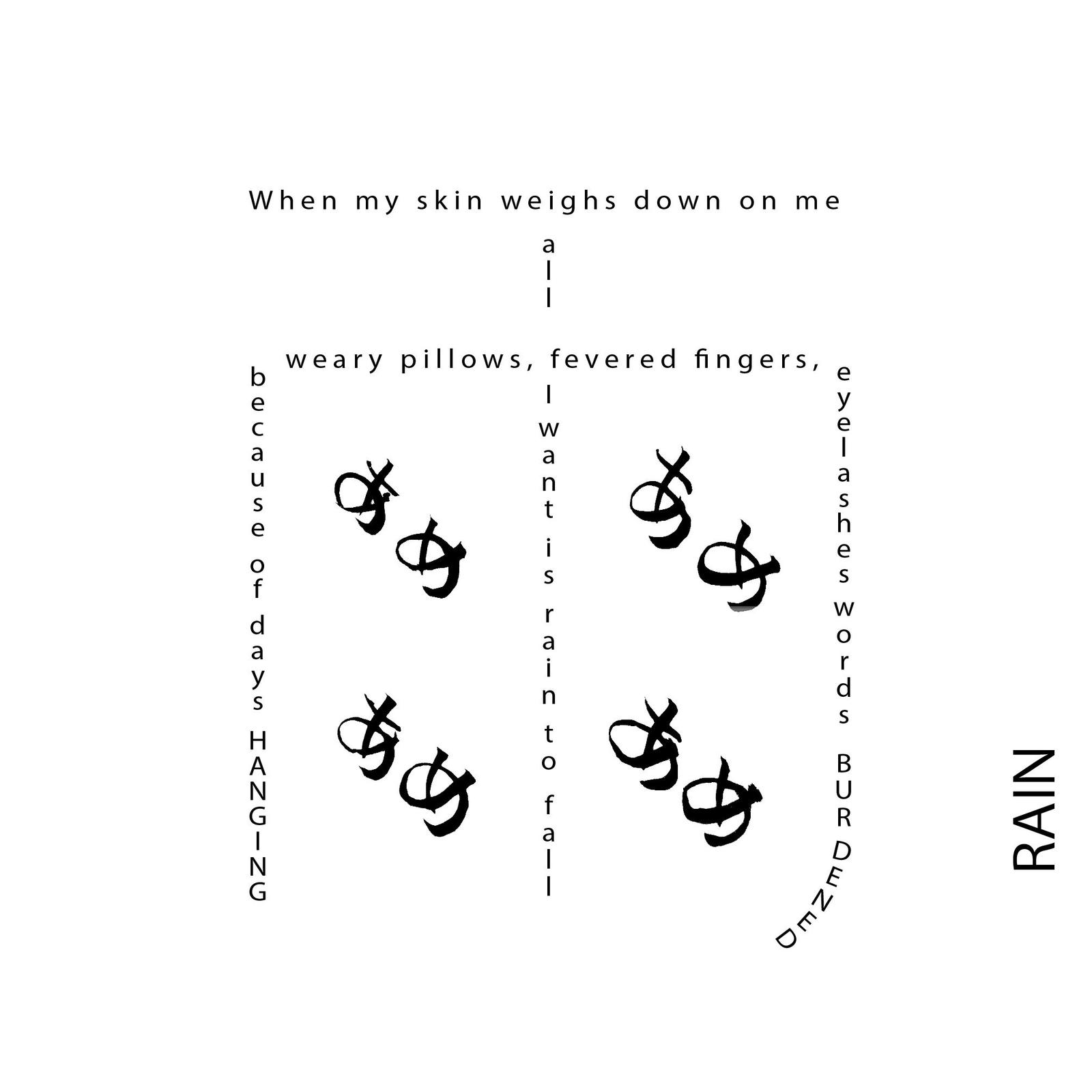
In addition to her journalistic pursuits, some of Petkoska's most cutting-edge work has been in the field of poetry. Her book Wordigami, featuring calligrammes—a type of visual poetry where the text itself is shaped to portray thematic elements from the poem at hand—was released in 2015 by MATICA, Macedonia's oldest and largest publishing house.
Translated into both English and Japanese, parts of the book have been printed in literary journals including the online Hong Kong-based Cha, and another in Japan by Waseda alumni literary journal Shinkiseki. Excerpts of the works—which are read by tracing the same character order of the kanji appearing in the poetry—were also published in Tokyo Weekender, including this poignant poem about rain:
Petkoska has also directed her love and talent for poetry toward creating platforms where other poets can share their work. She joined the Tokyo Poetry Journal (known affectionately as ToPoJo) as a co-associate editor in 2021, and presently serves as its editor. She has made her mark on the journal particularly closely through efforts such as the volume titled "Visual///Visionary Poetry," which she herself initiated and whose exhibition she also curated.
"ToPoJo has become a launch pad for up-and-coming poets to find an international audience—both diasporic as well as local Japanese," she explains. "It is a place where I immediately felt right at home."
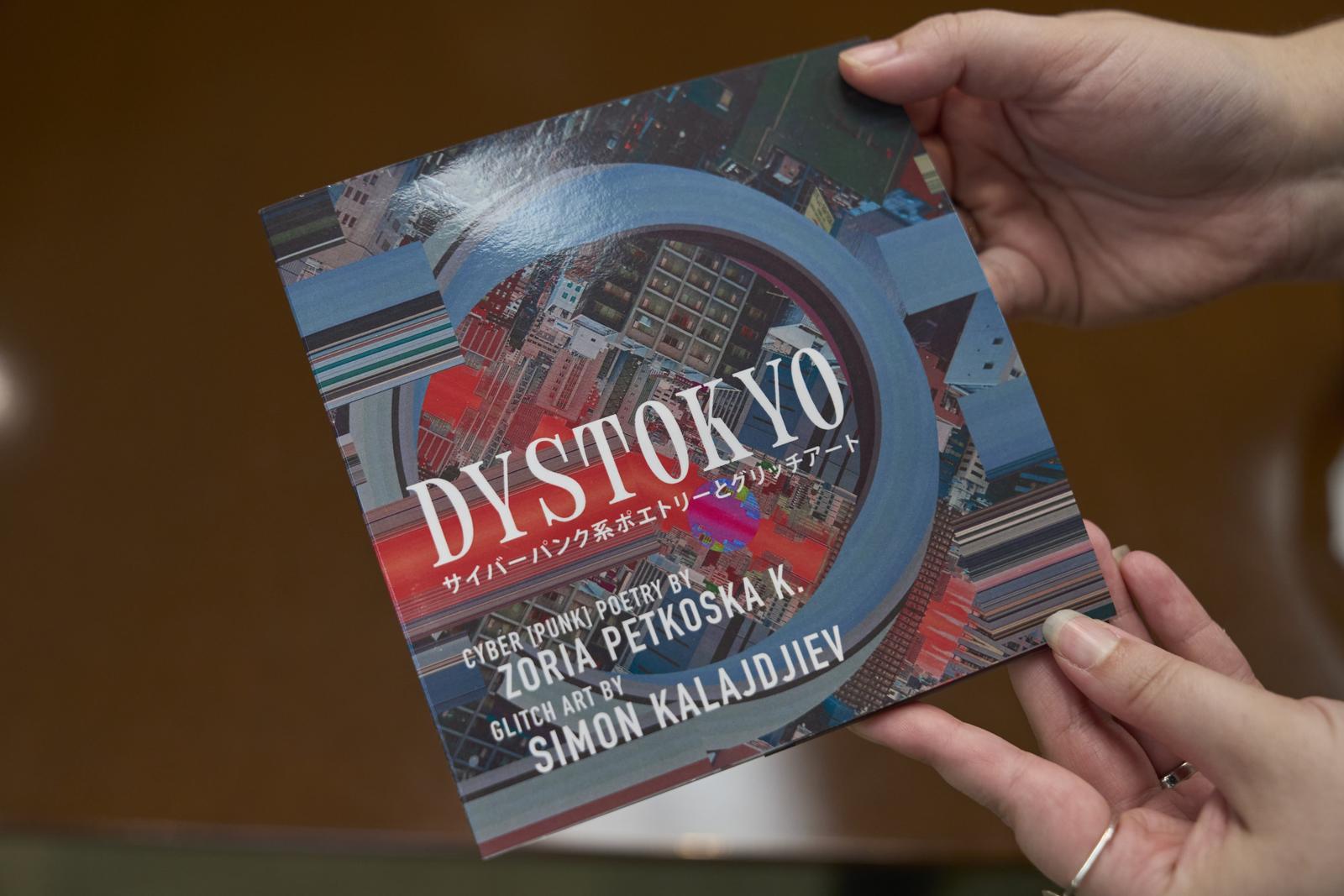
Another adjacent project is DYSTOKYO, a book of cyberpunk, futuristic poetry which Petkoska wrote in collaboration with artist Simon Kalajdjiev—who is also her husband—as an exploration of Tokyo's chaotic elements, as well as the despair characterizing the start of the COVID-19 pandemic.
"I'm particularly happy that it was blurbed and recommended by Chris Mosdell—a lyricist for Yellow Magic Orchestra and Sakamoto Ryuichi, who has also co-written a book with Tanikawa Shuntaro, one of Japan's most famous contemporary poets," she says.
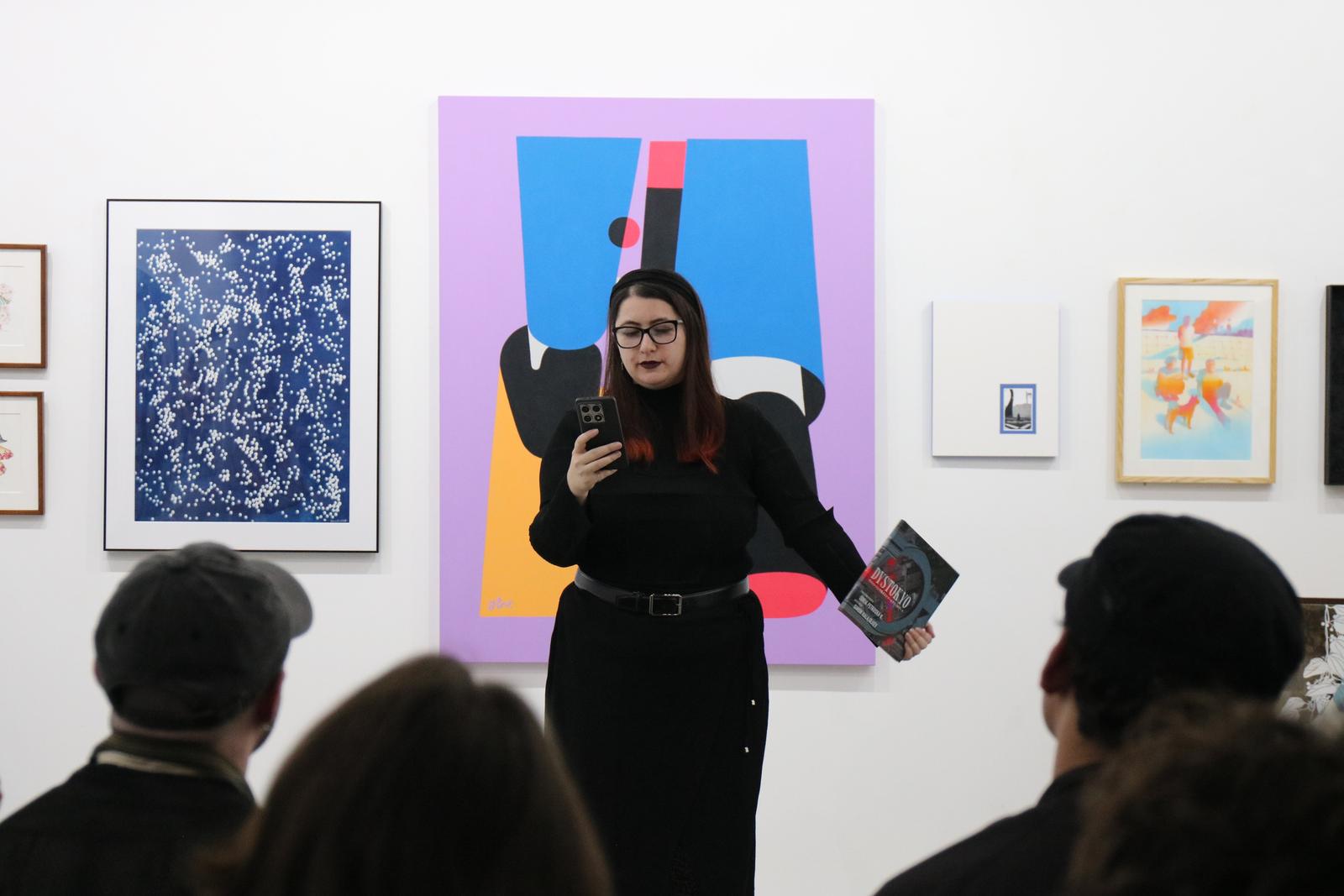
Petkoska additionally launched an initiative in 2025 known as Tokyo Poetry Week, for which she serves as founder and director. Holding its second edition in April 2026, the event takes place across Tokyo during a nine-day period and features workshops, talks, readings, dance and poetry performance collaborations, and art poetry exhibitions.
"People are looking for escapes, and poetry fulfills a need in this regard," she notes. "Even if the genre might feel intimidating at first, it is still possible to appreciate it. I was also surprised to see that all of the events were completely full, and felt moved to see that some people even cried during the poetry readings. It's things like that that keep me going."
Finding Endless Creative Inspiration Throughout the City
While undertaking her Tokyo explorations, Petkoska has combined her sharp eye for detail together with another one of her passions: photography.
"Poetry is my calling—as something that I just began doing naturally on my own—but photography is my hobby," she notes, adding that she always asked for cameras as gifts in childhood, and was also a member of the photography club in university.
Besides collaborating with artists for poetry and photography zines, Petkoska also regularly provides her own photography as a travel writer. "Writing and photography are both important tools for creating art and preserving memory," she notes.
Even after a decade of living in the metropolis, Petkoska says that she still finds inspiration throughout the city—particularly in its small, independently run shops, and other spots located right in her own neighborhood.
"There are so many special places in this city, like the Benzaiten Shrine in Inokashira Park, near where we live," she says, describing her neighborhood of Kichijoji in western Tokyo. "The shrine's resident goddess oversees musicians and artists, so we feel protected by her."
"As someone who was born curious, Tokyo is an overwhelming and yet incredible city to be in," Petkoska notes, while also pointing out intriguing juxtapositions between Tokyo and her own homeland.
"I come from a place where you find ninth-century fortresses and Roman roads dating back 2,000 years," she observes. "But in Tokyo, you have no idea what is going to change next—and so I feel it is important to document things, whether through writing or photography."
"This is an endlessly fascinating city where everything seems to be both big and small at the same time," she adds. "Tokyo stretches on endlessly; and yet when you get down to the micro level, everything is so tiny. It's like Tokyo is a city that lives on its own axis of time and space, with an indescribable buzzing energy in the cultural scene that makes you feel like it's possible to be anything and everything."
Zoria Petkoska K.